

MIAMI — Two years ago, Javier Milei walked into the Casa Rosada carrying a chainsaw. It was a campaign prop, but it was also a promise: he was going to cut Argentina’s bloated state to the bone, slash its catastrophic inflation, and drag South America’s second-largest economy back from the edge of collapse. By most macroeconomic measures, he has delivered. By most human measures, the bill is still coming due.
Argentina’s GDP expanded 4.4% in 2025—the highest growth in years apart from a pandemic-era bounce-back—in further confirmation of Milei’s success in turning around an economy that had been in freefall.
When he took office, Milei inherited the world’s highest inflation rate of 211% from the previous Peronist government. It has since fallen to around 31%—its lowest level since 2018—while the budget is showing a surplus for the first time in 14 years.
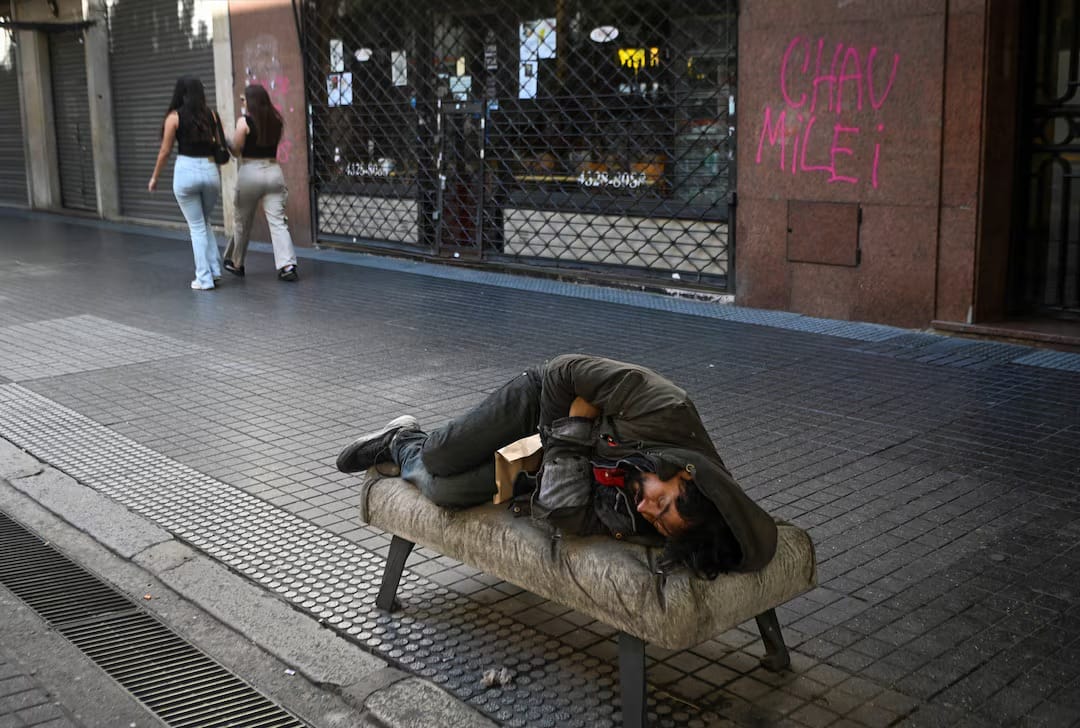
Those are extraordinary numbers by any historical standard for Argentina. But behind the headline figures lies a more complicated story—one that is playing out at kitchen tables, in factory shutdowns, and on the streets of Buenos Aires. For millions of Argentines, and for the large Argentine diaspora community in South Florida, the macro story and the human story are moving in very different directions.
What Milei Actually Did
The breadth of the changes Milei pushed through in two years is difficult to overstate. He eliminated or merged government ministries, laid off tens of thousands of public sector workers, slashed subsidies on energy and utilities, unwound price controls, opened markets to foreign competition, and forced a fiscal discipline on Argentina that no government since the return of democracy in 1983 had managed to sustain.
Buoyed by a larger-than-expected midterm election victory in October 2025 and a $20 billion currency swap deal with the Trump administration, Milei entered 2026 with significant political tailwinds.
His party, La Libertad Avanza, now holds more than twice its previous share of congressional seats. And in February 2026, he secured his most symbolically significant legislative win: the Argentine Senate approved his labor market reform by 42 votes to 28, following the lower house’s approval by 135 votes to 115 in a marathon session, handing Milei one of the most consequential legislative victories in Argentina in decades.
The law rewrites the rules of the Argentine workplace—reducing severance pay, limiting the right to strike, allowing working days of up to 12 hours, shifting more costs of dismissals from employers to workers, and prioritizing company-level agreements over the sector-wide collective bargaining that Argentina’s powerful unions have used for generations to defend wages and conditions. More than 40% of Argentinians currently work in the informal sector—some 9 million people—lacking social security coverage and stable income.
The government argues the reform will incentivize employers to bring these workers into the formal economy by reducing the cost and legal uncertainty of hiring.
Unions called it an attack on workers’ dignity. The General Confederation of Labor declared a national strike that caused widespread factory and business closures the day of the lower house vote. Susana Amatrudo, a 54-year-old nurse who protested outside Congress, told reporters: “When factories close, and people lose their jobs, it affects everybody. People have less money, and they can buy less. This has been happening for a while and will only get worse.”
The Numbers That Don't Make It Into the Headlines
The IMF has praised Milei’s program. Country risk has fallen from over 2,000 basis points before his election to around 500 today. International markets have returned. But the daily experience of Argentines in 2026 is more ambiguous than the investor narrative suggests. Monthly inflation has risen for five consecutive months since hitting a low of 1.5% last year, driven in large part by subsidy cuts pushing up utility bills, food prices, restaurants, and housing costs.
Economists note that Argentina’s official statistics formula still underestimates real price rises, particularly for public services like health care and electricity that have skyrocketed as subsidies are removed. Annual inflation came in at 33.1% in February 2026, up from 32.4% in January—a small move, but one that signals the disinflation trend is stalling rather than accelerating.
Signs of economic slowdown have appeared in 2026, with unemployment growing and key metrics such as industrial output and construction showing cracks. A 33-year-old graphic designer in Buenos Aires put it plainly: “At the end of the day, prices are about what you can buy with your salary. Here and now, it’s obvious that you can buy less than you did a couple years ago.”
As of June 2025, 6.9% of the population was living in extreme poverty—defined as the inability to meet basic food needs—while 45.4% of children under 14 were living in poverty. Milei vetoed laws passed by Congress to increase pension payments, university funding, and social security for people with disabilities, though Congress overrode several of those vetoes.
Perhaps the most pressing concern for Argentina’s economic stability in 2026 is not inflation but the calendar. Argentina faces debt maturities exceeding $19 billion in 2026—a demanding financial schedule that requires the government to successfully issue debt in international markets to refinance its obligations. This would require continuing to lower country risk and maintaining the confidence of private investors and multilateral lenders simultaneously.
Argentina’s Central Bank has been cutting interest rates aggressively—benchmark short-term rates dropped to 20% from 50% at the end of 2025—as policymakers push to stimulate growth by encouraging consumer and business spending. But those falling rates are now below the annual inflation rate, creating new risks. A weaker peso, which lower rates tend to produce, could reignite inflationary pressure and undercut the very achievements Milei has staked his presidency on.
What it Means for Miami’s Argentine Community
For South Florida’s substantial Argentine diaspora, these economic developments carry immediate personal weight. Remittances to Argentina, investment decisions, family financial support, and the question of whether to return home are all shaped by what happens in the next 12 months. The Argentine community in Miami has watched Milei’s experiment with a mixture of hope and caution. Many came to South Florida precisely to escape the cycles of inflation, devaluation, and institutional instability that have defined Argentine economic life for decades.
The macro improvements Milei has delivered are real and meaningful. The question is whether they will prove durable—or whether Argentina is simply in the latest phase of a cycle it has never fully broken.
The Larger Regional Significance
Argentina’s experiment matters far beyond its borders. Milei has become the ideological reference point for a new generation of right-wing politicians across Latin America who believe that radical economic liberalization—not incremental reform—is the only path out of the region’s chronic underperformance.
The OECD has warned that Latin America is entering 2026 with limited growth momentum and heightened exposure to global risks, with the region growing at roughly half the pace of other emerging markets.
If Milei’s shock therapy produces lasting stability and growth in Argentina, it strengthens that argument across the region. If it produces another Argentine crisis, it will set that argument back by a decade.
The chainsaw got the attention. What happens next is what will matter.
Sociedad Media will continue to monitor Argentina’s economic transformation and its implications for the Argentine diaspora community in Miami and across South Florida. Have a tip, a story, or a personal experience connected to Argentina’s economy? Reach out to our team at info@sociedadmedia.com—we always want to hear from our readers.


