


MIAMI — Citadel CEO Ken Griffin has pledged $3 billion to Carnegie Mellon University — the largest individual gift in the history of American higher education.
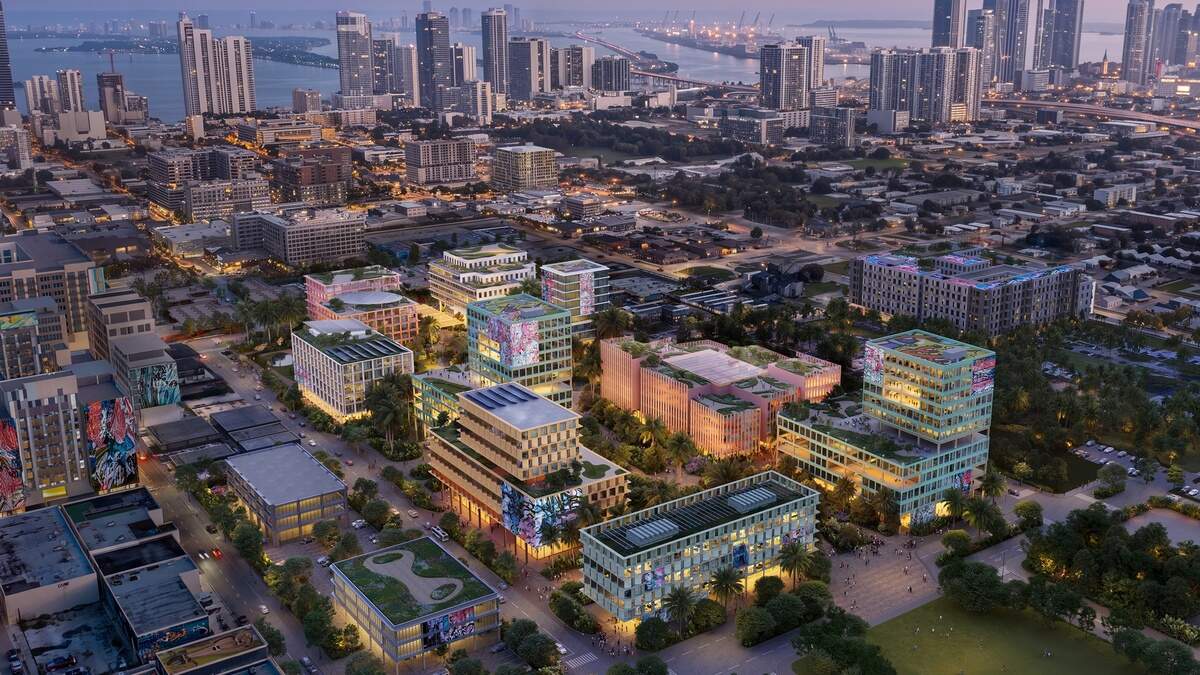
The money splits two ways: $1 billion goes to CMU’s home campus in Pittsburgh, including $500 million to rename and fund its School of Computer Science as the Kenneth C. Griffin School of Computer Science. The remaining $2 billion will launch an entirely new campus: CMU Miami, set on more than 35 acres in the Wynwood neighborhood.
At full capacity, CMU Miami is expected to enroll more than 3,500 undergraduate, master’s, and PhD students, supported by nearly 300 faculty and over 600 staff.
Construction is to begin in 2027, with the first students expected to enroll in 2028, pending regulatory approval.
Rather than organizing around traditional academic majors, the campus is designed around societal challenge areas — human health and biological discovery, national security and strategic capabilities, energy and climate resilience, and advanced manufacturing — with facilities built to house industry research labs and venture studios alongside classrooms.
Why Miami
The gift (although Griffin calls it an “investment”) is the latest and largest move in Griffin’s broader bet on the city. A Florida native from Boca Raton, Griffin relocated Citadel and Citadel Securities from Chicago to Miami in 2022 after more than three decades in the Midwest, citing the city’s schools, environment, and safety — while saying taxes weren’t the deciding factor.
Citadel now employs roughly 500 people in Miami and is building a 54-story, $2.5 billion headquarters on Brickell Bay, expected to open in 2030.
Griffin summed up his thinking simply: “Great American cities are anchored by great universities, with almost no exception.”
What This Means for Miami
A full research university campus of this scale is a different category of investment than a corporate relocation — it’s a long-term bet on Miami as a hub for advanced research, talent, and innovation, not just finance.
CMU’s track record in computer science, robotics, and AI gives Miami a direct pipeline into fields the city has been trying to attract for years, and the campus’s focus on national security, health, and climate research signals an ambition to pull federal research dollars and industry partnerships southward along with it.
Combined with Citadel’s expanding physical footprint, the university project reinforces a broader thesis taking hold in Miami: that the city is positioning itself not just as a finance and crypto destination, but as a genuine competitor for the kind of academic and research infrastructure historically concentrated in cities like Boston, Pittsburgh, and the Bay Area.
What’s Still Unknown
Neither CMU nor Griffin’s team has detailed admissions criteria, tuition structure, or how CMU Miami’s degrees will be positioned relative to the Pittsburgh campus’s offerings.
Local reaction from Miami-Dade officials and the broader South Florida higher education landscape — including how existing institutions like the University of Miami and FIU view the new competitor — remains to be seen as construction gets underway.
A dream is becoming a reality in Miami! I was honored to join last night's celebration and today's press conference announcing @CarnegieMellon University's new Wynwood campus, made possible by Ken Griffin's record $3 billion gift.
— Miami Beach Mayor Steven Meiner (@StevenMeiner) October 1, 2026
Carnegie Mellon is the No. 14 university in the… pic.twitter.com/9nHtuoIWj2