

MIAMI – Cuba is in the grip of its worst energy and economic crisis since the collapse of the Soviet Union, and the regime has no solutions in sight.
Nearly a month after Washington moved to block oil supplies from reaching the Caribbean island, Cuba’s humanitarian situation continues to worsen, with fuel shortages posing growing risks to healthcare, water services, and food distribution sectors, a senior United Nations official warned this week.
Fuel shortages on the island are also crippling the state-run sanitation services as trash continues to accumulate in the nation’s capital, risking the spread of disease and malaria among the population.
The crisis is worsening after the United States intervened in Venezuela in early January, ousting the former President and dictator Nicolás Maduro—Cuba’s closest ally and oil patron for a generation–and subsequently blocking Venezuelan oil tankers from reaching the island.
On January 30, President Donald Trump signed an executive order threatening tariffs on any country that continues to supply Cuba with fuel, a move that The New York Times described as the most effective U.S. blockade of Cuba since the Cuban Missile Crisis. The results on the ground have been severe.
Lights Out Across the Island
On Friday, Cuba’s national electricity grid reported a generation deficit of 1,776 megawatts during peak hours, leaving millions of Cubans without power.
Havana has experienced outages that stretch beyond 15 hours a day.
Garbage collection has broken down as fuel shortages sideline trucks, leaving trash piling up in neighborhoods across the capital. Although blackouts have become a fact of life for Cubans throughout the island for decades, the worsening energy crisis in Cuba in recent weeks is halting everyday life for the island’s over 10 million inhabitants.
Emergency services and firefighters are struggling to find fuel to respond to emergencies. Flights bringing vital supplies have been suspended as Cuba’s government says it is now unable to refuel airplanes at its airports, according to Al Jazeera.
Buses have slashed routes, and gasoline is being sold only in foreign currency, which is inaccessible to most Cubans.
Francisco Pichón, the UN’s top official in Cuba, told reporters in New York via video link from Havana that daily life on the island is “becoming fragile,” with essential services scaled back across the country.
He warned of a potential humanitarian “collapse” if the country’s energy needs are unmet, noting that five million Cubans living with chronic illnesses face interrupted treatments, including more than 32,000 pregnant women and thousands of cancer patients requiring continuous oncology care, says Latin News.
One of those patients, Aniliet Rodríguez, a 25-year-old pregnant woman who spoke with Al Jazeera, admitted to a maternal care center in January, described the situation plainly: “There’s no bread, no milk for nutrition … there are no medicines.”
Allies Send Ships, But Can Only Do So Much
As Cuba’s government struggles to keep the lights on, a handful of regional and international partners have stepped in—though the scope of their assistance remains limited by U.S. pressure.
Mexico dispatched two Mexican Navy ships carrying more than 800 tons of humanitarian supplies from Veracruz to Cuba on February 9.
Mexican President Claudia Sheinbaum described the decision to halt oil deliveries to Cuba—made under heavy pressure from the administration in Washington—as a “sovereign choice,” while simultaneously pledging food aid to the Cuban people.
International activists in Spain have also announced plans for what they are calling the Nuestra América Flotilla, a civilian convoy that would attempt to break the U.S. blockade and deliver humanitarian supplies directly to the island.
Russia’s Kremlin spokesman Dmitry Peskov raised the alarm in early February, calling Cuba’s energy situation critical, saying Moscow was discussing possible solutions to provide Havana with whatever assistance it needs.
However, when Cuban Foreign Minister Bruno Rodríguez Parilla received a warm welcome from officials of the Russian government on Feb. 18, including a meeting with Vladimir Putin, Parilla returned to Havana empty-handed.
China’s foreign ministry stated that Beijing “stands firmly” against what it called “inhumane actions” depriving Cubans of their right to subsistence, and pledged to continue providing assistance. But the Asian power, too, has done little in the shape of physical aid to its Cuban partners.
Robert Munks, head of Americas research at risk intelligence firm Verisk Maplecroft, told CNBC that Cuba lacks foreign partners capable of truly stepping in, noting that the U.S. has simultaneously limited Cuba's access to hard currency and pressured Nicaragua to end visa-free travel for Cuban citizens—closing one of the most frequently used escape routes for Cubans fleeing the island, according to Americas Quarterly.
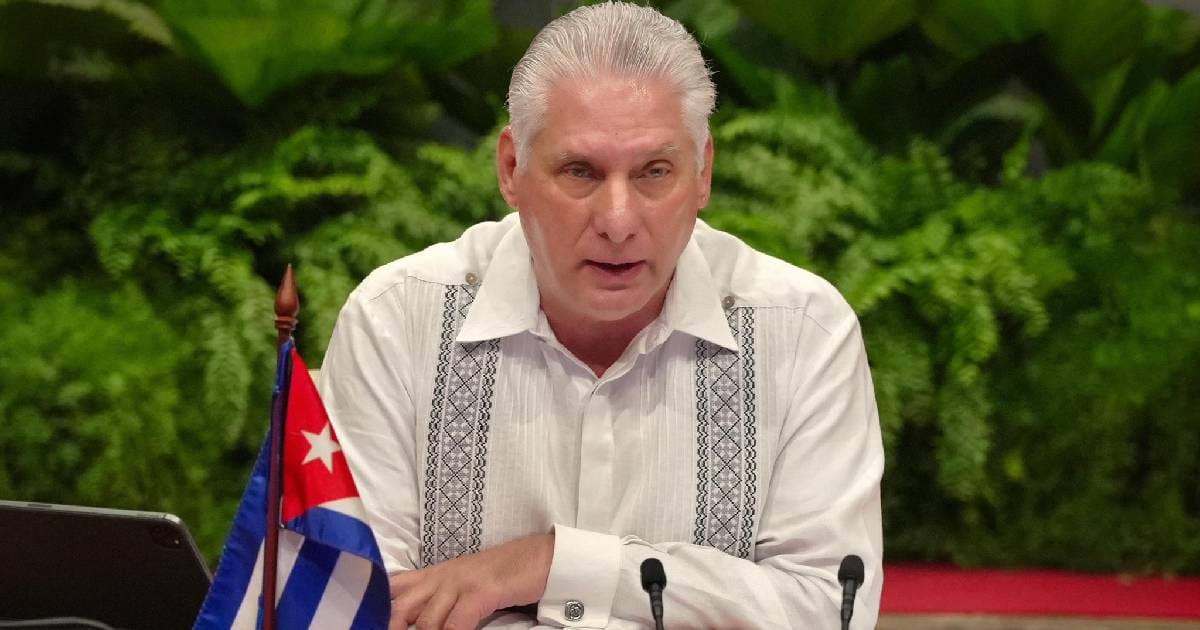
Cuban President Miguel Díaz-Canel has pledged to ramp up domestic solar generation and expand crude oil extraction to boost self-sufficiency.
Díaz-Canel told reporters in a two-hour televised press conference in Havana that his government would take measures to preserve fuel for essential services, calling the U.S. stance “aggressive and criminal.” But even he acknowledged the limits of what renewable energy can deliver in the short term, asking hopelessly:
“How do we till our soil? How do we move around? How do we keep our kids in classes without fuel?”
Rubio's Quiet Game: Pressure, Talks, and the Question of What Comes Next
Behind the fuel blockade lies a more ambitious U.S. objective: changing who governs Cuba in the weeks to come.
At a Senate Foreign Relations Committee hearing in late January, Secretary of State Marco Rubio declined to rule out a regime change effort, stating clearly: “I think we would like to see the regime there change.”
The son of Cuban immigrants, Rubio has long been the most prominent advocate in Washington for ending communist rule in Havana. President Trump, on the other hand, has been more blunt.
Before launching strikes on Iran, Trump publicly floated the idea of a “friendly takeover of Cuba,” naming Rubio as his point man on the matter.
But Rubio appears to be pursuing a more calculated path than his public rhetoric suggests. According to a report by Axios, Rubio has been conducting secret talks with Raúl Guillermo Rodríguez Castro—also known as “El Cangrejo,” the 41-year-old grandson of former Cuban leader Raúl Castro and a figure with ties to Cuba's powerful military-commercial conglomerate known as GAESA.
Three sources confirmed the discussions to Axios, with a senior Trump administration official describing them not as negotiations but as “discussions about the future.”
The official said the U.S. sees Rodríguez Castro and his circle as representing younger, business-minded Cubans for whom revolutionary communism has failed—and who may see value in a new relationship with Washington.
One source described the conversations as “surprisingly friendly,” noting that both Rubio and Rodríguez Castro were able to build mutual rapport by acknowledging that they both share Cuban heritage and Miami cultural roots in their earlier years.
Some analysts believe Rubio may ultimately pursue a Venezuela-style accommodation with Cuba, rather than full-scale regime change—leaving some figures in place while seeking to reshape the country's economic direction and gain greater leverage over Havana, according to a recent report by Bloomberg.
At a regional summit in St. Kitts last week, Rubio was careful with his public words. He told reporters that 15 percent of Cuba's population has fled the island since 2021, calling it “a system that’s in collapse,” and one that needs dramatic reform.
But Rubio stopped short of threatening military action, saying the United States is always willing to speak with officials who have information or viewpoints to share.
Meanwhile, the Trump administration is quietly allowing American companies to sell fuel to Cuba's private sector—a calculated carve-out that could weaken the state-run economy while creating economic openings for a post-Castro business class that could later assume the reins of power in Havana.
The Stakes for Miami's Cuban Community
For the hundreds of thousands of Cuban Americans in South Florida, the crisis carries a deeply personal weight. Many have family members still on the island navigating daily blackouts, food shortages, and an uncertain political future. The question being asked on both sides of the Florida Straits is the same: how long can this hold?
Munks warned that an accelerating collapse of basic services will put the Cuban government under extreme pressure to find a negotiated solution—but that outbreaks of civil unrest remain possible if conditions continue to deteriorate.
Washington is betting that economic pain will force Havana’s hand. Havana is betting it can outlast Washington’s pressure, as it has for six decades.
Ordinary Cubans, in the meantime, are the ones paying the price.
Sociedad Media will continue reporting on events in Cuba as they develop. If you have family on the island and want to share their story, contact our editorial team.


