

MIAMI — When Donald Trump gathered twelve Latin American leaders at his Doral resort on March 7 to launch the Shield of the Americas, he was equally deliberate about who was not in the room. The presidents of Brazil, Mexico, and Colombia—together representing more than half of the region’s GDP—were not invited.
Mexico: Calibrated Defiance
Of the three excluded leaders, Mexico’s President Claudia Sheinbaum has walked the most delicate line. With the U.S.-Mexico relationship carrying enormous trade and security stakes on both sides, an open confrontation with Washington is a luxury she cannot afford.
During a Tuesday press briefing at the National Palace in Mexico City, President Sheinbaum shared an awkward moment among journalists when a reporter asked why the Sheinbaum government was not invited to the Shield of the Americas summit in Doral on Saturday. Sheinbaum stated: “We were not invited to the Shield of the Americas, but we didn’t need to be invited because we had an agreement with the United States,” alluding to recent bilateral security arrangements with the Trump administration.
Sheinbaum reemphasized her government’s continued cooperation with the United States on the security front, but critics argue that the Mexican government, along with Petro’s Colombia and Lula’s Brazil, were not invited because Washington does not view these administrations as reliable partners to combat the drug cartels and to bolster security across the region.
Sheinbaum has remained defiant in the face of U.S. pressure, reaffirming that she will never allow U.S. troops on Mexican soil while maintaining that bilateral intelligence cooperation continues.
When Trump declared at the summit that “the cartels govern Mexico” and floated the idea of direct U.S. military action to eradicate them—an offer Sheinbaum had previously and publicly declined in a phone call with the U.S. president—she announced she would respond formally on the following day, deliberately choosing not to escalate in real time.
The message was strategic: Mexico will not be provoked into a confrontation, but it will not accept the premise that Washington has the right to operate militarily on its territory.
The restraint reflects a hard reality. Mexico is too economically intertwined with the United States to respond the way Lula or Petro can. Sheinbaum’s approach has been to quietly continue security cooperation while publicly defending the principle of sovereignty—threading a needle that satisfies her hard-left domestic base without inviting tariff retaliation from a White House that has already demonstrated its willingness to use trade as a weapon to exert political pressure on its southern neighbor.
Colombia: Fighting Back at the United Nations
Colombia’s President Gustavo Petro chose a more confrontational venue for his response. Petro went to the UN narcotics commission and argued that Washington had sidelined decades of shared counter-narcotics expertise—a network built with 75 countries—in favor of political theater.
It was a pointed rebuke: the country that has served as the anchor of U.S. anti-drug strategy in South America for three decades was telling the international community that Trump’s new alliance was not a serious security framework but a partisan exercise.
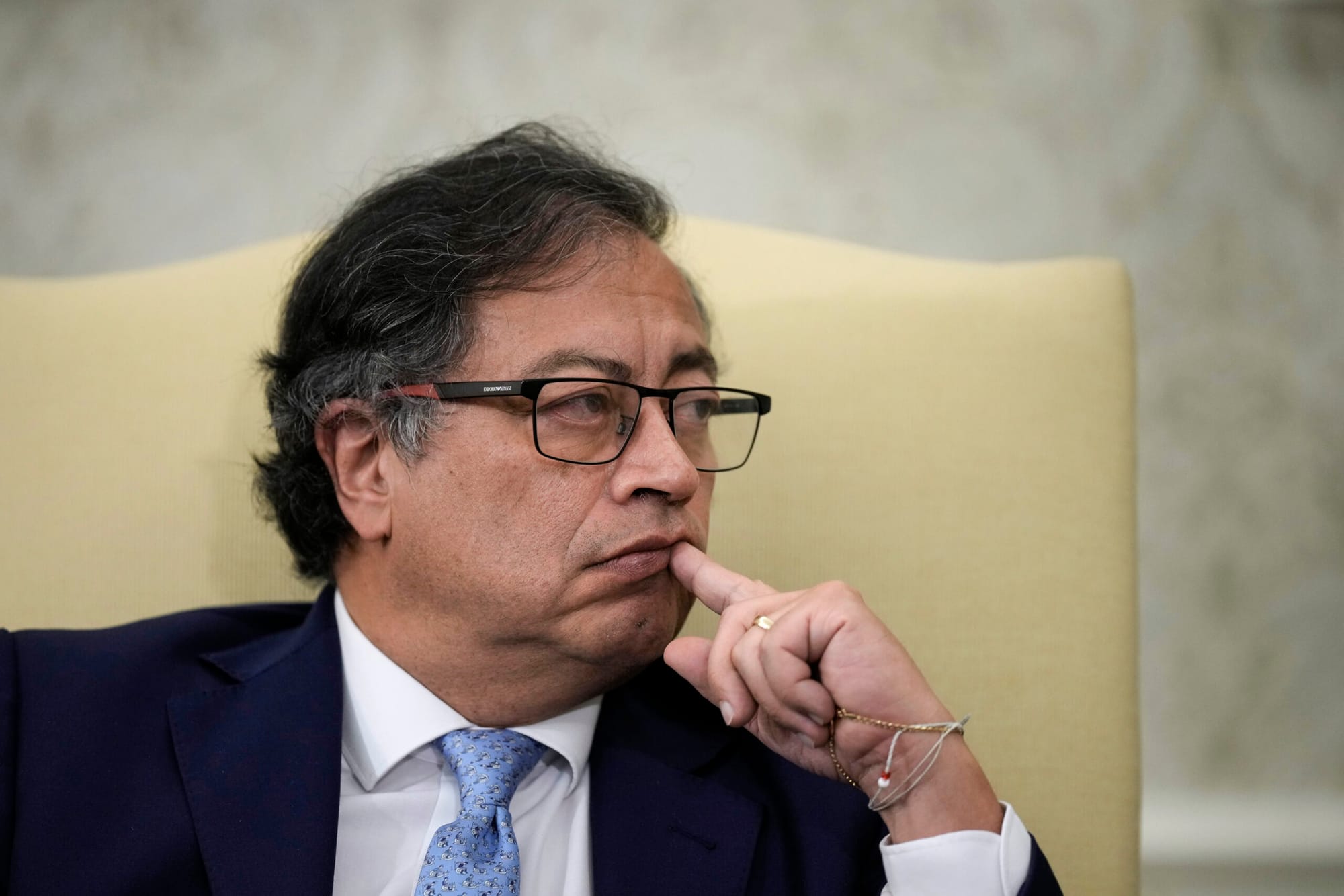
Petro was not on the guest list for the Doral summit—a deliberate exclusion that underscored the ideological divide the Shield of the Americas has drawn across the hemisphere. His absence is particularly glaring given the facts on the ground: Colombia and Mexico together remain the major sources of narcotics entering the United States. Any counter-narcotics alliance that excludes both countries simultaneously is, by definition, working around its primary problem rather than addressing it.
Petro also used the weekend to appear at Jesse Jackson’s funeral in the United States—a setting that allowed him to scrupulously position himself on a very different moral stage than the Doral resort.
Brazil: The Most Alarming Response
It was Brazil’s Lula who delivered the most striking response of the three—one that signals the Shield of the Americas may be producing consequences its architects did not anticipate.
Speaking alongside South Africa’s President Cyril Ramaphosa on the day after the Doral summit, Lula warned that Brazil could be invaded “any day” if it fails to strengthen its defenses. He proposed a joint arms-production partnership with Pretoria, framing it as an alternative to dependence on what he called the “Lords of Arms.”
The subtext was unmistakable: the January capture of Venezuela’s Nicolás Maduro by U.S. special forces had crossed a threshold in Lula’s mind, transforming Trump’s regional posture from political rhetoric into an operational threat to Brazilian sovereignty.
The warning was not idle. Brazil has already begun the most significant military buildup in its modern history, with a 2026 defense budget exceeding $26 billion—more than every other South American nation combined.
Lula’s defense minister has declined to rule out revisiting Brazil’s constitutional prohibition on nuclear weapons development, pointing to the country’s uranium reserves and its capacity to dominate the nuclear cycle as strategic deterrents. For Lula, the Shield of the Americas is not a security framework to engage with—it is a threat to prepare against.
The Verdict
The collective response of the three excluded leaders has reinforced what independent analysts had already concluded about the Shield of the Americas. Those three countries represent more than half of the region’s GDP and host a large part of the illicit markets, including narcotics production and trade—the supposed targets of the summit itself.
The riskiest outcome is not that the Shield will fail to eradicate the region’s violent cartels. It is that it will push excluded nations toward exactly the kind of defensive posture that makes the hemisphere less stable.
Lula is already talking about arms production and partnering with U.S. adversaries. Sheinbaum is fortifying the principle that Mexican sovereignty is non-negotiable. Petro is building coalitions at the United Nations. None of this makes anyone safer.
Analysts from CSIS, a Washington, D.C.-based think tank, have noted that contingent on upcoming election results in Colombia and Peru, and possibly Brazil, future iterations of the Shield of the Americas could include presidents from those countries—particularly if Colombia elects Paloma Valencia on May 31. That remains the most realistic path to making the alliance genuinely hemispheric rather than ideologically curated.
Until then, the three most consequential absent voices in Latin America have delivered their verdict on the Doral summit—and none of it resembles an endorsement.


