

Donald Trump stood before a room of oil executives at the White House on January 9 and told them he had a feeling they would invest $100 billion in Venezuela “very rapidly.” The executives listened politely. Then they went back to their offices and said almost nothing.
Trump predicted billions. Big Oil said: not yet. And somewhere between those two positions lies the answer to the most consequential economic question in the Western Hemisphere right now—who is actually going to rebuild Venezuela’s oil sector, when, and on what terms?
The Promise vs. The Reality
The scale of the opportunity is not in dispute. Venezuela sits on 303 billion barrels of proven oil reserves—the largest in the world, exceeding Saudi Arabia’s.
Venezuela’s production peaked at 3.5 million barrels per day in the late 1990s but has declined dramatically since then, standing at around 800,000 barrels per day—approximately 1% of global crude output.
Oil executives operating in Venezuela say it will cost $10 billion annually to turn production around, and a stable security environment and a friendly government in Caracas will be essential to grow production back to those historic levels.
The licenses are already in place. On January 29, OFAC issued Venezuela General License 46, authorizing U.S. firms to market Venezuelan oil globally. On February 13, GL 49 authorized oil and gas firms to negotiate and enter into contingent contracts to invest in upstream oil and gas projects. And the GL 50 authorized certain firms already in Venezuela to expand operations, including pursuing additional upstream projects.
The legal framework for investment exists. The question is when the large multinational companies—which have the capacity to do so—will decide to enter the fray.
Chevron: The Only Major Already Inside
Chevron is the only U.S. oil major still operating in Venezuela, present in the country since the 1920s. The Houston-based firm accounts for 25% of Venezuela’s current production, importing over 120,000 barrels of crude per day to the United States. It operates five crude oil production projects in Venezuela as a minority shareholder in joint ventures with the state-owned PDVSA.
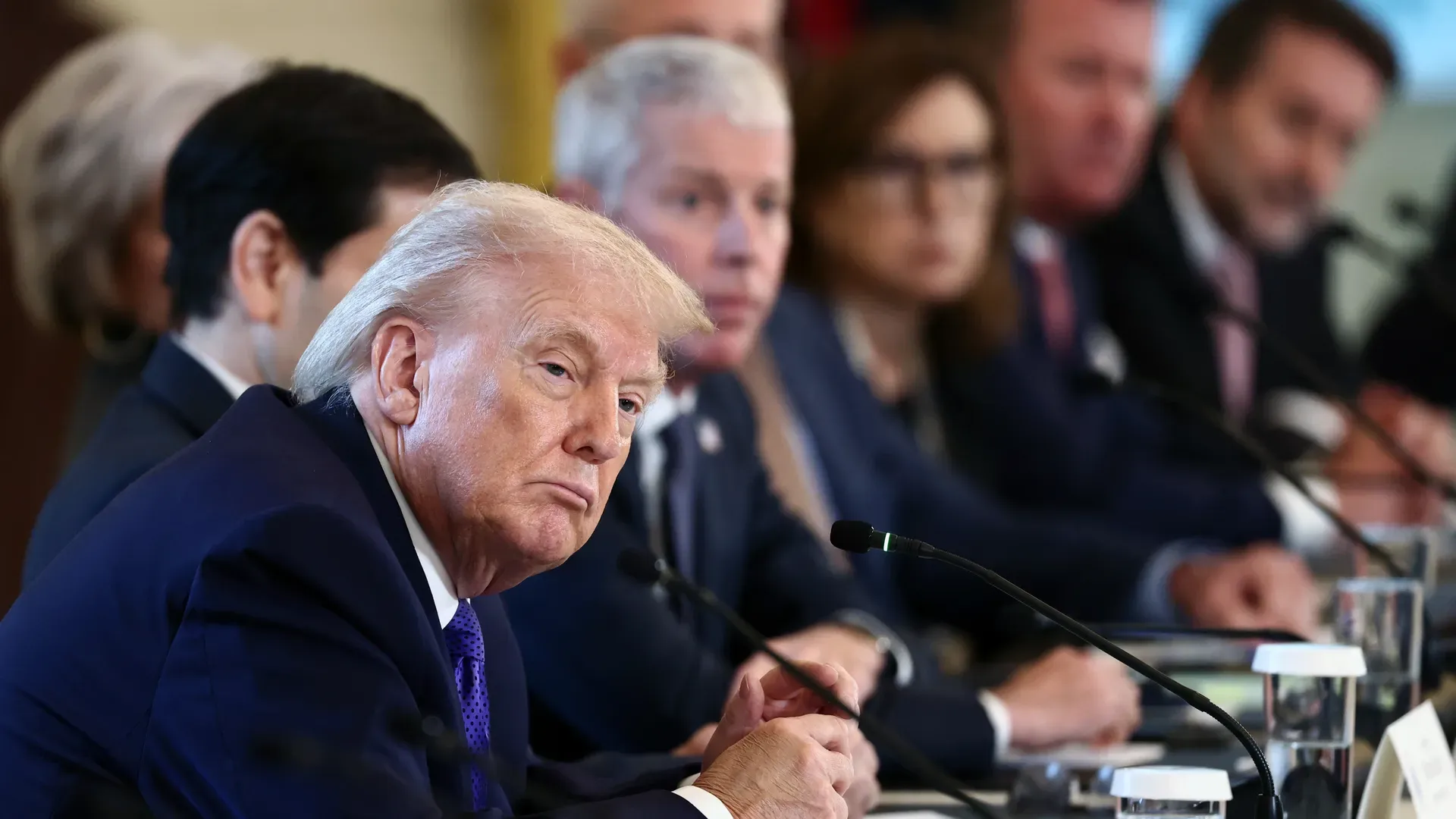
Chevron Vice Chairman Mark Nelson told Trump at the January 9 White House meeting that the company had a path forward to rapidly ramp up its production. “We have a path forward here very shortly to be able to increase our liftings from those joint ventures 100% essentially effective immediately,” Nelson said. “We are also able to increase our production within our own disciplined investment schemes by about 50% just in the next 18 to 24 months.”
Chevron’s advantage is structural: 3,000 employees already in the country, existing infrastructure, and a clear operational understanding of how Venezuela’s oil sector functions. If any U.S. major is going to move fast in Venezuela, it is Chevron—and the company has already signaled it intends to.
ExxonMobil: “Uninvestable”—and Trump is Dissatisfied
ExxonMobil CEO Darren Woods delivered the bluntest assessment of the January 9 meeting: Venezuela is “uninvestable” in its current state. “We’ve had our assets seized there twice, and so you can imagine to re-enter a third time would require some pretty significant changes from what we’ve historically seen here,” Woods told Trump directly.
“If we look at the legal and commercial constructs and frameworks in place today in Venezuela—today, it’s uninvestable.”
Woods’ comments drew the ire of Trump, who said he’d be “inclined to keep Exxon out.” But Exxon’s stance has essentially been echoed by the American Petroleum Institute—the top industry lobby group in Washington. API President Mike Sommers said “significant policy changes, security guarantees, and some assurance that the government is going to be stable into the future” were necessary for Venezuela to become investable.
The numbers behind Exxon’s reluctance are significant. Venezuela seized ExxonMobil’s assets in 2007, and the World Bank’s International Centre for Settlement of Investment Disputes ruled in 2014 that the Venezuelan government should pay ExxonMobil $1.6 billion in compensation. Maduro’s government never paid, and ExxonMobil is still waiting.
Exxon has indicated it is prepared to send a technical team to evaluate the current state of Venezuela’s oil assets—a gesture of engagement that falls well short of a commitment to invest.
ConocoPhillips: Monitoring, Not Moving
ConocoPhillips has outstanding arbitration claims against Venezuela approaching $10 billion following the expropriation of its Hamaca and Petrozuata heavy crude projects in 2007. The company is “monitoring developments in Venezuela and their potential implications for global energy supply and stability,” a spokesperson said—adding that “it would be premature to speculate on any future business activities or investments.”
ConocoPhillips CEO Ryan Lance told Trump at the White House meeting: “As we think that big and bold, we need to be also thinking about restructuring the entire Venezuelan energy system, including PDVSA,” illustrating the deep level of reform the company views as a prerequisite before it would consider re-entry post-Maduro.
The Wildcatters Are Ready—The Majors Are Not
The gap between Trump’s ambitions and the oil majors’ caution has produced an unexpected dynamic. Treasury Secretary Scott Bessent acknowledged the disconnect explicitly: “The big oil companies who move slowly, who have corporate boards, are not interested,” Bessent said at the Economic Club of Minnesota. “I can tell you that the independent oil companies and individuals, wildcatters—our phones are ringing off the hook.”
Energy Intelligence Group analysts conclude that the most likely investors in the near term are the handful of companies that have retained positions in Venezuela alongside some oilfield services firms, U.S. independents, and private capital with high-risk appetites. The massive investment opportunity the Trump administration believes it has created looks overstated for most companies of significant size.
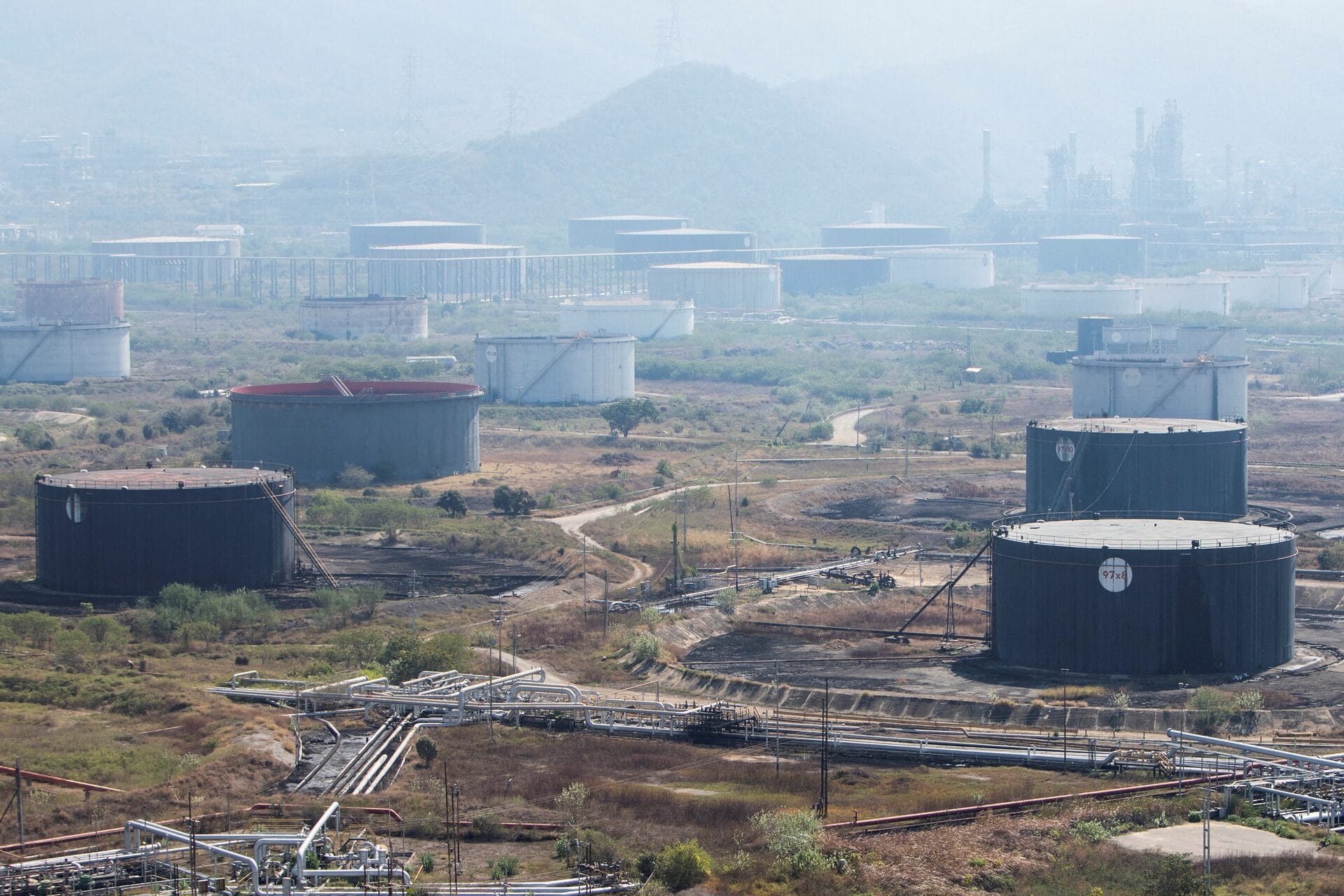
Oilfield services companies—Halliburton, SLB, and Baker Hughes—may be the most immediate beneficiaries. Restarting production depends on drilling rigs, well services, completions, and modern oilfield technology. Shares of SLB rose more than 10%, and Halliburton gained 9% in the days following Maduro’s capture—reflecting investor expectations of a services boom even while the majors held back on direct investment commitments.
The Minerals Play: Beyond Oil
Mining companies are lining up to invest in Venezuela as Washington seeks greater access to gold, coltan, bauxite, and other critical minerals abundant in the Venezuelan plains. U.S. Interior Secretary Doug Burgum, visiting Caracas on March 4, said mining companies were “eager to get started” and described opportunities for collaboration as “unlimited.”
Venezuela’s interim president Rodríguez has set her sights on updating Venezuela’s mining code to allow large foreign companies to exploit minerals and rare earth elements.
The Trump administration has begun marketing Venezuelan crude, planning to sell an initial 30 to 50 million barrels, with proceeds held in U.S.-controlled accounts at international banks. It also promised exports of light oil to Venezuela as needed for use as diluent—to be blended with the country’s extra-heavy crude for transport—and is easing sanctions to allow Venezuela to import oilfield equipment, parts, expertise, and investment from U.S. and allied companies.
What Needs to Change
The conditions that would unlock large-scale U.S. oil investment in Venezuela are clear. Analysts across Wood Mackenzie, RBC Capital Markets, and Energy Intelligence Group are aligned on what the minimum requirements look like: legal certainty and property rights protections that prevent future expropriation, resolution of outstanding arbitration claims owed to ExxonMobil and ConocoPhillips, a restructured PDVSA with reduced corruption and professional management, a stable political transition that gives investors confidence the rules will not change again, and formal U.S. security guarantees on investments—something the Trump administration has so far declined to provide in binding form.
Even if Washington and Caracas can deliver those minimum requirements, it remains unclear whether Venezuela can compete for capital against other global investment opportunities—particularly as corporate strategy across most of the oil industry has been defined by capital discipline and returning cash to shareholders rather than maximizing resource capture in high-risk environments.
The Wednesday Wildcard
Wednesday’s firing of Defense Minister Padrino López and his replacement with a former intelligence chief introduced new uncertainty into an investment environment already defined by caution.
The firing signals that Rodríguez is consolidating power, which analysts interpret as either a sign of growing confidence or growing instability, depending on whom you ask. For oil executives already skeptical about Venezuela’s governance trajectory, personnel changes of this magnitude in the military establishment are exactly the kind of unpredictable event that pushes investment decisions further into the future.
The future of Venezuelan production depends on how the security situation on the ground evolves. “However, all bets are off in a chaotic change of power scenario like what occurred in Libya or Iraq,” RBC Capital Markets' Helima Croft warned investors.
Venezuela has the oil. Washington has opened the legal door. The business case is being built in real time—one license, one general license, one arbitration settlement at a time. The question of who actually walks through that door, and when, will determine whether Venezuela’s energy opening produces the economic transformation Trump promised or the cautious trickle that the oil majors’ boardrooms currently envision.


