

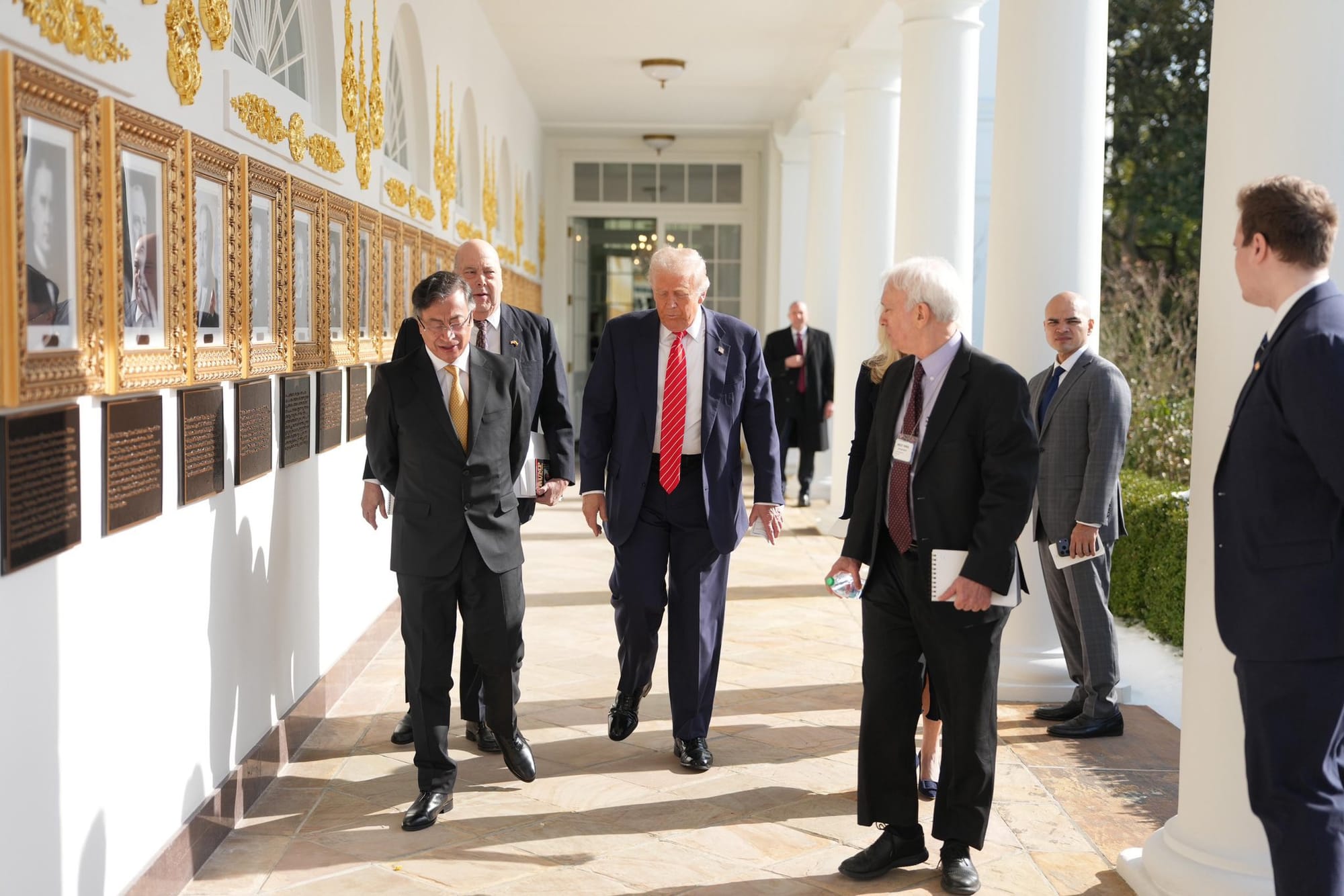
WASHINGTON, D.C. - President Gustavo Petro of Colombia was welcomed by President Trump at the White House in Washington, D.C. on Tuesday.
The visit, held behind closed doors, marks the cooling of tensions between the two partners after a year-long stand-off over regional security in Latin America and Washington’s military pressure on the Venezuelan government in Caracas.
Petro has been one of the region’s most vocal critics of the Trump administration’s deployment of U.S. military assets in the South Caribbean, which has pursued a relentless campaign targeting suspected drug vessels loaded with illicit narcotics, killing at least 100 people since strikes began in early September 2025.
Colombia’s Petro has sought to undermine Washington’s aggressive approach towards drug traffickers, stating that smugglers are “poor fishermen” trying to provide for their families, while accusing the Trump administration of carrying out an “imperialist” foreign policy agenda as part of a plan to usurp Venezuela’s natural resources in gold and oil.
In December, Petro warned the administration that U.S. strikes in the region risked destabilizing Latin America, stating: “Do not Awaken the Jaguar,” a veiled threat referencing the region’s ancestral animal, and admonishing the North Americans for violating Latin American “sovereignty.”
Since taking office in January 2025, President Trump has embarked on a scorched-earth campaign of rhetorical bullying to pressure American partners in the region to employ more aggressive tactics to counteract the criminal drug organizations operating in the region, arguing that such networks “flood drugs into the United States, killing hundreds of thousands of Americans” every year.
Latin American governments, on the other hand, including Petro’s, believe that the problem rests at the demand side of the issue, opting for a more conciliatory approach to the region’s criminal elements, which conservative hardliners in the region argue only encourages bad actors.
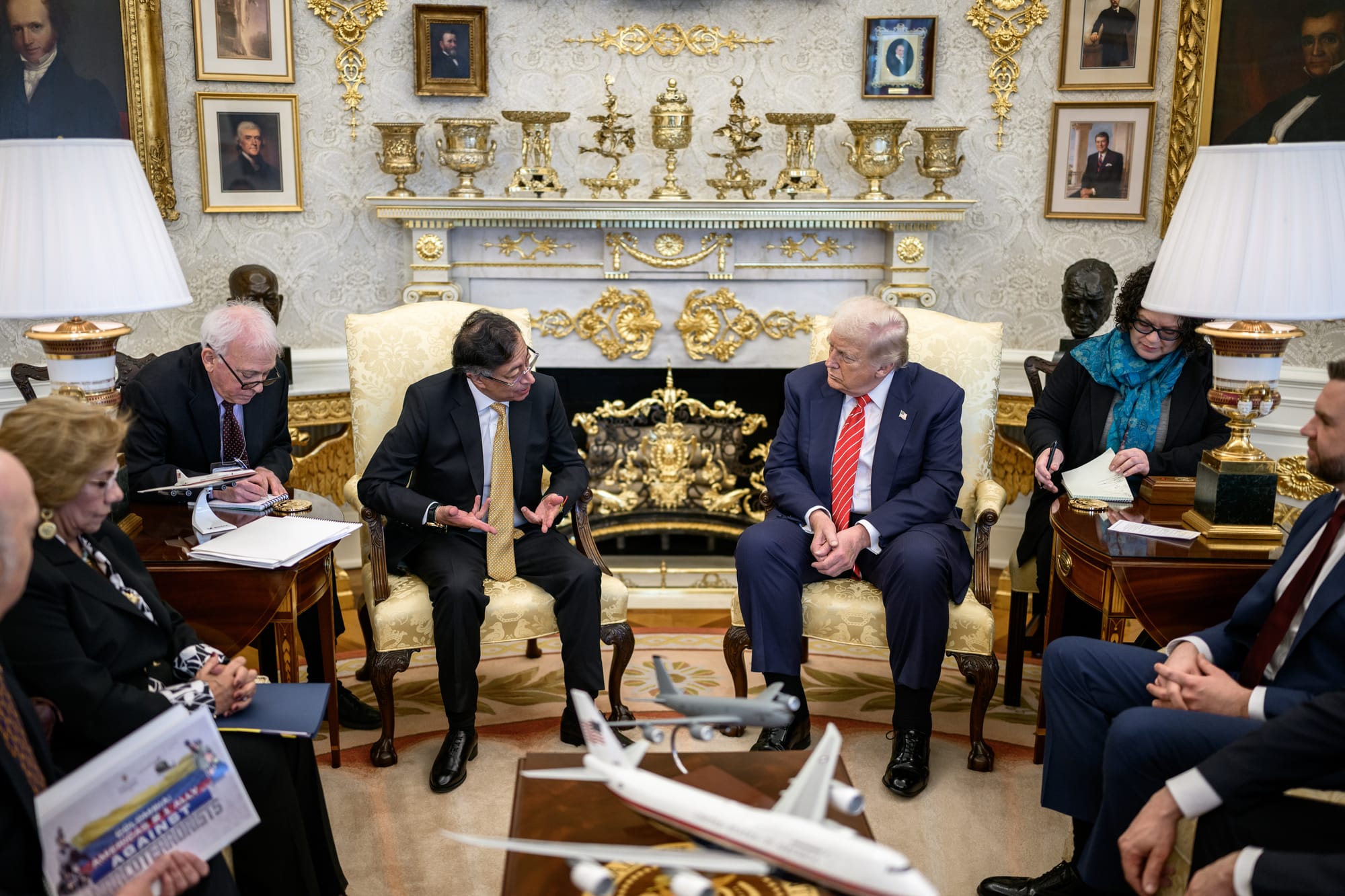
Petro wrote on X before his meeting inside the Oval Office with the U.S. president that Colombia is “determined to continue strengthening the relationship between two nations that share a common goal,” while highlighting his government’s commitment to the “fight against narco-trafficking.”
Colombia has historically been the United States’ strongest partner in Latin America, and Washington’s closest trading partner in the region, with an almost $580 million trade deficit with its North American neighbors.
Colombia, traditionally a reliable partner with a conservative government in close collaboration with the United States on regional security, is now one of the most consistent critics of U.S. foreign policy in the region.
Petro, a former Marxist guerrilla fighter of the M-19 rebel group during the 1980s, and Colombia’s first left-wing administration, has adopted a more nationalist worldview on Latin American relations with the hemisphere’s superpower, allying his government with the region’s more left-wing hardliners to undermine U.S. influence in the region.
However, with Petro’s term ending in August, the Colombian has a short time to wield his agenda on self-reliance, instead vowing to cooperate with the United States on bolstering regional security as the region’s left-wing influence continues to wane.
🚨🇨🇴🇺🇸 | ALERTA/U.S.-COLOMBIA: Colombian President Gustavo Petro was welcomed by President Trump at the White House this afternoon.
— Sociedad Media (@sociedadmedia) February 3, 2026
Petro wrote on X that the Colombian is “determined to continue strengthening the relationship between two nations that share a common goal,” and… pic.twitter.com/m8INnE3qac


