

Maria Aparecida Ferreira drives a 2019 Fiat Uno to work every morning in São Paulo’s Zona Sul. The commute is 23 kilometers each way. She fills up twice a week. In January 2026, she was paying R$6.38 ($1.00) per liter of regular gasoline. By mid-March—after Petrobras raised diesel prices, the Iran war spiked global crude, and the ICMS state tax kicked in at its new fixed rate—she was paying R$6.85. Her monthly fuel bill had risen by nearly R$150 in ten weeks.
“Everything costs more, but gasoline costs more every time,” she told a local news outlet in February, immediately following the escalation of hostilities in the Middle East ensued. “My salary doesn’t go up. The gas always does.”
Maria’s frustration reflects a structural problem that has been building for years and reached a new inflection point in 2026—a convergence of global oil prices, domestic tax policy, distributor margin inflation, and a state-owned energy company navigating the impossible space between its shareholders’ expectations and its social contract with 215 million Brazilians.
Why Prices Are Rising—The Full Picture
Brazil’s fuel price surge in 2026 is the product of at least four overlapping causes—no single one of which is fully responsible, and none of which is easily resolved.
The most immediate trigger is geopolitical. The rise in oil prices on the international market has begun to be reflected directly in Brazil. The country is partially dependent on imports of diesel, which increases its sensitivity to external shocks—accelerating the transmission of international price increases to domestic fuels.
The U.S.-Israeli strikes on Iran beginning in late February drove Brent crude to levels analysts had not anticipated until later in the decade. HSBC raised its Brent forecast for 2026 from $65 to $80 per barrel—a 23% increase— while the U.S. Energy Information Administration increased its 2026 Brent forecast to $79 from $58, a 36% upward revision. That swing in global crude directly feeds into what Brazilians are paying at the pump.
Diesel is one of the main cost components of the Brazilian economy, supporting road transport essential for one of its main sectors, agribusiness. With oil prices rising, the impact tends to spread rapidly across the entire supply chain—from freight costs to food prices, from industrial inputs to consumer goods.
The second cause is domestic tax policy. Starting January 1, 2026, a new fixed ICMS (Imposto sobre Circulação de Mercadorias e Serviços) rate—a state-level value-added tax, or VAT, on goods and services—came into effect nationwide. For gasoline, the rate increased from R$1.47 to R$1.57 per liter, a rise of 6.8%. For diesel, the rate increased from R$1.12 to R$1.17 per liter. For cooking gas, the charge rose from R$1.39 to R$1.47 per kilogram—equivalent to R$1.05 more per standard 13-kilogram cylinder.
Economist Igor Lucena framed the tax decision in blunt terms: “Oil prices have fallen—prior to the Iran war spike—the dollar has stabilized, and yet fuel prices will rise. This isn’t tax policy; it’s revenue policy.”
The states’ decision to raise the ICMS came during a period when international crude was actually declining—meaning Brazilian consumers were not being protected during the period of price relief, and are now exposed to double pressure from both higher taxes and higher global crude simultaneously.
The third cause is distributor and refinery margins. Between January and August 2025—well before the Iran oil spike—the gross margin on gasoline in Brazil rose from 15.5 percent to 20.9 percent, despite a fall in refinery prices from R$2.30 to R$1.80 per liter. Diesel margins rose from R$0.89 to R$0.91 per liter. For cooking gas, nearly half of the cylinder price corresponds to distributor profits.
In a country where government policy is supposed to moderate the impact of global price swings on ordinary consumers, the simultaneous expansion of distributor margins during a period of falling crude represents a failure of regulatory oversight that consumer groups and opposition politicians have been vocal about throughout 2025 and into 2026.
The fourth cause is Petrobras itself—or more precisely, the structural tension between Petrobras’s role as a publicly listed company and its role as Brazil’s social fuel buffer. On March 13, Petrobras raised diesel prices to R$3.65 per liter from March 14, doing so just one day after the Brazilian government announced federal tax breaks on fuels specifically designed to shield consumers from surging crude prices.
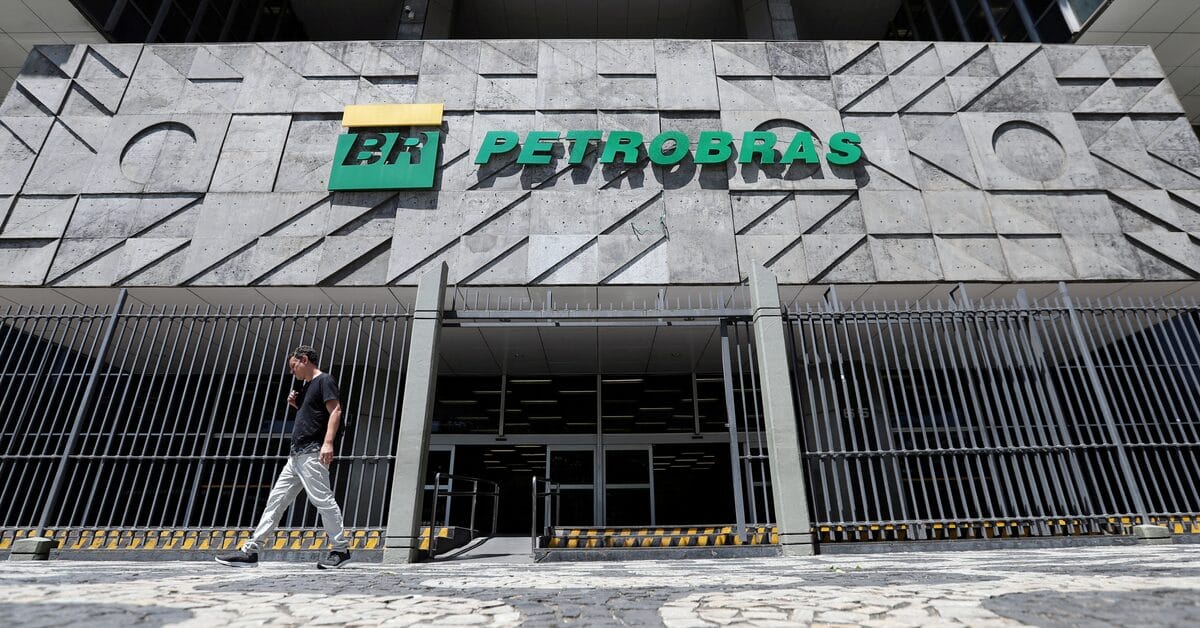
The sequence—government relief announced, Petrobras price increase enacted the next morning—illustrated the fundamental contradiction at the heart of Brazil’s energy policy: the government cannot simultaneously maximize Petrobras’s financial performance for shareholders and absorb global price shocks for consumers.
Every administration since Dilma Rousseff’s first term has been trapped by this same dilemma, and none have resolved it.
Petrobras separately raised jet fuel prices to distributors by 9.4% starting March 1—a move that will flow through to airline ticket prices and add to the inflationary pressure on an economy already grappling with the highest interest rates since 2006.
Petrobras’s Impossible Role
Academic research analyzing Petrobras’s pricing policies across different political administrations reaches a sobering conclusion: no solution satisfies all stakeholders. Keeping fuel prices below international benchmarks boosts societal satisfaction and has minimal inflation impact—but harms Petrobras’s financial health. Aligning domestic with international fuel prices increases inflation and reduces voter satisfaction, even though the company performs better financially.
The policies have consistently created societal discontent regardless of ideological direction.
Lula’s current administration came to power in 2023 partly on a promise to insulate Brazilians from the fuel price volatility that scarred the Bolsonaro years. The Iran war has placed that promise under maximum stress—arriving at the worst possible political moment, ten weeks before the campaign season for October’s presidential election effectively begins.
The Truckers’ Warning
Diesel fuel is rising, freight rates are lagging behind, and truckers are accumulating losses—with employer associations threatening to halt trucking operations and the government announcing tough measures to regulate freight in order to avoid a logistical collapse that could drive up food prices and affect the entire country.
The reference point haunting every policymaker is 2018, when a nationwide truckers’ strike paralyzed Brazil for eleven days—emptying supermarket shelves, grounding flights, and creating fuel lines stretching for miles. The current trajectory, if not reversed, risks repeating that episode in an election year, which could spell disaster for the current Lula government.
On Thursday, the Brazilian truckers’ associations threatened another nationwide strike, further mobilizing political divisions in the country amid deepening economic constraints for millions of residents.
The Government’s Response—Too Little, Too Fast
The Brazilian government announced federal tax breaks on fuels on March 12, the second week into the U.S.-Israel-Iran conflict— a measure designed to partially offset the war-driven surge in crude prices and moderate the impact on consumer budgets. The relief was real but immediately undermined by Petrobras’s same-day diesel price increase—a move that generated widespread criticism from consumer advocates, opposition politicians, and trucking associations simultaneously.
Lula’s government has also accelerated discussions about restructuring the relationship between Petrobras’s international pricing policy and domestic fuel prices—a debate that has been ongoing since the Rousseff years without producing a durable legislative solution.
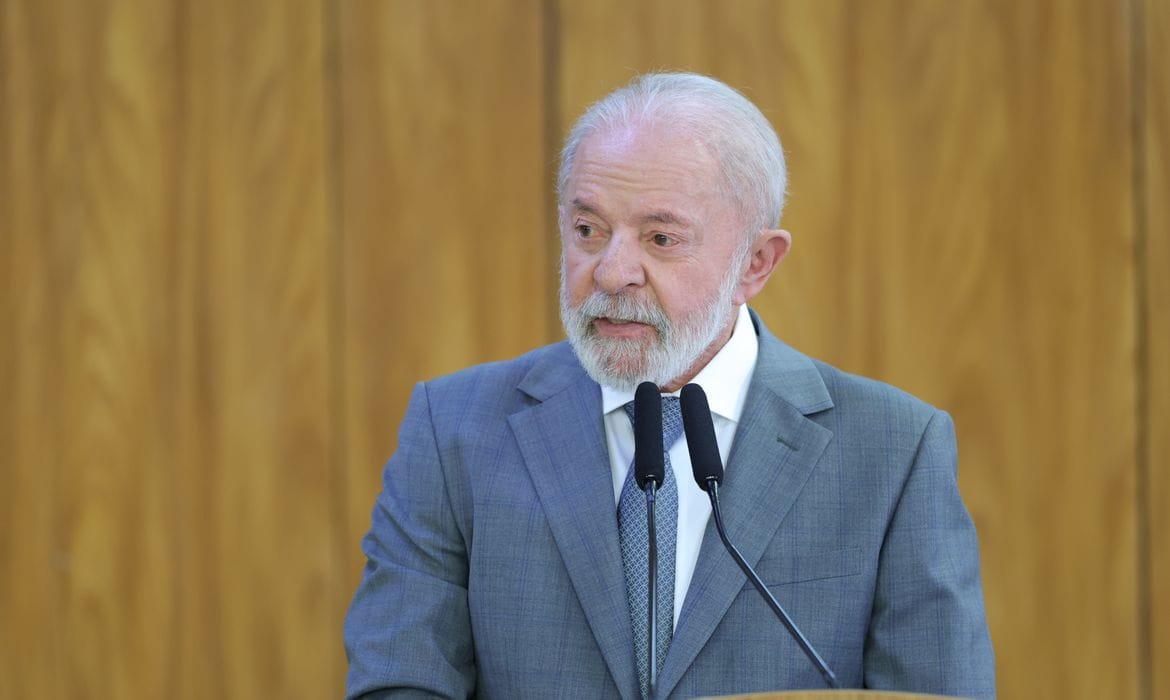
The October election has added urgency to that discussion: fuel prices are one of the most politically visible economic indicators, felt by every Brazilian who drives, takes a bus, buys food that was transported by truck, or cooks with gas.
During his announcement of emergency relief efforts, Lula criticized the ongoing Iran conflict, blaming the aggressions in the Middle East for the price of oil “spiraling out of control.” Lula, when speaking at a press conference in Brasília last week, added that the rise “is largely caused by the irresponsibility of the wars we are experiencing in the world.”
What It Means for Ordinary Brazilians
In January 2026, the national average price of regular gasoline rose from R$6.379 per liter in December 2025 to R$6.483 in January—a 1.63% increase, a modest rise, but one noticed by ordinary poor and middle-class Brazilian residents.
Hydrated ethanol showed the greatest advance at 3.46%. In Rio Grande do Norte, ethanol prices surged 12.91%. Diesel—the lifeblood of Brazilian freight—showed a more moderate increase of 0.56% in January, before the Iran war spike accelerated its trajectory through February and March.
The compounding effect matters most for the bottom half of Brazil’s income distribution. A family that relies on cooking gas—the cylinder that heats meals for tens of millions of lower-income Brazilian homes—paid R$1.05 more per cylinder from January 1. A truck driver whose fuel costs have risen 15% in twelve weeks while freight rates have barely moved has seen his monthly income effectively cut. A bus company operator in the Northeast whose diesel bill has surged is either passing the cost on to passengers or absorbing losses that will eventually force service cuts, constricting supply.
Analysts warn that the situation could worsen further if international conflicts continue to drive up oil prices. Small adjustments in the global market, combined with the increase in ICMS and inflated distributor margins, have the potential to further pressure the price of gasoline and other fuels throughout 2026.
With Brent crude now forecast at $79 to $80 per barrel through the end of the year—nearly $20 above pre-war projections—those warnings are not abstract, and for Maria Aparecida Ferreira, filling up her Fiat Uno in Zona Sul, the geopolitics of Iran and the shareholder returns of Petrobras are distant abstractions. The number on the pump is not.


