

MIAMI — It did not announce itself as a turning point. There was no single headline, no summit, no declaration. But on Monday, March 30, 2026, the pieces of the Trump administration’s Latin America strategy came into view all at once—a Russian tanker arriving in Cuba, a U.S. embassy reopened in Caracas, nearly a thousand Venezuelan political prisoners released in recent days, and Secretary of State Marco Rubio sat down to give the world an update on the latest developments in the Western hemisphere—from Washington’s point-of-view.
Taken together, they form a picture of a hemisphere being reorganized at a speed that is difficult to track in real time—but that Miami's Cuban and Venezuelan communities are watching with the intensity of people whose families’ lives depend on what happens next in the region.
The Russian Tanker: Why Did Trump Let it Through?
The Anatoly Kolodkin, a Russian government-owned vessel carrying approximately 730,000 barrels of crude oil, docked at the Cuban port of Matanzas on Monday after President Trump told reporters aboard Air Force One on Sunday evening that he had “no problem” with the delivery.
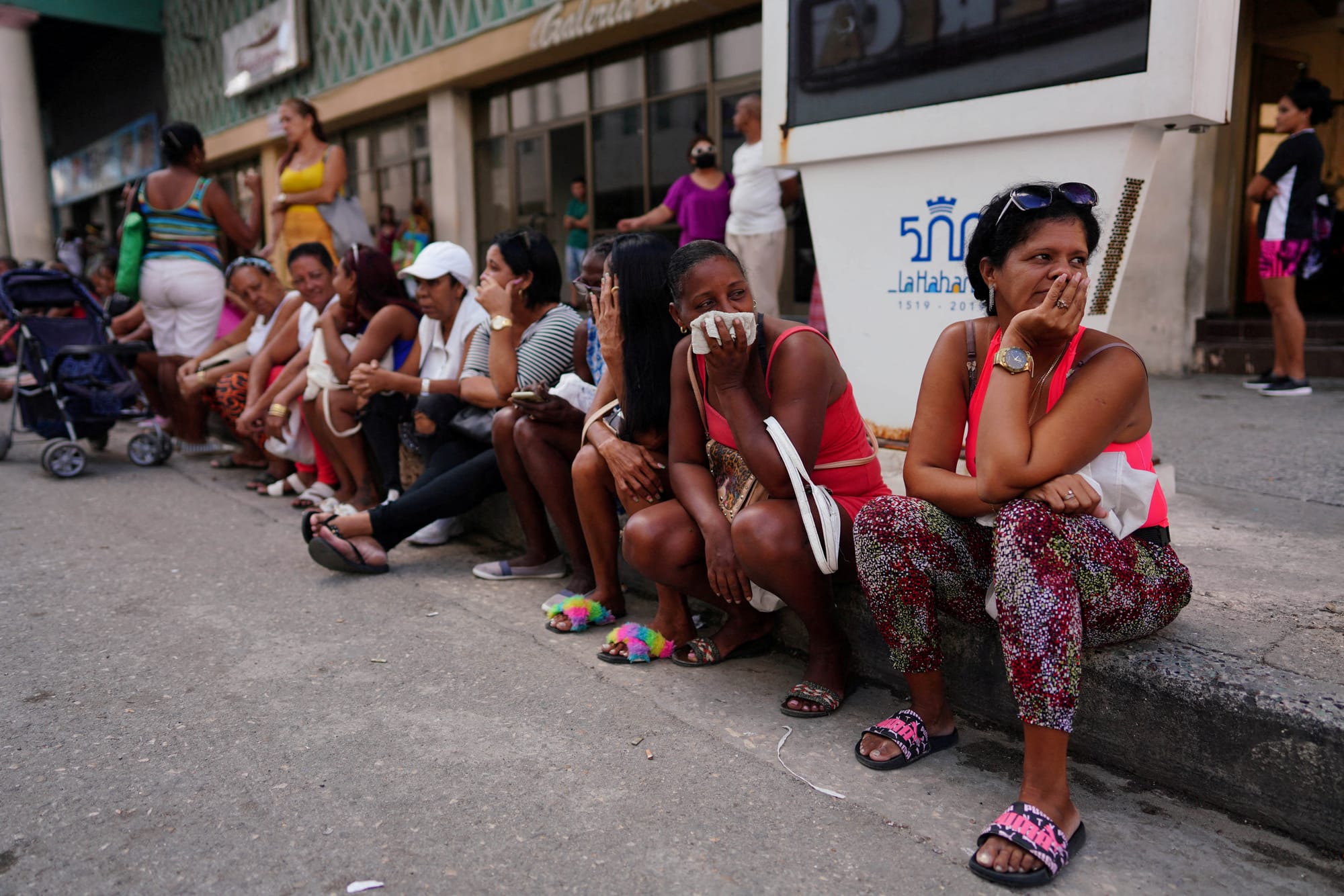
The tanker’s cargo, once refined into diesel, is estimated to be enough to power Cuba’s aging thermoelectric grid for roughly seven to ten days—a reprieve for an island that has endured three nationwide blackouts in March alone and has not received a significant oil shipment since January.
The decision to allow the tanker was notable for what it was not: a policy change. The U.S. oil blockade on Cuba technically remains in place. The Trump administration’s stated goal—pressuring Havana toward political and economic reforms, and ultimately regime change—has not shifted. What changed was the enforcement decision on one specific shipment, in one specific moment, with Trump stating that Cubans “have to survive.”
That humanitarian framing was the carve-out. Whether it holds, whether more Russian tankers follow, and whether Washington uses the opening as diplomatic leverage in its ongoing back-channel negotiations with Havana are questions that remain open as the week begins.
During a Monday press briefing, White House Press Secretary Karoline Leavitt stated that the passage of foreign crude oil destined for Cuba will be assessed on a “case-by-case basis” going forward.
For Miami’s Cuban exile community, the arrival of Russian oil in Cuba is a complicated signal. It provides temporary relief to family members living in darkness on the island. But it also underscores the degree to which Washington’s pressure campaign—designed to force the end of the communist government—has produced real suffering for ordinary Cubans before producing any substantive political result.
The U.S. Embassy in Caracas Reopens—After Seven Years
In a development that would have been unimaginable fourteen months ago, the United States Embassy in Caracas officially resumed full operations Monday. The State Department described the reopening as “a key milestone in implementing the President’s three-phase plan for Venezuela,” adding that it would strengthen Washington’s ability to engage directly with Venezuela’s interim government, civil society, and the private sector.
The embassy had been closed since 2019, when the U.S. severed diplomatic relations with Maduro’s government and threw its support behind opposition leader Juan Guaidó as Venezuela’s legitimate president.
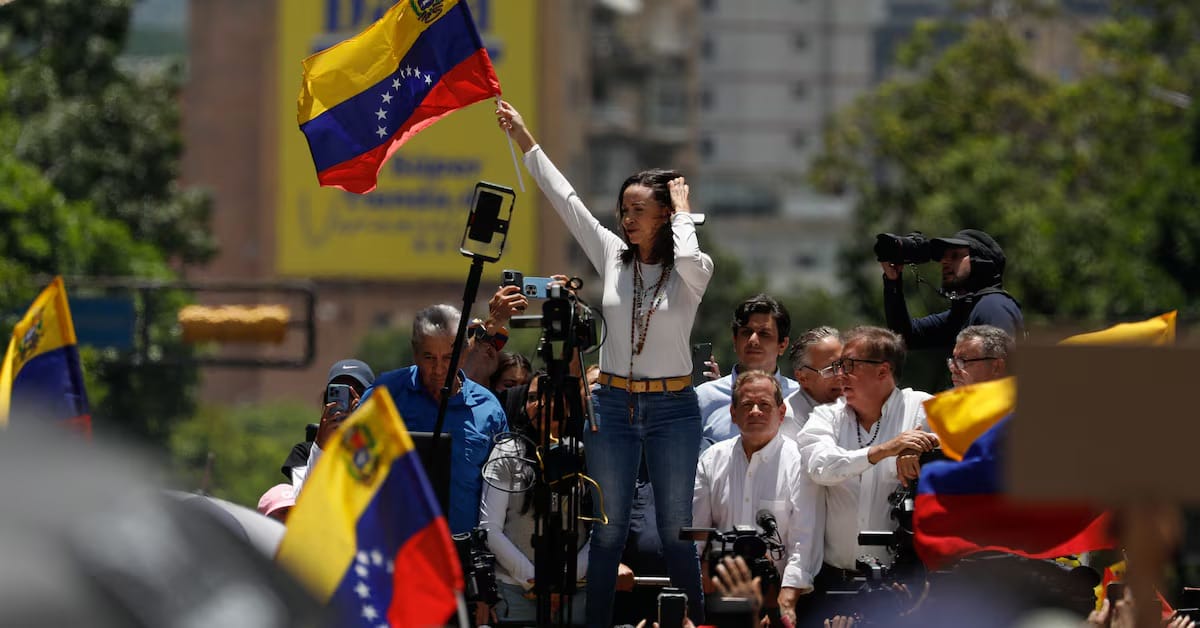
That recognition went nowhere. What followed were years of sanctions, an oil embargo, and deepening hostilities between the two American governments. Then came January 3.
Ambassador Laura Dogu, a career diplomat who previously served in Nicaragua and Honduras, was deployed to Caracas in January to lead the restoration of the chancery building and resume diplomatic engagement on the ground. Consular operations—visas, passport services, American citizen services—will resume once the building is sufficiently restored.
For now, the embassy’s primary function is direct diplomatic contact with the Rodríguez government, which Washington has now formally recognized after years of dealing with Venezuela through the fiction that Maduro’s administration did not exist.
The reopening represents the completion of the first phase of Rubio’s stated three-part plan: stabilization. The country did not descend into civil war after Maduro’s capture. There was no mass migration event. Oil is flowing. An embassy is open. By Washington’s own metrics, the plan is proceeding.
Nearly 1,000 Political Prisoners Released—But Hundreds Remain
Since January 3, the UN High Commissioner for Human Rights confirmed this month that approximately 950 people who were arbitrarily detained in Venezuela have been released—including human rights defenders, opposition politicians, journalists, and trade union leaders. Notable names among those freed include Javier Tarrazona, Eduardo Torres, Kennedy Tejeda, Carlos Julio Rojas, and Spanish-Venezuelan attorney Rocío San Miguel, who had been held since February 2024.
The releases have taken place in waves, driven by a combination of U.S. pressure, Venezuela’s newly adopted amnesty law—passed by the National Assembly in February and signed into effect—and quiet negotiations between Washington and acting President Delcy Rodríguez. In March alone, 17 prisoners walked out of the Zona 7 detention center in Caracas on March 7, greeted by cheering family members.
The picture is not entirely positive. Human rights organization Foro Penal reports that approximately 526 political prisoners remain behind bars as of early March. The UN Human Rights Council’s Fact-Finding Mission on Venezuela noted that 87 new politically motivated detentions have occurred since January 3—meaning that even as the Rodríguez government releases prisoners on one side, its security apparatus continues to arrest dissidents on the other.
Those released are not fully free: they face ongoing legal charges and are required to appear before a judge every 30 days. Speaking publicly remains prohibited for many.
For the families of those still detained, the releases are welcome but incomplete. The central demand of the Venezuelan opposition—the immediate and unconditional release of all political prisoners—has not been met. UN High Commissioner Volker Türk put it plainly: those who were freed “should never have been detained in the first place.”
Rubio and Machado: The Opposition’s Uncertain Future
Venezuelan Nobel Peace Prize laureate and opposition leader María Corina Machado has remained a central, if complicated, figure in Washington’s Venezuela calculations. In January, Machado traveled to Washington and met with both Trump and Rubio in separate sessions. She presented Trump with her Nobel Peace Prize medal—a gesture the Nobel Committee swiftly clarified could not transfer the laureate title—and emerged from the White House with a warm reception but no firm commitment of U.S. support for her as Venezuela’s next leader.
Rubio has described Machado as “fantastic” and has spoken highly of her in multiple settings. But the administration’s position has been consistent: in the short term, Delcy Rodríguez is the practical partner Washington needs to stabilize oil production, manage the security apparatus, and prevent collapse. A Caracol Radio report confirmed that Machado held a second confidential meeting at the White House in early March, attended by Rubio and White House Chief of Staff Susie Wiles, where she presented proposals for a political transition roadmap.
Reports indicate she has been invited back to Washington within weeks for continued talks. Unconfirmed reports also suggest that Machado is scheduled for a meeting with Rubio at the State Department on Tuesday morning.
The tension at the center of these meetings is clear. Machado’s goal is to accelerate the path to free elections and ensure the opposition, not Chavismo, shapes Venezuela’s next chapter. Washington’s goal, at least in the initial phase, is stability and oil revenue—and Rodríguez, however imperfect, is delivering both.
Whether those two agendas eventually converge or permanently diverge is the defining question of Venezuela’s political transition going forward.
Rubio’s Al Jazeera Interview: What He Said About Venezuela and Cuba
On Monday, Secretary of State Rubio sat for an extended interview with Al Jazeera’s Hashem Ahelbarra—primarily focused on the U.S.-Israeli war against Iran, but covering Venezuela and Cuba in terms that were as revealing as anything he has said publicly since January.
On Venezuela, Rubio said the situation was moving “very well.” He described the oil arrangement in direct terms: for the first time in decades, he said, Venezuela is selling its oil at full market price and “the money is coming back to Venezuela and being spent for the benefit of the Venezuelan people”—covering medical equipment, teacher salaries, police officers, civil servants, and sanitation workers.
Rubio described three phases for Venezuela: stabilization, recovery, and then “a full transition, because in order for Venezuela to fulfill the economic potential it has to have a stable democratic government.” He credited the interim authorities, noting that the U.S. Embassy had reopened, and said Washington is “in dialogue with them every single day.”
On Cuba, Rubio was blunt and offered a framing that directly contradicted international assessments of the island’s crisis.
“These blackouts that are occurring that I see people reporting have nothing to do with us,” he told Al Jazeera. “They were having blackouts last year. They’re having blackouts because they have equipment from the 1950s in their grid that they’ve never maintained and never upgraded because they’re incompetent.”
He pushed back against the characterization of U.S. actions as punitive, stating that Washington has “done nothing punitive against the Cuban regime.” He argued that the only thing that changed for Havana is that it is no longer receiving subsidized Venezuelan oil. The United Nations Office for the Coordination of Humanitarian Affairs has documented three nationwide grid collapses in Cuba in March alone, attributing the crisis in significant part to three consecutive months without diesel, fuel oil, gasoline, jet fuel, or liquefied petroleum gas, and has released a $94 million emergency plan to keep critical services operational.
Rubio also added, in a remark directed at the broader regional trajectory: “And Cuba’s next, by the way—but pretend I didn’t say that, please.”
He did not elaborate further. He did not need to.
What This Means for Miami
What happened on Monday is not abstract global politics for South Florida. For Miami’s Venezuelan community—one of the largest concentrations of Venezuelan diaspora in the United States, with over half a million residents of Venezuelan origin in the greater Miami area—the reopening of the U.S. Embassy in Caracas is a concrete development that could eventually restore consular services, ease travel documentation, and signal that conditions inside Venezuela are inching, however slowly, toward something different.
For Miami’s Cuban community, on the other hand, the tanker’s arrival is a one-week reprieve for family members living in darkness—not a resolution, not a policy shift, and not the beginning of the end of the pressure campaign. Rubio’s comments that Cuba is “next” and Trump’s repeated statements about “taking” the island suggest that Washington’s attention will turn more fully to Havana once its operations in the Middle East reach their stated objectives.
The hemisphere that Miami sits at the center of is being reorganized. Whether that reorganization produces the democratic transitions Washington says it seeks, or simply replaces one form of authoritarian arrangement with another version of U.S. strategic control, is a question that will be answered not in press interviews or tanker arrivals—but in whether Venezuela holds free elections, and whether Cuba’s lights stay on, and a more representative government emerges from the darkness.
Events in South America and the Caribbean—and their direct consequences for Miami’s Cuban and Venezuelan communities—are at the core of Sociedad Media’s editorial mission. We will continue tracking Venezuela’s political transition, the Cuba blockade, and Washington’s evolving strategy in the hemisphere as these stories develop. Write to us with questions, tips, or general inquiries at info@sociedadmedia.com


