

MIAMI — Eighty-six days after U.S. forces captured Nicolás Maduro in Caracas, the Trump administration has taken its most significant step yet toward integrating Venezuela’s resource economy into the United States’ sphere—opening the country’s gold and mining sector to American investment for the first time in years.
On March 27, the U.S. Treasury Department’s Office of Foreign Assets Control issued a new general license authorizing U.S. companies to negotiate and sign contracts related to new investments in Venezuela’s mining sector, including gold.
The move follows a series of energy-sector licenses issued since late January and marks the first time Washington has extended sanctions relief beyond oil and gas into Venezuela's broader resource economy. The message embedded in the license’s restrictions is as important as the license itself. Transactions involving entities linked to Russia, Iran, North Korea, Cuba, or China are explicitly prohibited. Washington is not opening Venezuela’s resources to the world. It is opening them to American companies—and closing them to its adversaries.
What the New License Authorizes
The new general license authorizes transactions with Minerven, Venezuela’s state-owned gold mining company, and any entity in which Minerven owns a 50% or greater interest. Permitted activities include the purchase, transportation, and resale of Venezuelan gold, as well as mining operations, mineral processing and refining, and the creation of joint ventures.
The license coincided with an agreement between Minerven and commodity trading giant Trafigura for the sale of up to 1,000 kilograms of gold doré bars to be shipped to U.S. refineries—the first concrete commercial transaction under the new framework.
Beyond gold, the license also extends to other strategic minerals present in Venezuela’s territory, including coltan and bauxite—materials critical to the production of electronics, computers, and mobile phones. Venezuela’s rare earth and critical mineral reserves have been a stated interest of the Trump administration since before Maduro’s capture, with Trump publicly expressing ambitions to access them as part of what he has described as a comprehensive resource partnership with Caracas.
The Pattern: A Phased Economic Integration
The mining license is not an isolated decision. It is the latest step in a deliberate, phased process of economic integration between Washington and Caracas that began the day Maduro was captured.
On January 29, acting President Delcy Rodríguez signed into law a reform opening Venezuela’s oil sector to privatization—reversing a core principle of the socialist movement that had governed the country for more than two decades. The same day, the Trump administration authorized limited Venezuelan oil transactions.
On February 13, two additional licenses were issued, allowing international companies to operate oil and gas projects in Venezuela and negotiate contracts. The U.S. energy secretary visited Venezuela in February and reported that oil sales had hit $1 billion since January, with projections of another $5 billion within months.
On March 9, the Venezuelan National Assembly approved in its first discussion a Bill of Organic Mining Law intended to repeal and replace the 1999 Mining Law and introduce reforms to attract national and international investment. Each step has followed the same pattern: Venezuela passes enabling legislation, Washington issues a corresponding sanctions license. The sequencing is not coincidental. It reflects what Trump has openly described as a tutelage relationship—the United States directing Venezuela’s economic opening in exchange for access to its resources.
The Arco Minero: Opportunity and Obstacle
The mining sector that U.S. companies are now authorized to enter is not a straightforward investment destination. At its center is the Arco Minero del Orinoco—a 112,000 square kilometer zone in southern Venezuela containing some of the most significant mineral deposits in the Western Hemisphere.
Venezuela holds important reserves of gold, diamonds, bauxite, coltan, and rare earth elements. The mining activity is concentrated primarily in the Arco Minero, a zone where armed groups, guerrillas, and organized criminal bands continue to maintain control—a reality that the new legal framework attempts to address through what it describes as a new institutional structure for mining governance.
The Arco Minero has been one of the most environmentally and humanitarianly contested regions in South America for years. Indigenous communities in the zone have repeatedly denounced forced displacement, environmental destruction, and violence tied to illegal mining operations.
Human rights organizations have documented extensive abuses in the area under both state-controlled and irregular mining networks.
For U.S. companies evaluating the new license, the legal authorization from OFAC and the commercial opportunity it represents will have to be weighed against the operational reality on the ground—a region where the rule of law remains contested and where the infrastructure required for large-scale legitimate mining investment is largely absent.
The Geopolitical Frame
The new license explicitly prohibits transactions with persons or entities linked to Russia, Iran, North Korea, Cuba, and China—a carve-out that transforms the sanctions easing from an economic measure into a geopolitical one. For years, Venezuela’s resource economy was integrated into a network of relationships with precisely those countries, countries that have a history of being adversarial towards U.S. interests.
China was Venezuela’s largest creditor and oil customer. Russia provided technical assistance to PDVSA. Cuba received oil under preferential terms in exchange for doctors and military advisers. Iran helped Venezuela evade international sanctions through shadow fleet tankers. The new licensing framework does not simply open Venezuela’s mines to American companies, it attempts to surgically extract Venezuela’s resources from those existing networks and redirect them toward U.S.-aligned actors. while maintaining sanctions that prevent Venezuela’s traditional partners from benefiting from the same opening.
The Trump administration and Delcy Rodríguez’s government formally restored diplomatic relations in early March—the first resumption of full bilateral ties since relations were severed in 2019. Earlier this week, the Trump administration also eased sanctions to facilitate the imminent reopening of Venezuela’s embassy in the United States.
The embassy reopening, the mining license, the oil sector integration, and the diplomatic restoration are all moving in the same direction. Venezuela is being brought back into Washington’s orbit—not through democracy promotion or human rights conditionality, but through resource extraction and economic leverage.
What it Means for Miami’s Venezuelan Community
For Miami—home to one of the largest Venezuelan diaspora communities in the world—the developments in Caracas carry a particular weight that extends beyond geopolitics.
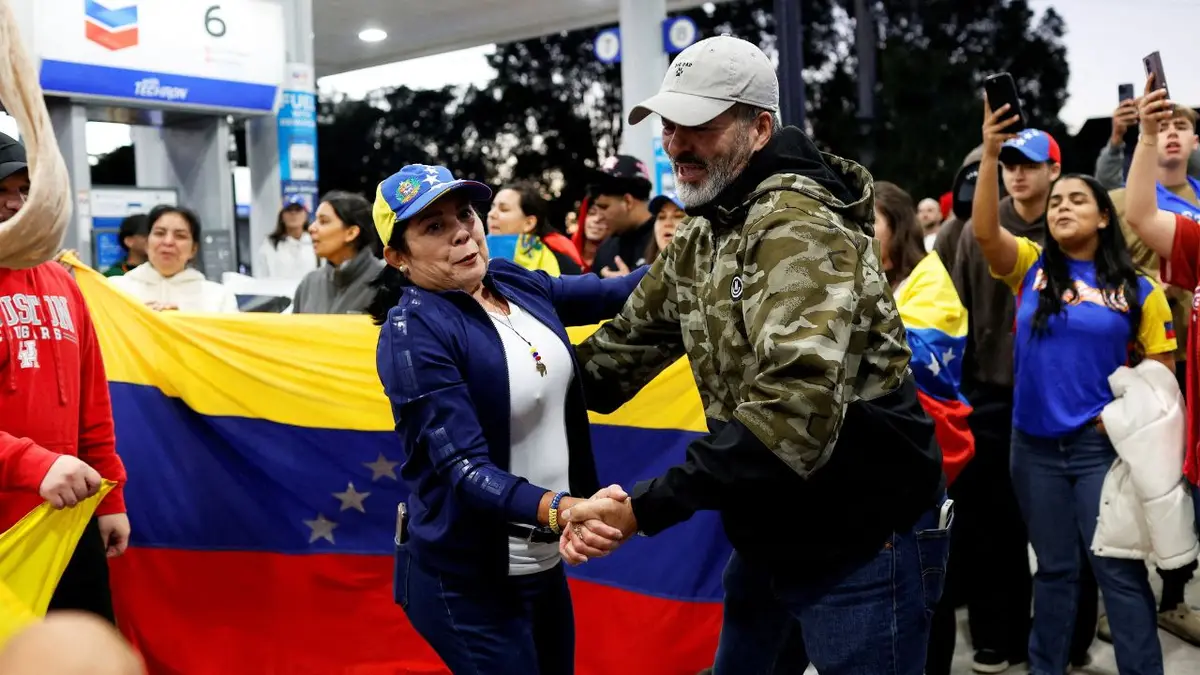
The Venezuelan professionals, engineers, and business people who rebuilt their lives in South Florida over the past decade are watching a country they were forced to leave being reopened for investment—under conditions that many find both hopeful and deeply uncomfortable. The resources are real. The economic opportunity is real. The government overseeing the transition is composed almost entirely of figures who served Maduro loyally until the day he was captured.
The question that Miami’s Venezuelan community is asking—and that Washington has not yet answered—is whether the opening of Venezuela's oil fields and gold mines to U.S. companies constitutes a genuine transition toward democracy, or simply a change in who controls the extraction.
Venezuela is Coming Back to Washington. Here is What the Embassy Reopening Actually Means
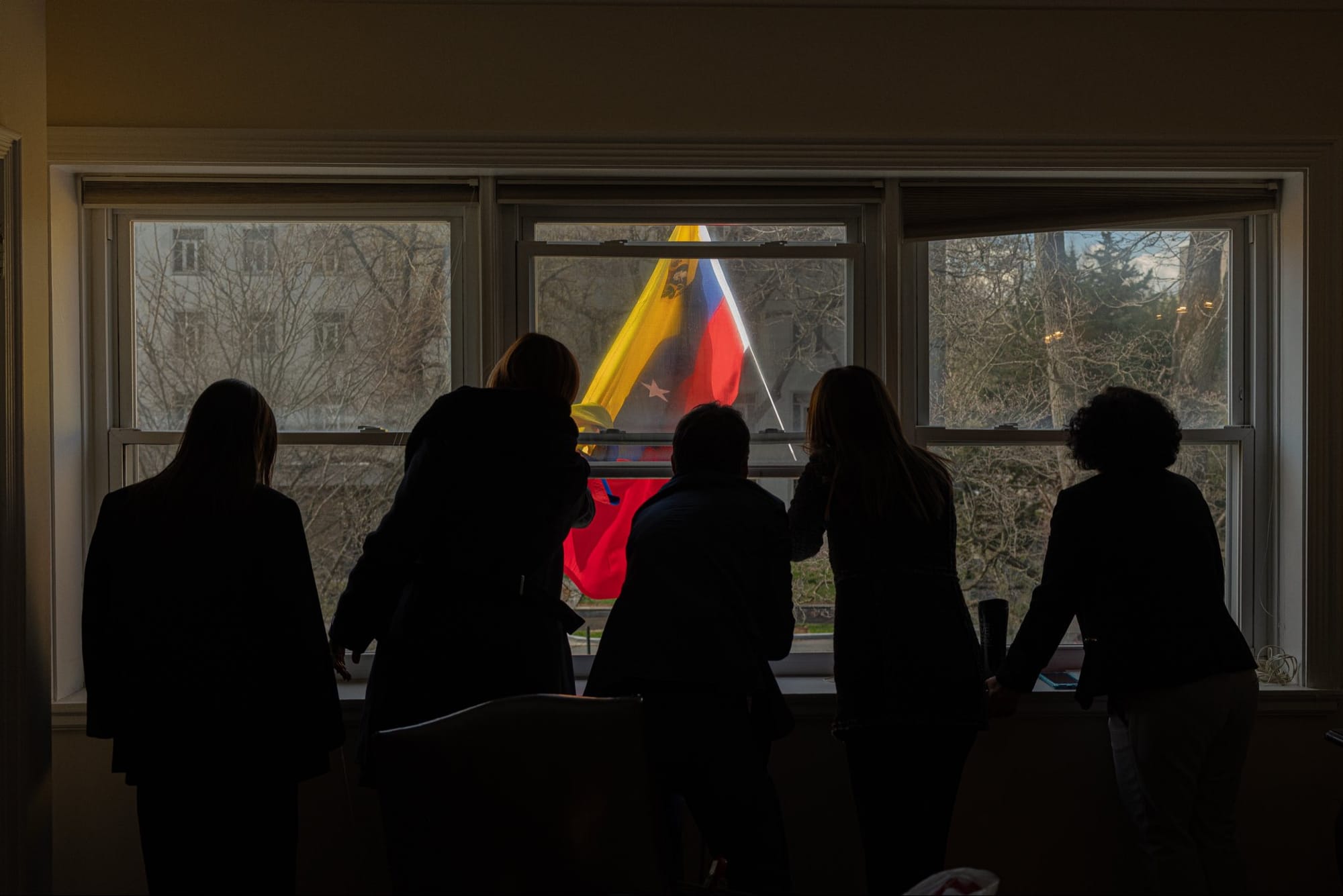
MIAMI — On March 14, 2026, exactly seven years after the American flag was lowered over the U.S. Embassy in Caracas, Chargé d'Affaires Laura Dogu raised it again. “A new era for US-Venezuela relations has begun. Onward with Venezuela,” she wrote on the same morning.
Ten days later, Washington took the reciprocal step—clearing the legal and financial obstacles that had prevented Venezuela from operating its own diplomatic facilities on American soil.
On March 24, the U.S. Treasury Department’s Office of Foreign Assets Control issued General License 53, authorizing transactions necessary for Venezuelan government missions to resume operations in the United States. The license does not lift the broader sanctions regime that has governed U.S.-Venezuela relations for nearly a decade. But it removes the specific financial barriers that had made it practically impossible for Venezuelan diplomatic facilities to function—and it signals, unambiguously, that both governments are moving toward full normalization.
What General License 53 Actually Permits
Under the authorization, transactions otherwise prohibited under U.S. sanctions are allowed if they are tied to goods and services necessary for the functioning of Venezuela’s official missions or its permanent missions to international organizations in the United States.
The measure permits payments for official use or for the personal use of mission staff and their immediate family members, provided they are not intended for resale. It excludes transactions involving real estate and maintains all other legal restrictions.
The most consequential provision is financial. The authorization allows U.S. financial institutions to open and maintain bank accounts for Venezuelan diplomatic missions, extend credit, and process funds transfers on their behalf—steps seen as essential for reopening embassies, consulates, and related offices that have been largely dormant under sanctions.
Without bank accounts at U.S. financial institutions, a diplomatic mission cannot pay its staff, its utility bills, or its lease. General License 53 solves that problem. It is not a grand gesture of normalization. It is a plumbing fix—but a plumbing fix that makes everything else possible. Analysts say the move does not lift broader sanctions but is designed to remove practical barriers that had prevented Venezuelan diplomatic facilities from operating, signaling a willingness by Washington to restore a functional diplomatic presence as talks advance.
The Diplomatic Timeline: From Capture to Rapprochement
The speed of this normalization is historically unusual. Eighty-six days elapsed between Maduro’s capture and the issuance of General License 53. In that window, the two countries moved from open hostility to a functioning diplomatic framework at a pace that reflects the transactional nature of the Trump administration's approach to Venezuela.
Venezuela’s interim president Delcy Rodríguez announced that her government would send a diplomatic delegation to Washington to launch a new phase of political and diplomatic dialogue, as the Trump administration moved to facilitate the reopening of Venezuelan diplomatic facilities on U.S. soil.
The sequence of official OFAC licenses tells the story of the normalization in precise legal terms. Since January, OFAC has issued a cascade of Venezuela-related general licenses—covering oil and gas operations, PDVSA transactions, port and airport operations, diluent sales, minerals including gold, and now diplomatic missions. General License 53, covering official Venezuelan missions in the United States, was issued March 24. General Licenses 54 and 55, covering minerals operations and investment contracts in Venezuela’s minerals sector, followed on March 27.
Each license represents one more layer of the sanctions architecture being selectively dismantled—not eliminated, but repurposed. The message embedded in the sequencing is that Venezuela is being brought back into the U.S. orbit one sector at a time, with each concession from Caracas matched by a corresponding license from Washington.
The U.S. Embassy in Caracas: Already Open
The Venezuelan embassy in Washington is the second half of a diplomatic restoration that began with the American side. The Trump administration reopened the U.S. Embassy in Caracas in mid-March for the first time since its closure in 2019. Venezuela’s interim government under Rodríguez had agreed to several of Trump’s demands, including granting the U.S. access to Venezuela’s vast oil reserves and other natural resources.
The reopening of both missions within weeks of each other represents the formal restoration of bilateral relations that had been severed since the height of the Maduro crisis—when the U.S. recognized Juan Guaidó as Venezuela’s legitimate president and Maduro expelled American diplomats from Caracas.
By February, the U.S. and Venezuela had already restarted diplomatic relations, with the Embassy of the United States in Caracas reopened for the first time since its closure in 2019. The Venezuelan side of that restoration—the reopening of Caracas’ mission in Washington—is now being enabled through GL 53.
What it Means for Venezuelans in the United States
For the estimated 700,000 to one million Venezuelans living in the United States—with the largest concentration in South Florida—the embassy reopening carries immediate and practical implications that go well beyond geopolitics.
The reestablishment of consular services could have immediate effects for millions of Venezuelans living abroad, as well as for Americans with ties to the country, particularly in areas such as visas, passports, and other documentation.
Venezuelan passport services have been effectively unavailable through official channels in the United States for years. Venezuelans abroad have had to travel to third countries—Colombia, Panama, Spain—or pay significant sums through unofficial channels to renew documentation. A functioning Venezuelan consular presence in Washington, and potentially in Miami and other cities with large Venezuelan populations, would address one of the most pressing practical problems facing the diaspora.
The question for Miami’s Venezuelan community—which has overwhelmingly opposed the Maduro government and supported the opposition—is more complicated than passport renewal. The government now occupying Venezuela’s embassy in Washington is led by Delcy Rodríguez, who served as Maduro’s vice president and foreign minister throughout the years of repression that drove so many Venezuelans to Miami in the first place. The building may be the same. The flag may be the same. The government sending diplomats to staff it is composed of the same people many Miami Venezuelans fled.
The Broader Picture: Normalization With Conditions
The Trump administration’s approach to Venezuela normalization is consistent with its approach to every other aspect of the relationship—transactional, resource-focused, and conditioned on compliance rather than democratic reform.
Rodríguez told business leaders that her government is seeking to move beyond the current system of limited U.S. engagement and toward a broader framework of economic cooperation.
The Trump administration outlined a three-phase transition plan centered on stabilization, economic recovery, and eventual democratic elections—with Rodríguez at the helm of the interim government managing each phase.
Whether that three-phase plan leads to genuine democratic transition or simply consolidates a new form of managed authoritarianism under American oversight is the defining question of Venezuelan politics for the rest of 2026. The embassy reopening resolves nothing about Venezuela’s political future. It simply confirms that Washington and Caracas are talking again—officially, through formal diplomatic channels, with licensed bank accounts and authorized payments—for the first time in seven years.
For Miami’s Venezuelan community, that is both a milestone and a warning.
Venezuela’s political transformation and its impact on South Florida’s Venezuelan community is central to Sociedad Media’s coverage. Have a tip or a story? Write to us at info@sociedadmedia.com


