

MIAMI — For nearly three months, Cuba has been living in the dark. Repeated island-wide blackouts, shuttered hospitals running on backup generators, families cooking over wood fires because there is no gas—the humanitarian toll of Washington’s oil blockade and almost 70 years of a failed socialist experiment has been visible and severe. Then, on Sunday evening, more developments emerged from the pariah island.
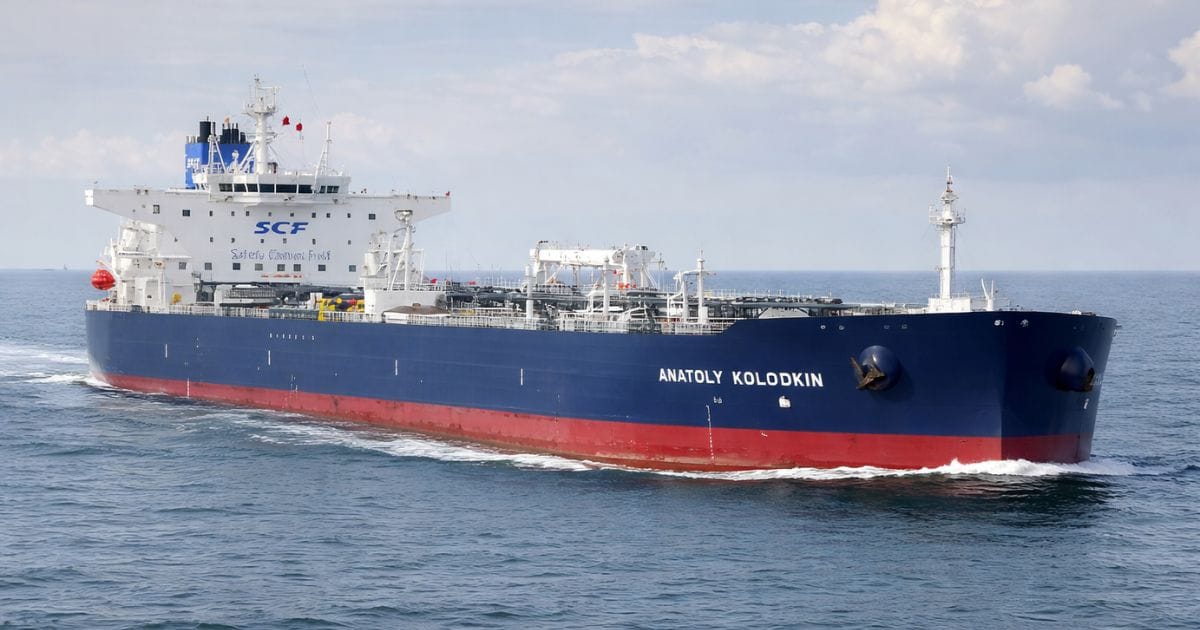
Speaking to reporters aboard Air Force One on March 29, President Donald Trump said he has “no problem” with a Russian oil tanker currently positioned off Cuba’s eastern coast delivering its cargo to the island. The tanker, the Anatoly Kolodkin, is carrying approximately 730,000 barrels of crude—enough, experts estimate, to power Cuba’s aging thermoelectric grid for roughly seven to ten days.
It was expected to dock at the port city of Matanzas by Tuesday.
“We have a tanker out there. We don’t mind having somebody get a boatload because they need… they have to survive,” Trump told reporters. When asked whether the ship’s Russian origin concerned him, he was direct: “If a country wants to send some oil into Cuba right now, I have no problem whether it’s Russia or not.”
The remarks marked a notable, if narrow, pivot for an administration that has pursued one of the most aggressive pressure campaigns against Cuba in modern history.
How Cuba Got Here: The Blockade in Context
Understanding Sunday’s announcement requires rewinding to January 3, 2026, the day U.S. forces captured Venezuelan President Nicolás Maduro in a dramatic nighttime raid in Caracas. That single event set off a chain reaction whose most devastating consequences landed not in Venezuela, but 90 miles from Florida’s coast.
Cuba had long depended on Venezuela for roughly half of its daily oil supply—around 35,000 barrels. When the U.S. intervention effectively severed that pipeline, the island was left scrambling. An executive order signed on January 29 formalized the blockade, threatening tariffs on any country that exported oil to Cuba. Mexico’s Pemex, Russia, and others pulled back. No significant oil shipments reached the island.
The consequences escalated rapidly. Cuba’s national power grid, already in chronic disrepair, collapsed entirely on March 16, plunging all 11 million residents into darkness—the third major island-wide blackout in four months. Surgeries were postponed. Dialysis patients lost access to care. Garbage piled up on Havana’s cobblestoned streets. Protests, rare in Cuba, erupted across multiple cities, and demonstrators destroyed a Communist Party office in Morón on March 14.
Trump, for his part, had shown no signs of softening—until Sunday. Just days before his Air Force One remarks, he told attendees at a Miami investment forum that “Cuba is next,” referencing the series of geopolitical interventions his administration had undertaken this year.
Secretary of State Marco Rubio, who has been leading back-channel negotiations with Havana, stated publicly that the Cuban government needs to change, though not necessarily all at once.
The Tanker’s Story: Russia’s Calculated Defiance
The Anatoly Kolodkin’s voyage had been closely watched for days before Trump’s remarks. The Russian government-owned tanker crossed the Atlantic with a warship escort through the English Channel, tracked by the Royal Navy for 48 hours before the escort turned back. Its official broadcast listed its destination as “Atlantis, USA”—a detail political analysts read as deliberate provocation from Moscow.
A second vessel, the Hong Kong-flagged Sea Horse, was also tracked heading toward Cuba carrying around 190,000 barrels of Russian gas-oil. Maritime intelligence firm Windward flagged the Sea Horse for engaging in deceptive shipping practices, including disabling its location transponders—a common indicator of sanctions circumvention.
As recently as March 20, a U.S. official told CNBC that Cuba was prohibited from accepting Russian oil under the existing blockade framework. Sunday’s shift came just days later, apparently driven by behind-the-scenes diplomatic movement. Bloomberg reported that Cuban officials had quietly signaled cooperation with Washington, including allowing fuel deliveries to the reopened U.S. Embassy in Havana despite Cuba’s public stance against the blockade.
Florida on Alert: DeSantis Deploys Forces Ahead of Potential Exodus
While diplomatic chess was being played at the federal level, Florida was preparing for a very different scenario—one measured not in barrels of oil but in boats and people.
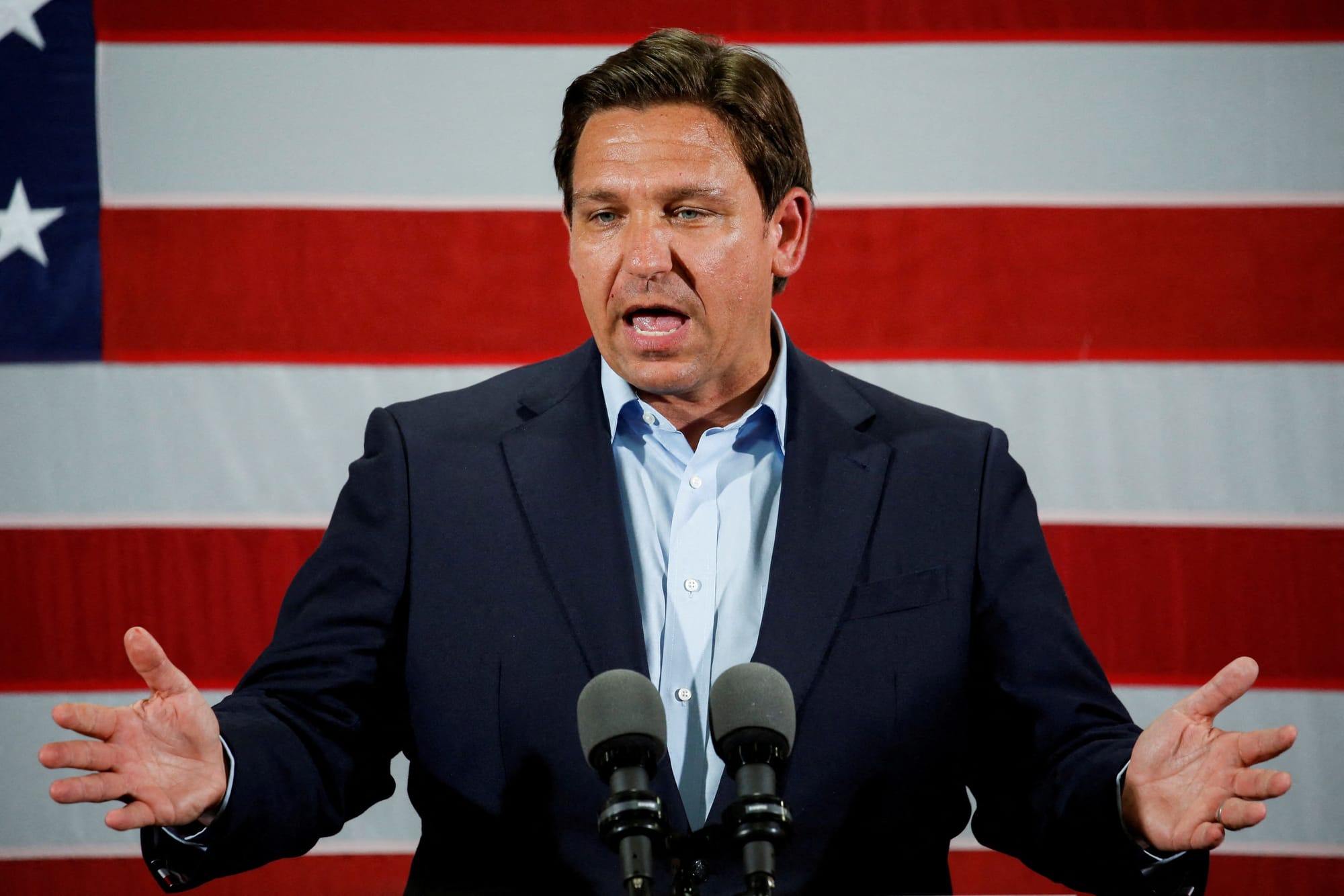
Governor Ron DeSantis this week ordered increased surveillance along Florida’s southern coastline, coordinating with the U.S. Southern Command and federal agencies in preparation for a possible mass maritime exodus from Cuba.
The U.S. military has activated contingency plans under an operation called “Integrated Advance,” designed for rapid responses to irregular migration flows. Officials have confirmed that Guantanamo Bay Naval Base has been reactivated as a logistical hub and could expand its capacity to accommodate as many as 30,000 migrants.
“If there is more turbulence there, there could potentially be an exodus out of Cuba, trying to come to Florida,” DeSantis said. “We don’t think that is acceptable. We think they need to fix Cuba there.” The governor’s position reflects the tension running through Florida’s Cuban-American community: deep solidarity with the people suffering on the island, combined with political opposition to any outcome that floods South Florida with unvetted arrivals.
The U.S. Coast Guard has issued explicit warnings that anyone attempting to reach American soil by sea will be detained and returned—a policy line directly echoing the “wet foot, dry foot” debates of decades past, now set against a far more acute humanitarian backdrop.
For Miami’s Cuban community—estimated at over 900,000 in Miami-Dade County alone—the combination of blackouts, protests, and the specter of a new boatlift is deeply personal. Many residents have family members on the island living through the crisis in real time. A federal lawsuit filed in mid-March in South Florida sought relief for thousands of Cuban immigrants who entered the country legally under Biden-era programs but now find themselves in immigration limbo under the current administration.
What Sunday’s Announcement Actually Means
Analysts caution against reading too much into Trump’s Air Force One remarks. The Anatoly Kolodkin’s cargo, once refined into diesel, could power Cuba’s grid for roughly a week—a reprieve, not a resolution. The U.S. policy architecture has not changed: the blockade remains in effect, and Washington is still selectively allowing fuel only to Cuba’s small and medium private businesses, not to the government that runs the country’s hospitals, schools, and utilities.
What has changed is the signal. By explicitly green-lighting a Russian state-owned tanker—rather than blocking or sanctioning it—the administration created a narrow opening. Whether that opening widens depends on what Havana does next. Rubio has made clear that cosmetic reforms will not be sufficient; the administration wants structural political change.
Cuban President Miguel Díaz-Canel confirmed in March that his government has been holding talks with U.S. officials, but he stated firmly that Cuba’s socialist principles are not on the table.
For Miami’s Cuban exile community, the question is not just whether the lights come back on in Havana—it is whether the political system that kept them off for decades is finally approaching its end. That question has no answer yet. What is certain is that the tanker is moving, Florida is watching the water, and the pressure on all sides is building.
The U.S.-Cuba relationship and its direct impact on South Florida’s Cuban-American community are central to Sociedad Media’s coverage mission. We will continue tracking the Anatoly Kolodkin’s arrival in Matanzas, the progression of U.S.-Cuba negotiations, and developments along Florida’s coastline as this story evolves. Write to us with questions, tips, or general inquiries at info@sociedadmedia.com—we want to hear from you.


