

When the United States and Israel launched coordinated strikes against Iran on February 28, killing Supreme Leader Ali Khamenei and triggering retaliatory missile attacks across the Middle East, the diplomatic aftershock reached Brasília within hours. Brazil’s foreign ministry—the Itamaraty—issued a statement condemning the U.S.-Israeli strikes, calling them violations of Iranian sovereignty.
A second communiqué followed, condemning Iran’s retaliatory attacks on Gulf states while invoking the UN Charter’s proportionality requirement.
The dual condemnation placed Brazil precisely where it has always sought to be: above the fray, sovereign, independent, and uncomfortable to everyone simultaneously.
The problem is that in 2026, that position is becoming harder to hold.
The War Brazil Did Not Want
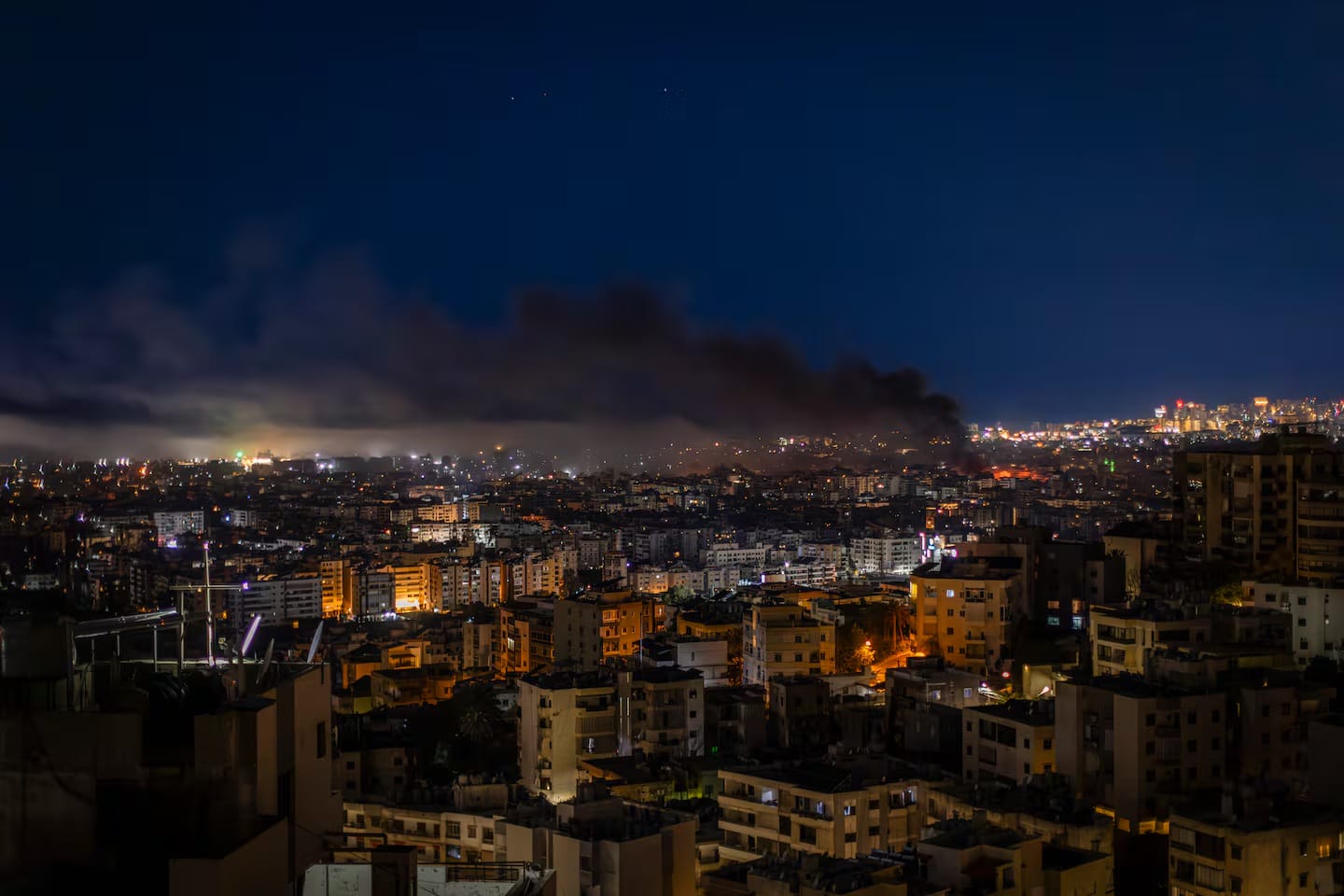
The 2026 Iran War began on February 28, when the United States and Israel launched a series of strikes against Iran targeting key officials, military commanders, and facilities, including the assassination of the Supreme Leader Ali Khamenei. Iran responded with strikes against Israel and American military bases across the Middle East, including in Bahrain, Kuwait, Qatar, Saudi Arabia, Jordan, and the UAE, leaving more than 2,000 people dead in Iran, Lebanon, and Israel.
The strikes came less than 48 hours after U.S. and Iranian negotiators held indirect talks in Geneva through Omani mediation, in which Iran had agreed to zero stockpiling of nuclear enrichment. The Omani mediator publicly expressed he was “dismayed” by the attacks, saying the interests of the United States were not served by this course of action.
For Brazil, the timing was not incidental—it was enraging. Brasília was among the first Latin American governments to issue a clear official position, condemning the U.S. and Israeli strikes as having taken place while negotiations remained the only possible path to peace. A day later, the Brazilian government issued a second statement condemning Iran’s retaliatory attacks on Gulf states, stressing that the right to self-defense remains exceptional and is constrained by proportionality.
The two-communiqué approach was characteristically Brazilian—balanced in form, without commitments to either belligerent.
Lula’s Diagnosis: Colonial Appetite
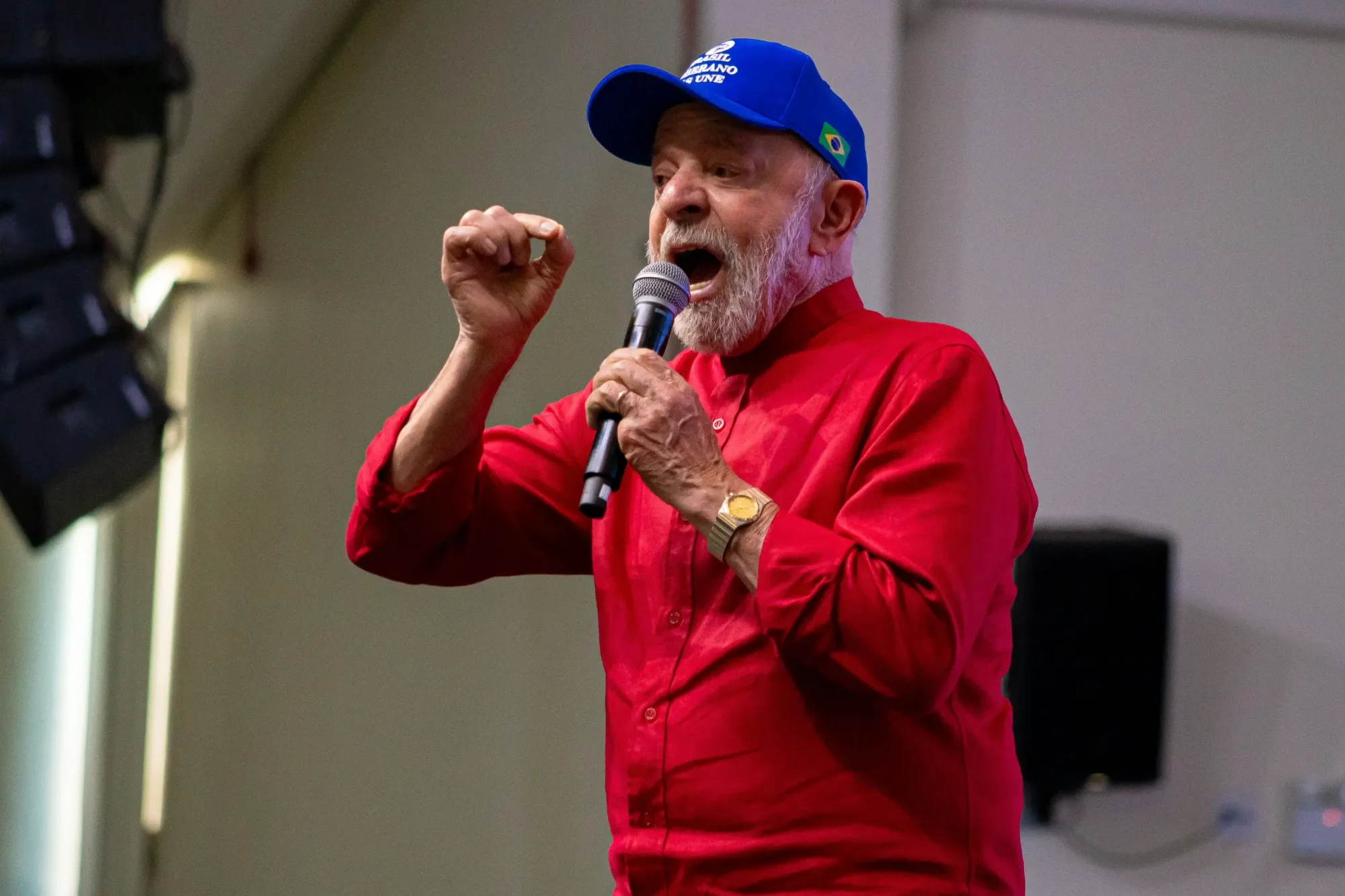
President Luiz Inácio Lula da Silva did not leave his government’s position to diplomatic language alone. Speaking at a CELAC summit in Colombia, he drew direct parallels between the Iran strikes and the 2003 U.S. invasion of Iraq.
“Iran has been invaded under the pretext that Iran was building a nuclear bomb,” Lula said, before pivoting to Iraq. “Where are Saddam Hussein’s chemical weapons? Where are they? Who found them?”
Lula also criticized U.S. policy in Latin America in the same breath—“What are they doing with Cuba now? What did they do with Venezuela? Is that democratic?”—framing the Iran strikes as part of a pattern of what he called “colonial appetite,” a determination by powerful states to “own” the resources and governments of weaker ones.
President Lula criticized the United States for acting as though they “own the world” and called on the UN Security Council to prevent the war from spreading further.
The UN Security Council: Brazil Abstains
The UN Security Council adopted Resolution 2817 condemning Iran’s attacks on its Gulf neighbors by a vote of 13 in favor, with two abstentions—China and Russia. A separate Russian draft resolution calling for a ceasefire and impartial de-escalation was rejected by a vote of 4 in favor to 2 against, with 9 abstentions.
Brazil was among those 9 abstentions—declining to endorse either the Western-led resolution that condemned only Iran’s retaliation while passing over the legality of the original U.S.-Israeli strikes, or the Russian alternative.
It was a principled abstention, rooted in Brazil’s consistent position that the Security Council had failed to address the strikes themselves before demanding Iran’s restraint.
The Itamaraty issued a statement condemning the attacks as violations of Iranian sovereignty that occurred during ongoing negotiations. Brazil’s foreign policy on the Middle East, already strained by Lula’s previous comparison of Israeli operations in Gaza to the Holocaust, has now become a defining fault line of the 2026 presidential race with the October presidential elections approaching.
The Nuclear Proliferation Fear
Brazil’s concern extends well beyond the immediate conflict. At the heart of Brasília’s anxiety is a fear shared by arms control experts worldwide—that the destruction of Iran’s nuclear infrastructure does not eliminate the proliferation risk. It may accelerate it.
The Arms Control Association noted that while military strikes can set back Iran’s nuclear program and destroy key infrastructure, they cannot eliminate Tehran’s proliferation risk. At the end of the conflict, Iran will retain the nuclear expertise and likely key materials necessary for building a nuclear bomb. Furthermore, the ongoing military action creates new nuclear risks and safety hazards.
The Saudi Arabia dimension amplifies the concern significantly. Saudi Arabia’s decision to sign a mutual defense agreement with nuclear-armed Pakistan in September 2025, following earlier U.S.-Israel strikes on Iran’s nuclear facilities, has deepened security concerns about a potential nuclear domino effect in the Middle East. If Iran reconstitutes its nuclear program—or if Gulf states conclude that the U.S. security guarantee is insufficient and seek their own deterrents—the proliferation risk extends far beyond the Middle East.
For Brazil, a country that voluntarily abandoned its own military nuclear program in 1990 and helped establish the Treaty of Tlatelolco as a nuclear-free zone in Latin America, the prospect of nuclear proliferation cascading from a Middle Eastern conflict is not an abstraction. It is an existential concern about the stability of the international order that Brasília has spent decades trying to build.
How Close Are Lula and Tehran—And Why Does it Matter?
To understand Brazil’s position on the Iran war, you need to understand that the relationship between Brasília and Tehran is not a recent diplomatic convenience. It is a deep, persistent, and politically charged connection that dates to Lula’s first presidency and has outlasted multiple changes in government in both countries.
During Lula’s first two terms, Brazil and Iran established a permanent high-level consultation mechanism alternating between their capitals, encompassing multiple policy areas.
Brazil became Iran’s main trading partner in Latin America. In 2011, bilateral trade reached $2.33 billion, with Brazil exporting food, medication, minerals, and automobiles while Iran exported chemical fertilizers. Iran was Brazil’s largest export market for beef.
The relationship between Lula’s Workers’ Party and Tehran dates to 2005, when Celso Amorim—Lula’s longtime foreign affairs adviser and former foreign minister—began cultivating ties that included the 2010 Tehran Declaration, a Brazil-Turkey-Iran nuclear fuel swap agreement that Washington ultimately rejected.
Leaked WikiLeaks cables showed U.S. diplomats flagging Amorim’s efforts to block Iran’s inclusion in UN Security Council resolutions on nuclear proliferation.
The fuel swap episode remains the defining episode in the Brazil-Iran-Washington triangle. In 2010, Lula personally traveled to Tehran and brokered a deal—supported by Turkey—in which Iran agreed to send low-enriched uranium to Turkey in exchange for enriched fuel for a research reactor. The U.S. Secretary of State Hillary Clinton said Brazil was being “used” by Tehran. The UN Security Council ultimately rejected the deal, arguing the swap would leave Iran with enough material to make a nuclear weapon.
The episode established a pattern that has repeated in 2026: Lula’s Brazil positioning itself as a mediator between Iran and the West, Washington viewing that positioning as naïve at best and enabling at worst. However, critics of the Lula government in Washington have also expressed concerns that Lula has cozied up too closely with U.S. adversaries, like Tehran.
Today, Brazil runs a $2.9 billion trade surplus with Iran, concentrated primarily in agricultural products like corn and soybeans. Trump’s announcement that any country conducting business with Iran would face 25% tariffs has placed Lula in a direct dilemma—prioritize the Iranian trade surplus or protect access to the U.S. market, one of Brazil’s most important trading partners.
The Impossible Position
Iran is now a BRICS member, placing Brazil in a position where it cannot openly oppose a fellow bloc partner without undermining the South-South solidarity narrative central to Lula’s international identity. Simultaneously, Lula faces U.S. tariffs on Brazilian goods reaching 50% in some categories, with his scheduled Washington visit centered on tariff negotiations.
USP political scientist Feliciano de Sá Guimarães has argued that Brazil must find an intermediate position—neither openly anti-Iran nor anti-American—or risk its diplomatic credibility with both sides. Social media analysis shows 82% of mentions linking Lula to the Iran conflict were negative domestically.
The political cost at home is mounting just as October’s presidential election approaches. Lula’s foreign policy—simultaneously critical of U.S. strikes on Iran, supportive of Palestinian rights, defending Venezuelan sovereignty, maintaining trade ties with Tehran, and pursuing a BRICS-centered vision of multipolarity—has given his opponents a target. The question for Brasília in the coming months is whether principled independence is still a viable diplomatic strategy in a world where Trump is demanding that countries choose sides.
Brazil’s positioning reflects a split within Latin America between governments that prioritize sovereignty and opposition to the widening of war, and others that view the crisis through the lens of security deterrence and their close relationship with Washington.
Argentina was the clearest example in the latter camp, openly endorsing the U.S.-Israeli action in recent days.
The divide runs directly through the hemisphere—and through Brasília’s domestic politics. For a country that spent decades building its reputation as a constructive, independent voice in global affairs, the Iran war has posed the sharpest question yet: in a world where the United States is bombing its adversaries and demanding loyalty, can Brazil remain nobody’s satellite?
Lula’s answer, so far, is yes. Washington’s patience, however, is visibly wearing thin as the current global environment reveals Lula’s strategy is increasingly difficult to maintain.
Brazil’s foreign policy and its implications for U.S.-Latin America relations are central to Sociedad Media’s coverage. Write to us for any questions or general inquiries at info@sociedadmedia.com. We want to hear from our readership


