



MIAMI — Nearshoring has become the defining investment story of North America’s industrial decade, and in 2026 its geography is visibly splitting: Mexico remains the single largest beneficiary by scale, while U.S. tariff uncertainty is simultaneously pushing manufacturers and services companies to diversify their footprint across Costa Rica, Panama, Guatemala, Colombia, and the Dominican Republic.
Mexico Still Leads, By a Wide Margin
Mexico absorbed roughly $41 billion in foreign direct investment in the first three quarters of 2025 alone, a 15% year-on-year increase, and has replaced China as the United States’ top trading partner by value since 2023 — making it both the top supplier and top export market for the U.S.
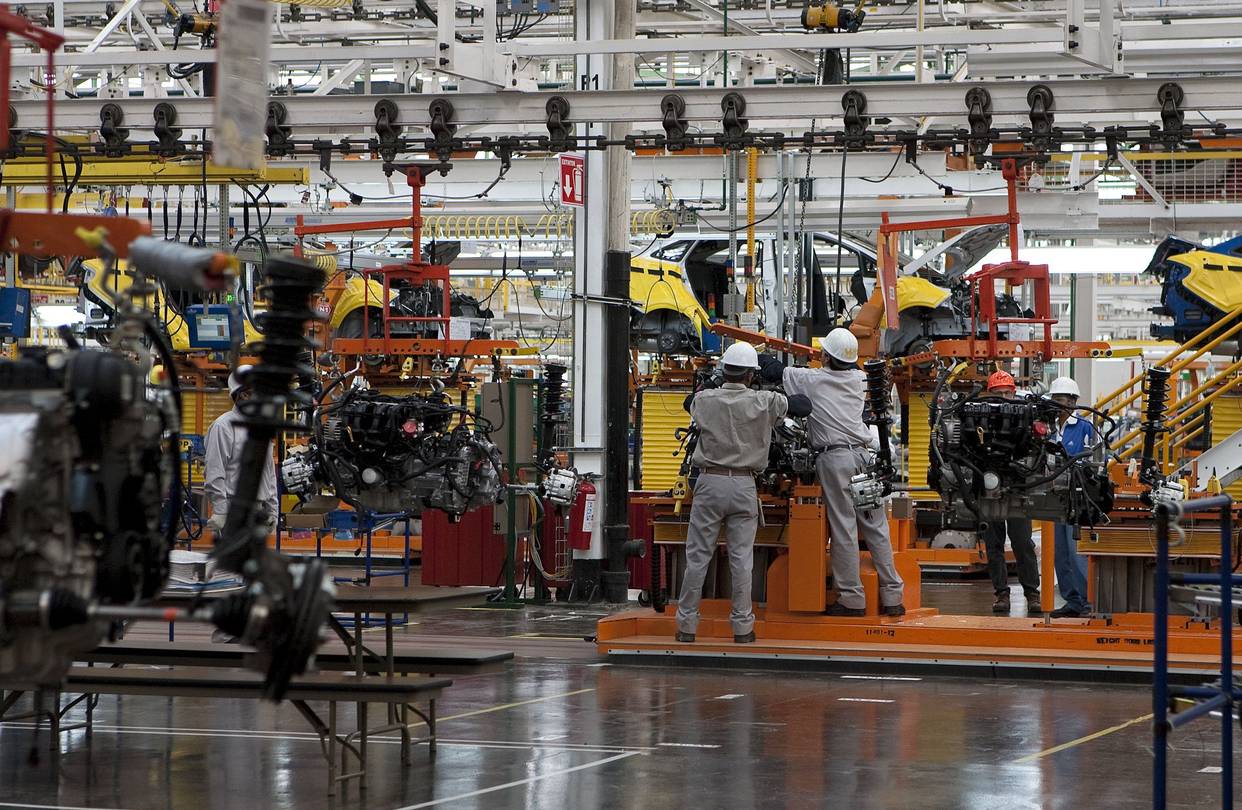
Manufacturing investment tied to autos, electronics, and industrial equipment has continued flowing into the country, supporting employment and exports even as broader macroeconomic gains remain constrained.
But Mexico’s “Miracle” Has Real Cracks
Mexico’s nearshoring boom is genuine but uneven. Three structural bottlenecks are limiting how much further it can scale in 2026: energy supply constraints, water scarcity across the country’s northern industrial belt, and customs inefficiency. A fourth, more immediate risk has emerged from Mexico’s own tax authority: retroactive audits by the SAT (Servicio de Administración Tributaria) reaching up to ten years back threaten to suspend companies’ import licenses unless disputed amounts are paid upfront, creating genuine operational risk for manufacturers already established in the country.
Foreign manufacturers continue pouring record sums into plants and industrial parks even as domestic Mexican investors have grown more cautious amid these same pressures.
Why the Rest of the Region Is Gaining Ground
U.S. tariff uncertainty is the direct driver pushing companies to diversify beyond Mexico rather than concentrate their entire nearshoring strategy there. Central America, the Dominican Republic, Colombia, and Costa Rica are absorbing a growing share of both services and manufacturing (maquila) investment as a result.
Costa Rica: Medical Devices and Business Services
Costa Rica has consolidated its position as a leading hub for medical device manufacturing and advanced production, leveraging an educated workforce and political stability that have long attracted shared services centers and technology firms.
The country has increasingly positioned itself as a nearshore hub for business process outsourcing and software development specifically, with U.S. companies seeking time-zone-aligned alternatives to Asian outsourcing destinations. Its Puerto Limón/Moín port processed 1.366 million TEUs, ranking tenth in Latin America with 3.4% growth.
Panama: Leveraging the Canal
Panama’s nearshoring advantage rests heavily on the Panama Canal and its Special Economic Zones, which together significantly reduce transportation times and costs for manufactured goods. The country maintains regional port leadership with 9.4 million TEUs processed across its combined Caribbean (Colón) and Pacific (Balboa) port system, a 14.2% increase since 2023, with roughly 90% of that volume tied to transshipment operations that take advantage of New Panamax vessel capacity and direct ship-to-rail connectivity.
Guatemala: Textiles, Apparel, and a Growing Auto Parts Sector
Guatemala is attracting investment from textile and apparel manufacturers specifically seeking shorter lead times and greater responsiveness to North American demand.
Local firms have begun transforming large parcels of land near the Mexican border, around Guatemala City, and in the Department of Escuintla into industrial infrastructure within free trade zones.
The country has also seen a notable shift toward auto parts manufacturing, highlighted by industry giant Yazaki’s recent groundbreaking on a Guatemalan manufacturing site.
Analysts describe Guatemala’s most promising competitive niche as mid-complexity manufacturing that combines cost efficiency with proximity to North American markets, rather than attempting to compete directly with Mexico’s higher-technology industrial clusters or Costa Rica’s advanced services and medical device sector.
The country’s young population offers a large potential labor supply at wages competitive with both Mexico and Costa Rica, though employers report persistent difficulty finding workers with the intermediate technical skills modern manufacturing increasingly requires — a labor alignment problem rather than a labor shortage, according to Inter-American Development Bank research.
Colombia’s Services-Led Approach
Colombia has positioned itself primarily as a nearshore hub for services rather than heavy manufacturing, drawing on its large Spanish-speaking talent pool and competitive labor costs for call centers, finance, and IT support functions. Because services nearshoring requires far less heavy infrastructure investment than manufacturing, it offers Colombia a comparatively faster path to new job creation, though the country continues working to close gaps in English-language proficiency and connectivity to widen its services export base further.
The Regional Opportunity, By the Numbers
According to Inter-American Development Bank estimates, the broader Latin American region could capture as much as $64 billion in additional goods trade and $14 billion in additional services trade through nearshoring.
Regional e-commerce, a related trend benefiting from the same supply-chain reorientation, is approaching $180 billion in annual retail sales, with mobile commerce already capturing 71% of regional sales, led by payment innovations like Brazil’s Pix system, which alone handles 16% of regional e-commerce transaction volume.
What This Means Going Forward
The emerging pattern suggests Latin America’s nearshoring story is evolving from a single-country phenomenon centered on Mexico into a genuinely regional one, with different countries specializing in different segments of the value chain:
Mexico for scale and higher-technology manufacturing, Costa Rica for medical devices and advanced services, Panama for logistics and transshipment, Guatemala for mid-complexity manufacturing and textiles, and Colombia for business services.
Whether this diversification accelerates further will likely depend heavily on how U.S. tariff policy continues to evolve, and on whether Mexico’s own infrastructure and regulatory bottlenecks are addressed quickly enough to sustain its lead, or continue pushing new investment toward its regional neighbors instead.