

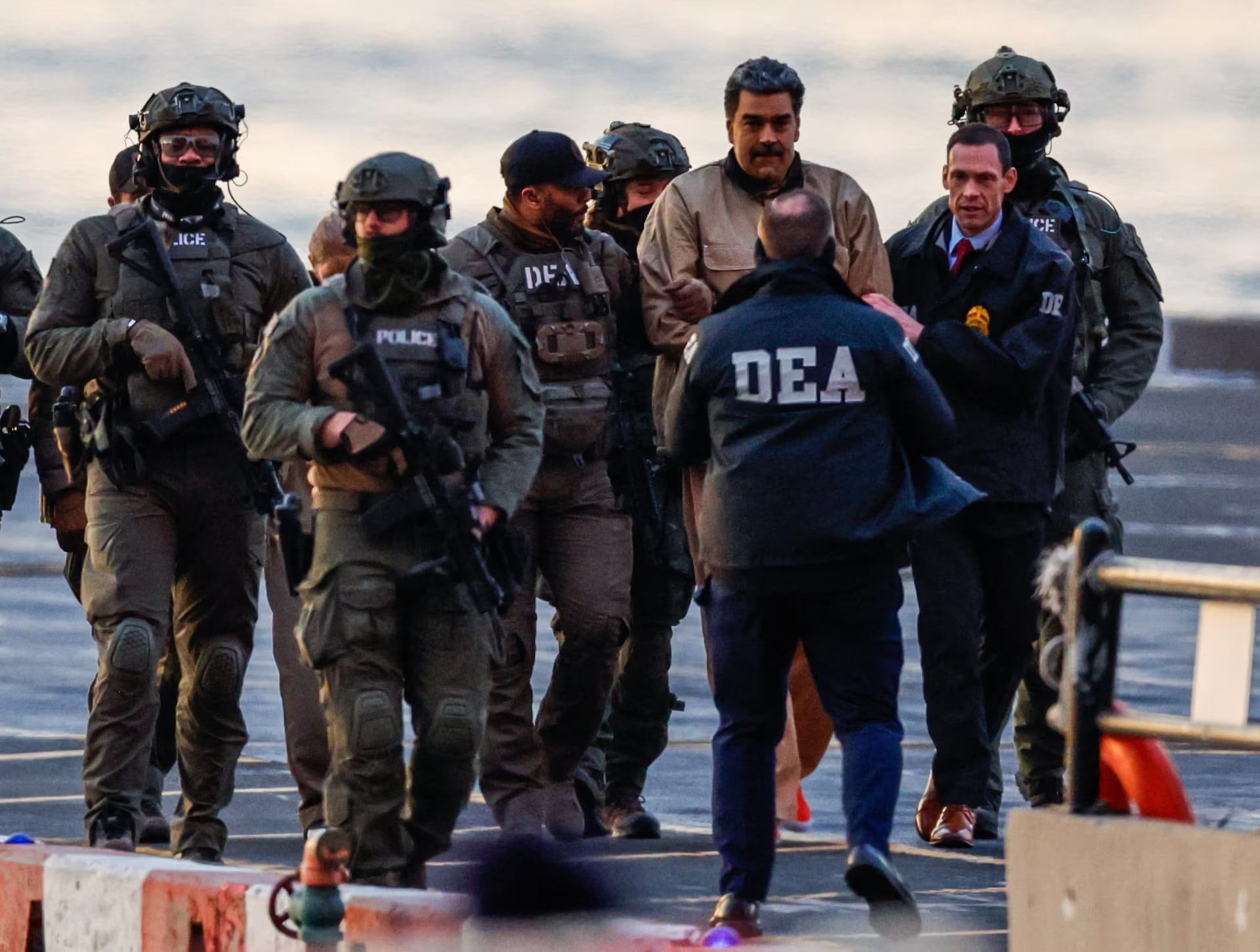
He arrived before dawn. A motorcade left the Metropolitan Detention Center on Brooklyn’s waterfront in the early morning hours of March 26, carrying Nicolás Maduro and his wife, Cilia Flores, through Lower Manhattan to the Daniel Patrick Moynihan Federal Courthouse—the same building where, less than three months ago, the ousted Venezuelan leader stood before a judge and declared himself a prisoner of war.
Thursday’s hearing was the first time Maduro and Flores had appeared in court since their January 5 arraignment, where both entered not guilty pleas to federal drug trafficking and weapons charges. This time, the central drama was not the charges themselves—it was whether the case would survive at all.
It will. U.S. District Judge Alvin Hellerstein was unambiguous: “I’m not going to dismiss the case.”
The Legal Fees Battle at the Heart of the Hearing
The motion to dismiss, brought by Maduro’s attorney Barry Pollack, rested on an unusual and politically charged argument: the U.S. government, through its own sanctions regime, is preventing Venezuela from paying for Maduro’s legal defense—and that, Pollack argued, violates his client’s constitutional right to counsel.
The mechanics of the dispute reveal the complexity of prosecuting a sitting—or former, depending on who you ask—head of state. The U.S. Treasury Department initially granted an exemption allowing Venezuelan government funds to cover Maduro’s legal fees, then revoked it hours later. Pollack told the court that Maduro cannot afford to pay for his own defense, and that the Venezuelan government has both an obligation and a willingness to do so. Flores’s situation is slightly different—her attorney indicated she may still have access to government funds, though that too remains unresolved.
Judge Hellerstein declined to dismiss the case over the dispute but stopped short of resolving the underlying question—he did not rule on whether Maduro would ultimately be permitted to use Venezuelan government funds. That decision remains pending, and it could significantly shape how the defense is able to proceed.
Separately, prosecutors filed a request for a protective order that would bar Maduro and Flores from sharing discovery materials with four co-defendants who remain at large, including Maduro’s son Nicolás Maduro Guerra and former Interior Minister Diosdado Cabello. Prosecutors argued that given Maduro’s history of threatening opponents, allowing such access would pose what they called “an unacceptable risk” to witnesses and their families, could lead to the destruction of evidence, and might compromise ongoing investigations.
The Charges: What Maduro and Flores Are Accused Of
The indictment, originally filed in 2020 and unsealed that year, was superseded on January 3, 2026—the same day U.S. forces captured the couple in Caracas. The charges paint a sweeping picture of what prosecutors describe as decades of narco-terrorism conducted from inside the Venezuelan government itself.
Maduro faces four counts: narco-terrorism conspiracy, cocaine importation conspiracy, possession of machine guns and destructive devices, and conspiracy to possess machine guns and destructive devices. Flores faces three counts, with the narco-terrorism charge the primary distinction between their cases.
Prosecutors allege that Maduro and his associates partnered with Colombian guerrilla groups—including the FARC and ELN—to traffic cocaine into the United States, using the machinery of the Venezuelan state to facilitate and protect the operation. The indictment describes a system in which drug trafficking concentrated power and wealth in the hands of Maduro’s inner circle, including his family, while violent narco-terrorist groups operated with impunity on Venezuelan soil.
Two co-defendants in related cases have already pleaded guilty. Hugo Carvajal, a former Venezuelan intelligence chief, pleaded guilty in June 2025. Clíver Alcalá Cordones, a former Venezuelan general, pleaded guilty in 2023 to providing aid to the FARC.
Trump: “Other Cases Are Going to Be Brought”
While Maduro was in the courtroom, President Trump was at a Cabinet meeting at the White House, offering his own commentary on the proceedings—and looking ahead.
“I would imagine there are other trials coming because they have just—they’ve really sued him in just a fraction of the kind of things that he’s done,” Trump said. “Other cases are going to be brought, as you probably know.” He described the current charges as representing only a portion of Maduro’s alleged conduct, and called the January capture “a great military operation.”
Trump also said he expected Maduro to receive a fair trial, while simultaneously accusing him of being “a major purveyor of drugs coming into our country” and having “killed a lot of people” and “emptied his prisons into our country.”
The remarks carry weight beyond political theater. They signal that the Justice Department may be preparing additional indictments—a possibility that would dramatically extend the legal and geopolitical saga surrounding Maduro’s detention for years to come.
Back to Brooklyn, No Trial Date Set
The hearing ended without a future court date being scheduled. Judge Hellerstein adjourned without announcing when he would next bring Maduro and Flores back to court, and no trial date has been set. The 92-year-old Clinton-appointed judge—one of the most experienced on the federal bench in New York—has given no public indication of his timeline.
A long motorcade of law enforcement vehicles was seen leaving the courthouse shortly after the hearing ended, heading back toward Brooklyn. Both Maduro and Flores remain detained at the Metropolitan Detention Center, where they have been held since arriving in the United States on January 3. Neither has requested bail.
In Caracas, hundreds of government supporters gathered at Bolívar Square to watch news updates from the hearing on large outdoor screens—unaware, apparently, that federal courts in the United States do not permit cameras inside courtrooms. Maduro’s son, lawmaker Nicolás Maduro Guerra, addressed the crowd from a stage, calling his father’s trial “illegitimate and illegal.”
Outside the Manhattan courthouse, a smaller group of roughly 70 demonstrators held “Free Maduro” signs, with some holding an inflatable figure of the ousted leader in handcuffs. Police barricaded the group across the street from the building.
Maduro Breaks His Silence: “We Are Well, Serene, and in Constant Prayer”
Two days after the March 26 hearing, Maduro and Flores broke nearly three months of public silence with their first social media post from detention. A message shared on Maduro's X account on Saturday, March 29—it remains unclear who posted it on their behalf, as both are reportedly held under highly restricted conditions without internet access or newspapers—offered supporters a direct word from Brooklyn.
“We are well, steadfast, serene and in constant prayer,” the couple wrote. “We have received your communications, your messages, your emails, your letters and your prayers. Every word of love, every gesture of affection, every expression of support fills our souls and strengthens us spiritually.”
The post also carried a politically significant message directed at Venezuela itself, calling on supporters to consolidate peace and national unity and expressing admiration for what Maduro and Flores described as their people’s ability to “remain united in difficult times.”
— Nicolás Maduro (@NicolasMaduro) March 28, 2026
A source close to the Venezuelan government told AFP that Maduro reads the Bible in detention and is referred to as “president” by some fellow detainees at the Metropolitan Detention Center (MDC). His son, lawmaker Nicolás Maduro Guerra, separately confirmed he has been able to speak with his father and described him as calm and confident of his innocence.
What Comes Next
The unresolved legal fees question is the most immediate procedural hurdle. Until Judge Hellerstein rules on whether Venezuelan government funds can be used for the defense, Maduro’s legal team is operating in an uncertain position. How that ruling lands could affect the pace and shape of the entire prosecution.
Beyond the courtroom, the trial exists within a rapidly shifting geopolitical context. Venezuela’s acting president, Delcy Rodríguez, has been quietly cooperating with Washington—releasing political prisoners, allowing the U.S. Embassy in Caracas to reopen, and engaging in back-channel diplomacy. Maduro, meanwhile, has been slowly erased from the government he once led. His ruling party remains in power, but it is Rodríguez, not Maduro, who is negotiating Venezuela’s future with the United States.
For Miami’s Venezuelan community—the largest concentration of Venezuelan diaspora in the United States—the trial is more than a legal proceeding. It is the culmination of years of watching from abroad as Maduro consolidated power, crushed opposition, and drove millions from the country. The courthouse in Lower Manhattan is a long way from Caracas. But for many in Miami, it is exactly where they always hoped this story would end up.
Venezuela’s political and judicial trajectory—and its direct consequences for Miami’s Venezuelan diaspora—are central to Sociedad Media’s coverage mission. We will continue tracking every development in the Maduro trial, from the unresolved legal fees ruling to the prospect of additional federal indictments. Write to us with questions, tips, or general inquiries at info@sociedadmedia.com—we want to hear from our readership.


