

Chile’s President-Elect, José Antonio Kast, has announced plans to develop a “humanitarian corridor” to help facilitate the departure of some 300,000 Venezuelan migrants, working to recruit neighboring South American governments in recent weeks.
The pledge for mass deportations, which helped propel Kast to his presidential election victory in mid-December over Communist candidate Jeanette Jara, has acquired some new vigor following the fall of the now deposed leader of Venezuela, Nicolás Maduro.
Kast, the founder of Chile’s Partido Republicano, or Republican Party, has advanced the argument for more stringent immigration policies, offering to Chilean voters a mass deportation program, not dissimilar to that proposed by President Donald Trump during his U.S. presidential race against Democratic candidate Kamala Harris.
Growing Chilean discontent over the large influx of Venezuelan migrants was one of the top concerns among Chilean voters during the 2025 presidential election, since significant numbers of Venezuelan nationals have sought refuge in the Andean nation in recent years, exacerbated by the catastrophic deterioration of Venezuela’s economic conditions under the Maduro government.
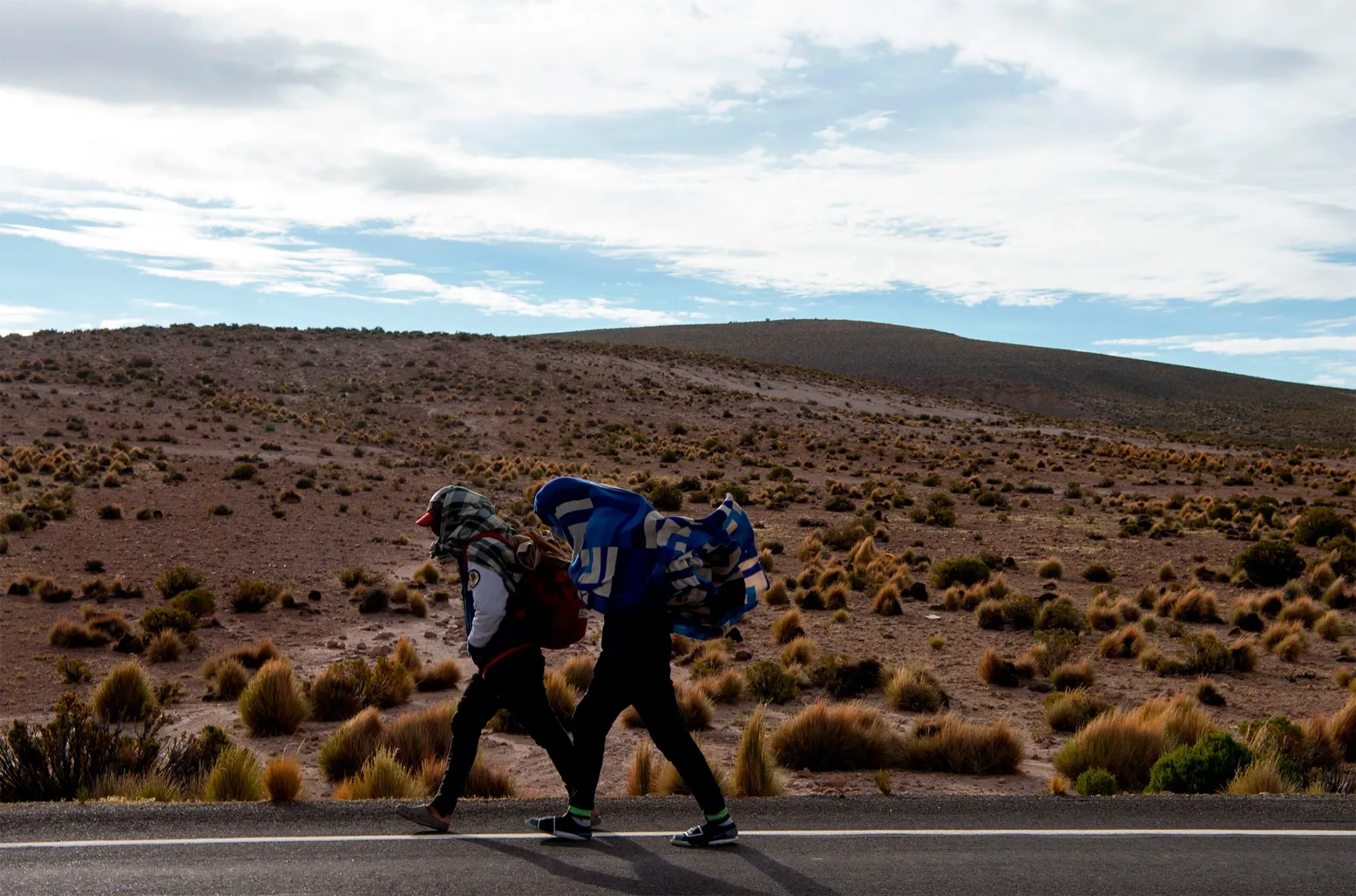
Beginning in 2016, the rates of Venezuelan immigration to Chile grew exponentially, with analysts estimating that close to 500,000 Venezuelans currently reside in the country, making Chile the fourth-largest host nation of a Venezuelan immigrant population.
Colombia, Venezuela’s western neighbor, ranks first with approximately three million Venezuelan migrants.
During the presidential campaign, Kast proposed an ambitious program to deport some 300,000-350,000 Venezuelan migrants, who, for Kast supporters, are exhausting local resources and contributing to a concerning increase in the nation’s crime rates.
Critics of Kast assert that discomfort over the Venezuelan migrant population and plans for mass deportations are “xenophobic.”
During a meeting with Argentine President Javier Milei, Kast proposed the idea of a “humanitarian corridor” as part of a plan to help facilitate the return of hundreds of thousands of Venezuelans with “irregular immigrant status”, a program that will work as a mechanism in conjunction with other regional governments to aid migrants in their departure from Chile.
Critics of the proposal have challenged the use of the term “humanitarian corridor”, which has historically been used to refer to a program designed to help secure a safe passage for large quantities of vulnerable populations fleeing war zones or large-scale natural disasters, not as a deportation strategy.
Kast, however, has described the program as one that will be “voluntary and orderly”, while critics express concern that the program will appear more like a deportation mechanism to uproot hundreds of thousands of lives. Kast has assured the public that those who decide to depart Chile will be provided the opportunity to reapply for a legal passage into Chilean territory at a later time.
President-elect Kast had recently met with Ecuador’s President Daniel Noboa, another Latin American leader who rode into office on the region’s wave of conservative populism.
Kast sat down with Noboa in Quito in late December to recommend a bilateral partnership in helping to facilitate the corridor, stating, “We have to search by air, land, or sea, for the fastest ways to return dignity to those people and so they can return to their homeland.”
This week, Kast held another bilateral meeting with Peruvian President José Jerí to discuss the migrant issue and to recruit the Peruvian leader to help form the “humanitarian corridor.”
Peru has also experienced a growing Venezuelan migrant influx in recent years, with yet more flooding in from Chile for fear of a potentially tough deportation campaign by President-Elect Kast. The topic of rising crime in both Chile and Peru was also discussed between the two heads of state.


