

MIAMI — The lights came back on in parts of Cuba on Tuesday. By Wednesday morning, the ground was shaking.
An earthquake struck the island as it was still recovering from a 29-hour total nationwide blackout—the worst power grid collapse in Cuba’s modern history—adding a geological dimension to a crisis that is already testing the limits of what a government can survive.
Cuba’s President Miguel Díaz-Canel delivered his most defiant statement yet—warning President Donald Trump on Wednesday that any attempt to take control of the island would be met with “impregnable resistance,” while simultaneously confirming that U.S.-Cuba negotiations are ongoing and describing them as “a very sensitive process conducted with seriousness and responsibility.”
The two positions—defiance and dialogue—are not contradictory. They are the Cuban regime’s only remaining strategy.
Díaz-Canel Draws His Line
Writing on X late Tuesday, Díaz-Canel said the Trump administration “publicly threatens” Cuba’s government almost daily with overthrowing it, and that any act of aggression “will clash with an impregnable resistance.”
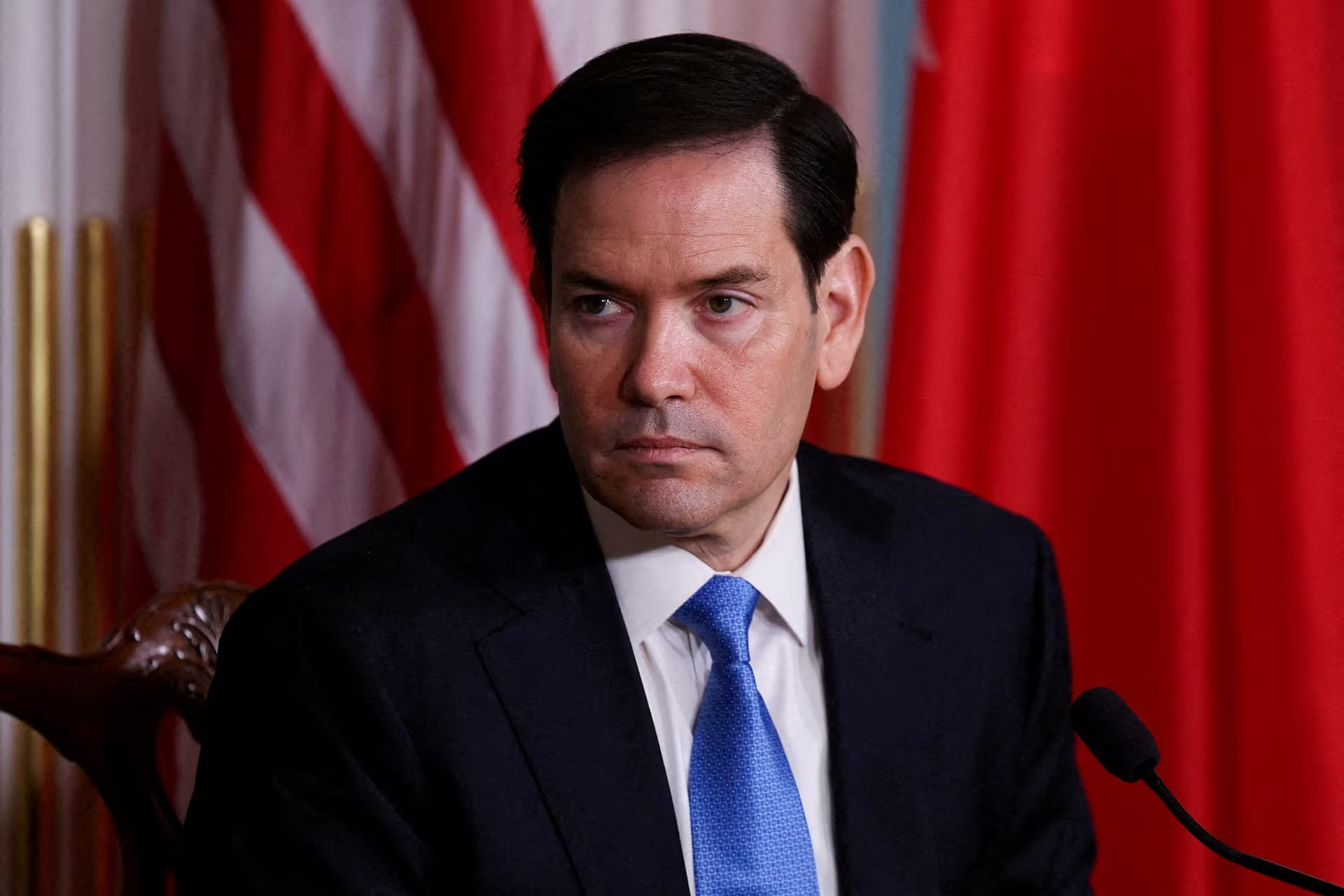
The comments came after Trump and Secretary of State Marco Rubio escalated their rhetoric—Rubio declaring that the Cuban government’s socialist economic model needs to “change dramatically,” and Trump telling reporters in the Oval Office on Monday: “Whether I free it, take it, I think I can do anything I want with it. You want to know the truth, they’re a very weakened nation now.”
Díaz-Canel lashed out at what he called the “almost daily” threats from Washington, pledging to meet the Trump administration’s energy blockade with “unyielding resistance.” He accused Washington of using Cuba’s economic weakness as an “outrageous pretext”, writing:
“They intend to announce plans to take over the country, its resources, its properties, and even the very economy they seek to suffocate in order to force us to surrender.”
He contended that Washington uses the island’s economic hardship as an “indignant pretext,” adding that the Cuban economy has been “attacked and subjected to isolation for more than six decades.”
The defiance is real. But so is the negotiation. The Trump administration is reportedly looking for Díaz-Canel to leave as the U.S. continues negotiating with the Cuban government, according to a U.S. official and a source with knowledge of talks between Washington and Havana—both speaking on condition of anonymity because they were not authorized to discuss the sensitive discussions.
The Crisis Behind the Rhetoric
The power grid collapse that produced Díaz-Canel’s defiant statements was not a political abstraction. Cuba reconnected its electrical grid across much of the island on Tuesday following a nationwide blackout that left 10 million people without electricity for more than 29 hours.
By Tuesday afternoon, power had returned to roughly 55% of customers in the capital of Havana and some places in the western and central-eastern regions of the island. School hours had been shortened, major sporting events postponed, and rubbish piled up in some neighborhoods due to a lack of fuel for dump trucks.
According to the United Nations Human Rights Office, the blockade and ensuing fuel shortage have threatened Cuba’s food supply and disrupted the country’s water systems and hospitals. The fuel shortage has prevented the harvesting of crops and undermined efforts toward food sovereignty. The lack of fuel has also hampered UN World Food Programme relief efforts following Hurricane Melissa.
UN Secretary-General António Guterres stated he is “extremely concerned” about the humanitarian situation in Cuba, warning it “will worsen, or even collapse,” if the country’s oil needs are not met.
On March 13, Díaz-Canel confirmed during a news conference that no fuel tankers had entered Cuba for more than three months. Three days later came the total blackout. Three days after that, an earthquake struck while the grid was still being restored—a geological event that could not have been timed worse for a country whose infrastructure is already operating at the absolute limit of its capacity.
Senate Democrats File War Powers Resolution
Senate Democrats filed a War Powers Resolution specifically to block any U.S. military action against Cuba—a development that reflects growing concern in Congress that Trump’s escalating rhetoric about “taking Cuba” and doing “anything he wants” with the island could be a prelude to military action rather than merely diplomatic pressure.
The resolution follows a pattern established earlier this year when Congress attempted—ultimately unsuccessfully—to limit Trump’s authority to conduct strikes on Iran without congressional approval.
The filing is significant for two reasons. First, it places congressional Democrats formally on record as opposing unilateral military action against Cuba—a position that puts them in the same company as Brazil, Mexico, Colombia, and most of the hemisphere’s left-leaning governments. Second, it signals that at least some members of Congress believe Trump’s language about Cuba is serious enough to require a legislative response—not just rhetorical pushback.
The Talks: What Both Sides Have Confirmed
Beneath the competing statements of defiance and threat, the framework of a negotiation is clearly visible—even if its outcome remains deeply uncertain.
Díaz-Canel confirmed Friday that Cuban officials had held talks with the U.S. to “identify the bilateral problems that need a solution.” President Trump had previously said that Washington was holding talks with Cuba—Friday’s statement from Díaz-Canel was the first confirmation from Havana that the talks were real. Havana resident Luis Enrique García told Reuters: “I truly believe that there will be dialogue and understanding, because it is love that should unite human beings, not war.”
Trump said Sunday that the Cuban government wanted to “make a deal” with the U.S. and that the agreement would be made “pretty soon”—before adding that his administration would “do Iran before Cuba,” referring to ongoing strikes on the Middle Eastern country. The sequencing matters: if Washington’s attention is consumed by the Iran military campaign for weeks or months, Cuba’s energy crisis will continue to deepen during a negotiating pause—producing more blackouts, more protests, and more pressure on a regime that may or may not survive the waiting.
Regime Change: The Conditions Washington Has Set
Under existing U.S. law, ending the Cuba embargo requires three specific conditions: 1) the liberation of all political prisoners; 2) the legalization of all political parties and the press; and 3) the scheduling of free multiparty elections. The New York Times reported last week that the Trump administration has added a fourth de facto condition: Díaz-Canel must go. Cuba’s chief of mission in Washington, Lianys Torres Rivera, has stated categorically that changes to Cuba’s political system are entirely off limits.
The United States confirmed regime change in Cuba is a goal by the end of the year, asking the government of Díaz-Canel to “make a deal before it’s too late.”
Secretary of State Marco Rubio, who is leading the charge on the Cuba negotiations from Washington, downplayed reports that the Trump administration is demanding a Díaz-Canel departure, calling news outlets that have reported on these claims “charlatans.”
Initially, Díaz-Canel used hawkish rhetoric about “U.S. imperialism” and called on people to prepare for a “war of the entire nation” while organizing state-sponsored demonstrations against the American oil blockade. The shift to confirmed negotiations represents a significant departure from that original posture—suggesting that three months without oil has moved the regime’s calculus considerably.
Human rights organizations documented at least 35 repressive actions between March 13 and 16, targeting protesters, journalists, activists, relatives of political prisoners, and opposition members—warning of “threats, permanent police surveillance of homes, house arrests and police brutality against protesters” and stating that “these events show a pattern of pressure and control aimed at silencing protest and restricting the exercise of fundamental rights.”
What Miami Is Watching
For the 1.5 million Cuban Americans in South Florida—many of whom left the island precisely because of the regime that Díaz-Canel leads—this week’s cascade of developments carries an emotional weight that transcends geopolitics.
An earthquake on an island with no power. A president vowing impregnable resistance while secretly negotiating his own exit. A Senate trying to prevent a military action that their own president has hinted at. And in the streets of Havana, Holguín, Santiago, and Morón, ordinary Cubans, banging pots in the dark for a twelfth consecutive night.
The regime has survived 66 years. It is now negotiating, defiant, without oil, with an earthquake, and with the most powerful nation on earth saying it can do “anything it wants.”
Whether impregnable resistance and sensitive negotiations can coexist long enough to produce a deal—or whether one gives way to the other—is the question that will define the island of Cuba in 2026.


