

El Salvador’s Legislative Assembly voted Tuesday to amend the country’s constitution—enshrining life imprisonment for murderers, rapists, and terrorists in a nation that has already imprisoned more than one percent of its population and now holds the highest incarceration rate in the world.
El Salvador’s Congress approved the constitutional amendment with the support of 59 lawmakers, with only one voting against, allowing for life sentences for charges including murder, rape, and terrorism, as President Nayib Bukele’s government continues its crackdown on the country’s criminal gangs.
While Salvadoran courts had previously handed down sentences exceeding 100 years on paper, the law had capped actual time served at 60 years. The reform removes that ceiling permanently. “Our all-out war against terrorists does not stop,” said Security Minister Gustavo Villatoro before the vote.
“That is why we are requesting life imprisonment for this type of criminal.”
Bukele framed the vote as a challenge to his critics. “We will see who supports this reform and who dares to defend the idea that the Constitution should continue prohibiting murderers and rapists from remaining in prison,” he wrote on X before Congress passed the amendment.
A Country Transformed—By Any Measure
The numbers behind Bukele’s security record are not disputed. What is disputed is what those numbers cost.
A crackdown on gangs began on March 27, 2022, following a weekend in which 87 people were murdered—including 62 on a single Saturday, the highest single-day tally in decades. The government responded by declaring a state of emergency that suspended several constitutional rights and enabled mass arrests of suspected gang members.
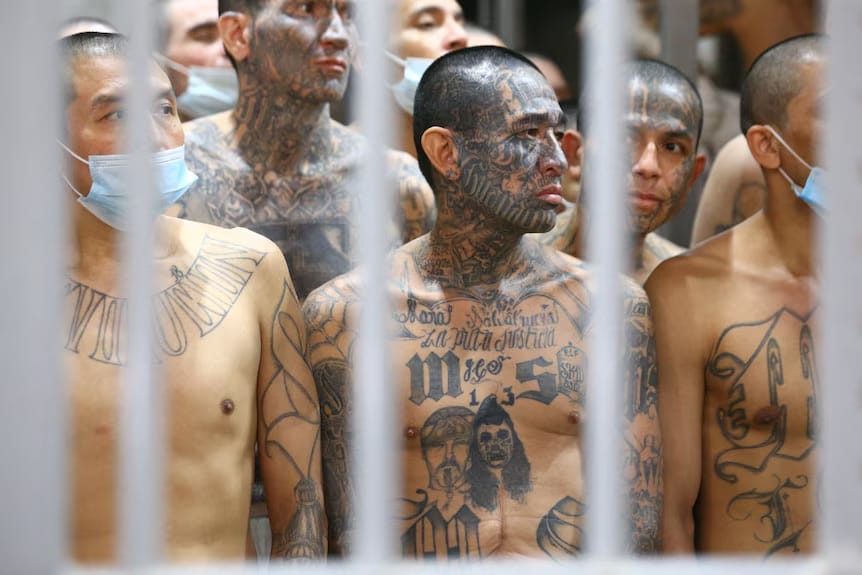
As of February 24, 2026, the state of exception has been extended 48 consecutive times. Over 91,300 people accused of gang affiliations have been arrested, driving El Salvador to the highest incarceration rate in the world by 2023.
The effect on violent crime has been dramatic. Bukele enjoys an approval rating of approximately 85%—among the highest of any leader in the world—with domestic support for the crackdown running at 91% in early polling, including 78% who “very much” supported the government’s actions. Salvadorans who spent years paying extortion to MS-13 and Barrio 18 street gangs—who by 2016 controlled 247 of El Salvador’s 262 municipalities—describe walking through streets that were previously ungovernable. The transformation of daily life for ordinary Salvadorans is real and widely acknowledged.
The Costs: 91,000 Arrested, Rights Groups Alarmed
A group of international lawyers said last week that there are “reasonable grounds” to believe that crimes against humanity have been committed during El Salvador’s controversial state of exception.
Human Rights Watch’s 2026 World Report documents that the Bukele government continued to remove checks on executive power and increased its repression of human rights defenders and critics throughout 2025. In July, the Legislative Assembly—controlled by the ruling party—amended the Constitution to remove presidential term limits. The government’s excessive use of secrecy classifications and weak oversight of public information laws have contributed to growing perceptions of public sector corruption.
Amnesty International has documented the state of emergency and criminal justice reforms as having undermined the rule of law, and has warned that the criminal justice system is being used as a weapon to punish human rights defenders.
The International Monetary Fund has identified concerns over judicial independence as a factor in the country’s speculative-grade credit rating and as a barrier to foreign investment, and a July review found that recommended reforms relating to judicial transfers and tenure had not been implemented.
The 2023 U.S. State Department human rights report cited extrajudicial executions, torture, and “harsh and life-threatening prison conditions” at Salvadoran detention facilities, including the CECOT mega-prison. The 2024 report claimed there were “no credible reports of significant human rights abuses”—while simultaneously citing complaints and reports of mistreatment, extrajudicial executions, and disappearances.
Press freedom has also deteriorated. El Salvador has ranked among the most restrictive environments in Latin America for independent journalism under Bukele’s administration, with human rights lawyer Ruth López arrested and held in custody, prompting protests outside a San Salvador courthouse in June 2025.
The government has dismissed such cases as legitimate prosecutions under existing law. Critics characterize them as a pattern of using the legal system to suppress dissent.
A Regional Blueprint—and Its Limits
Tuesday’s life sentence reform did not emerge in isolation. It is the latest step in a security model that has become the most discussed—and most imitated—in Latin America.
Ecuador’s CECOT-inspired mega-prisons, Chile’s new Kast administration studying Bukele’s incarceration model, and the Trump administration’s embrace of Bukele as a regional security partner have all elevated El Salvador’s approach as a template across Latin America.
U.S. authorities transferred 23 Salvadorans to CECOT, including César Humberto López Larios—an MS-13 leader who had been facing terrorism and conspiracy charges in U.S. federal court. López Larios’s removal is alleged by Bukele critics as designed to prevent him and others from testifying in U.S. courts about their alleged negotiations with Bukele’s government.
According to U.S. indictments, Bukele officials allegedly negotiated with MS-13 leaders since 2019 for looser prison regimes, reduced sentences, early releases, and protection from extradition—in return for lower homicides and political support during elections. Bukele has called these accusations a “lie,” denouncing previous administrations for having made similar arrangements.
The life sentence amendment passed Tuesday will almost certainly be popular. In a country where gang extortion once defined daily life for millions of families, few political messages resonate as powerfully as permanent incarceration for the men who terrorized their neighborhoods.
Whether the same institutions that carried out mass warrantless arrests can be trusted to apply lifetime imprisonment fairly and lawfully is the question that will define El Salvador’s justice system—and its democratic future—for decades to come.


