

MIAMI — Two sailboats carrying nine people—including a three-year-old child—went missing in the Caribbean for several days while delivering humanitarian aid to Cuba. And one Mexican outlet, LatinUs, created quite a stir by noting that their disappearance “coincides” with a U.S. military strike in the same waters.
The U.S. Coast Guard confirmed at 10:36 a.m. EST on Friday that it received a report that “the two vessels safely transited to Cuba.” The Friendship and Tiger Moth have arrived. All nine crew members are accounted for. The cause of the delay has not been officially reported.
No one asserted the boats were bombed. The cause of their disappearance was never established. But in a Caribbean Sea, where the United States has conducted 47 strikes on 48 vessels and killed at least 163 people since September 2025, the question LatinUs raised suggested that the possibility of U.S. strikes on the two missing sailboats was not unreasonable—and the safe arrival of the crews does nothing to diminish the broader context that made it worth asking.
What Happened
The sailboats Friendship and Tiger Moth departed Isla Mujeres, in the Mexican Caribbean state of Quintana Roo, on March 20 as part of the Nuestra América Convoy—a multinational grassroots initiative delivering humanitarian supplies to Cuba amid the island’s deepening energy and economic crisis.
The nine people aboard included two women, six men, and a three-year-old child, representing multiple nationalities. The vessels were expected to arrive in Havana between March 24 and 25. They never arrived on schedule. No distress signal was sent, and there was no communication with the crew after departure.
The Mexican Navy (SEMAR) activated a search and rescue operation involving naval vessels and military aircraft spanning the Caribbean and Gulf of Mexico. A third vessel from the same convoy arrived safely in Havana on Tuesday, received personally by Cuban President Miguel Díaz-Canel. On Friday, Díaz-Canel voiced deep concern for the nine people aboard the missing sailboats, writing on X: “We are doing everything possible to search for and save these brothers in arms.”
Hours later, the U.S. Coast Guard confirmed both vessels had safely reached Cuba.
The convoy noted that neither boat had sent out a distress signal, and that “the captains and crews are experienced sailors, and both vessels are equipped with appropriate safety systems and signal equipment.”
The “Coincidence” Floated by LatinUs
Mexican digital outlet LatinUs published a report on Thursday with a headline that translates directly: “Disappearance of Mexican vessels carrying humanitarian aid to Cuba coincides with U.S. attack on a boat in the Caribbean.”
The publication noted that the U.S. Southern Command announced on March 25 the destruction of a vessel allegedly associated with drug trafficking in international Caribbean waters, within the precise window during which the Friendship and Tiger Moth went silent.
LatinUs also reported that on March 20, U.S. forces struck another vessel in the Eastern Pacific, leaving three survivors.
The word “coincides” was deliberate. LatinUs was not asserting that the U.S. struck the humanitarian vessels. It was noting that a government conducting active military strikes on small boats in those same waters announced a strike during the exact period two civilian sailboats carrying a child went missing, and invited readers to consider whether the vessels could have been targeted by U.S. Southern Command.
Is This a Reasonable Possibility?
LatinUs’s framing rests on a documented factual foundation.
As of March 25, 2026, U.S. Operation Southern Spear has killed at least 163 people in 47 strikes on 48 vessels in the Caribbean and Eastern Pacific—15 in the Caribbean Sea, 31 in the Eastern Pacific, and 2 in unspecified locations. Human rights groups and international bodies have characterized the strikes as extrajudicial killings inconsistent with international law.
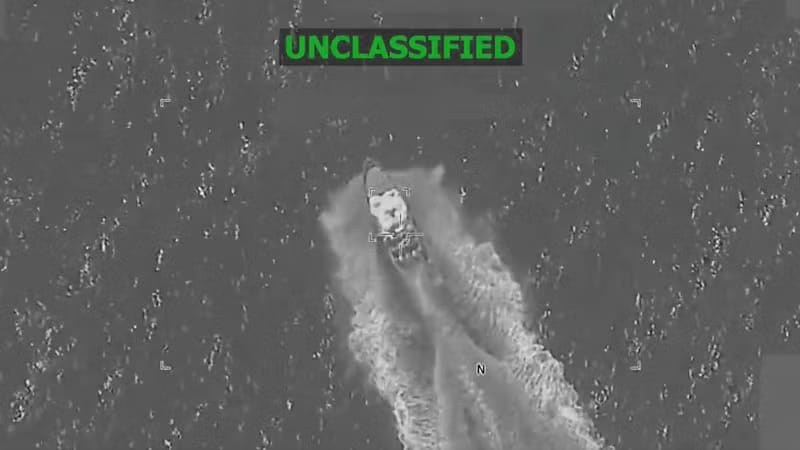
The U.S. has not consistently provided evidence that the vessels targeted were trafficking drugs, or publicly identified the alleged traffickers killed.
Venezuela’s ambassador to the United Nations put it plainly months ago after one such strike, stating: “There is a killer roaming around the Caribbean and the United States is killing everyone who is in the sea working.”
The Mexico Solidarity Media outlet noted that only two days before the Friendship and Tiger Moth went missing, the U.S. government killed four people in the Caribbean in the latest of its strikes—highlighting, in their words, “how dangerous the Caribbean is.”
What the U.S. and Mexican Authorities Said
The U.S. made no statement regarding the missing vessels during the search period. Mexico’s navy did not suggest any connection to U.S. military activity. The search operation involved coordination with maritime rescue centers in Poland, France, Cuba, and the United States itself. The convoy organization expressed confidence in the crews throughout, and noted neither vessel sent a distress signal—inconsistent with a sudden catastrophic strike, and ultimately consistent with a weather-related delay.
Weather conditions were the most plausible explanation from the outset. The vessels delayed their original departure by one day due to adverse conditions, suggesting the crossing was already being navigated cautiously.
Why This Story Matters Beyond the Search
The safe arrival of the Friendship and Tiger Moth is the best possible outcome. Nine people, including a small child, have safely reached the Cuban island. That matters above everything else.
The story unfolded against a backdrop that gave the question its weight—an active U.S. military campaign in Caribbean waters that has drawn condemnation from regional governments and international human rights organizations.
The Friendship and Tiger Moth were delayed. They were not struck. The search is over.
The moment also comes as the U.S. has imposed a de facto oil blockade on Cuba that has deepened a humanitarian crisis amid ongoing political tensions between Havana and Washington, with White House officials appearing to pressure for an overhaul of the Cuban regime.
These were the conditions under which the Friendship and Tiger Moth sailed. These remain the conditions under which the next convoy will sail.
LatinUs did not allege a crime. It noted a coincidence. This time, the coincidence ended well.
Have a tip or story connected to Cuba, the Caribbean, or U.S. policy in Latin America? Reach out at info@sociedadmedia.com


