

MIAMI - The Department of Homeland Security (DHS) has announced that the agency will be ending family-based parole programs for tens of thousands of migrants from Latin America and the Caribbean on Friday.
The department issued a release stating that the termination will affect "all categorical family reunification parole (FRP) programs for aliens from Colombia, Cuba, Ecuador, El Salvador, Guatemala, Haiti, and Honduras, and their immediate family members.
The most recent application of the FRP was implemented on July 7, 2023, under former Secretary of Homeland Security Alejandro Mayorkas of the Biden-Harris administration, and was designed to create "lawful pathways and strengthened enforcement to reduce irregular migration."
The July 2023 implementation expanded these avenues for relatives of approved I-130 petitions from Colombia, El Salvador, Guatemala, and Honduras, providing a pathway for beneficiaries to become eligible to be considered for parole under the normal immigration processes.
However, under the current Secretary of Homeland Security, Kristi Noem and the second Trump administration, the agency is now pulling back on these programs, stating that the department will be "ending the abuse of humanitarian parole, which allowed poorly vetted aliens to circumvent the traditional parole process."
DHS also added, "FRP programs had security gaps caused by insufficient vetting that malicious and fraudulent actors could exploit to enter the United States, which posed an unacceptable level of risk to the United States."
According to the DHS website, the termination will also revoke any work authorizations accompanying the parole, noting:
"If an alien was paroled in the United States under the FRP programs and their parole has not yet expired on Jan. 14, 2026, the parole will expire on that date, unless the alien has a pending Form I-485, Application to Register Permanent Residence or Adjust Status, that is postmarked or electronically filed on or before Dec. 15, 2025, and is still pending on Jan. 14, 2026."
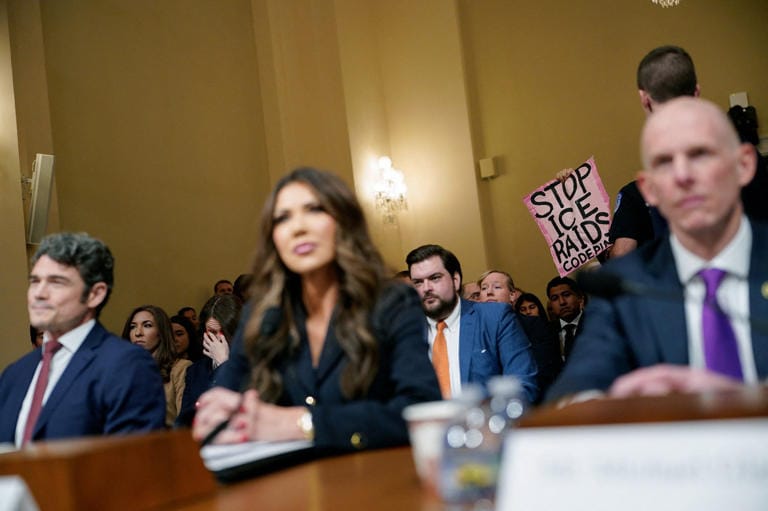
The announcement comes a day after Secretary Noem appeared before Congress for a hearing on Worldwide Threats to the Homeland. The hearing was interrupted by protesters with signage criticizing the secretary's execution of the Trump administration's deportation campaign.
While the annual hearing is typically focused on foreign threats posed to the United States, lawmakers peppered Secretary Noem on the administration's immigration strategy, which absorbed the majority of the hearing's minutes.


