

MIAMI — The island’s residents are boiling over from impatience with the regime in Havana. The former island paradise is in its 10th night of constant protests. Demonstrators once demanded food, water, and electricity. But the entire calculus has changed. Now, they are demanding “liberty.”
On Monday afternoon, Donald Trump sat before reporters inside the Oval Office of the White House and said something no American president has said about Cuba in the modern era: “I do believe I’ll have the honor of taking Cuba in some form. I can do anything I want.”
Bombshell Report by The New York Times: Díaz-Canel Must Go
The most consequential development of the day did not come from Havana or from Mar-a-Lago. It came from The New York Times, which published a report Monday that removed any ambiguity about Washington’s central demand in the U.S.-Cuba negotiations that both governments confirmed last Friday.
Citing four individuals familiar with the discussions, The New York Times reported that the Trump administration is seeking the ousting of Díaz-Canel to facilitate economic reforms in Cuba without dismantling the communist regime, describing the move as a potential symbolic victory for Trump domestically.
According to the report, U.S. officials communicated to Cuban negotiators that Díaz-Canel must resign, although they would leave it to the Cuban side to determine how to carry out that step.
Washington is seeking to remove Díaz-Canel from power without dismantling, at least for now, the overall framework of the communist regime that has ruled the island for more than 65 years—a model that some analysts have already dubbed “Cubastroika”: a limited leadership change within a system that remains structurally intact, modeled loosely on the partial reforms of the Soviet perestroika era.
The Cuban government’s response was immediate and defiant. Lianys Torres Rivera, Cuba’s chief of mission in the United States, told POLITICO in a direct interview that changes to Cuba’s political system are entirely off limits—reiterating the regime’s foundational position that any negotiation must respect Cuba’s sovereignty and that internal political arrangements are non-negotiable.
Trump: “I Can Do Anything I Want”
On Monday afternoon, Trump escalated his rhetoric further than at any previous point in the Cuba crisis, telling reporters: “I do believe I’ll be able to have the honor of taking Cuba in some form” and declaring: “I can do anything I want with Cuba.”
The statement—delivered on the same day Cuba’s entire national grid collapsed—reflected a president emboldened by the Venezuela precedent and operating with growing confidence that the island’s energy emergency has fundamentally altered the regime’s negotiating position.
Trump said Sunday that he could soon strike a deal with Cuba or take other action, following protests in the island nation’s capital. “They are going to make either a deal or we’ll do it just as easy, anyway,” Trump said—adding that the outcome could be “a friendly takeover” or something less friendly.
A White House official confirmed Friday that “Cuba is a failing nation whose rulers have had a major setback with the loss of support from Venezuela and with Mexico ceasing to send them oil.”
What Díaz-Canel Said—Before His Country Went Dark
Speaking Friday in a 90-minute nationally televised press conference, Díaz-Canel confirmed the talks, saying, “These are processes that are carried out with great discretion. They are long processes, and there has to be willingness and channels for dialogue, and all of that takes time.” He added, “We are still far from an agreement because we are in the initial phases of an agreement.”
Díaz-Canel said no petroleum shipments had arrived on the island in three months, acknowledging that the lack of power had affected communications, education, and transportation—and that the government had been forced to postpone surgeries for tens of thousands of patients as a direct result of the energy shortfall.
Raúl Castro’s grandson Raúl Guillermo Rodríguez Castro—nicknamed “El Cangrejo” and described by multiple sources as Washington’s primary negotiating counterpart, bypassing Díaz-Canel’s official channels—was seated visibly in the audience as Díaz-Canel delivered his remarks.
The optics were deliberate and unmistakable: Díaz-Canel speaking publicly about negotiations while the man Washington has been secretly talking to sat in the room watching him do it.
The Perestroika Parallel—and Its Fatal Flaw
The word circulating in diplomatic and academic circles is “Cubastroika”—a reference to Mikhail Gorbachev’s perestroika, the Soviet reform program launched in 1985 that was intended to modernize the communist system without dismantling it.
The result was the Soviet Union’s complete collapse.
Cuban economist Mauricio de Miranda Parrondo, professor at Colombia’s Pontifical Xavierian University, issued a stark warning this week: without a preceding political shift, genuine economic reform in Cuba is structurally unattainable. He warned that the current trajectory leads toward a “Russian-style transformation”—the monopolization of Cuba’s resources by a power-linked oligarchy, producing an authoritarian capitalist system that enriches the regime while leaving ordinary Cubans behind.
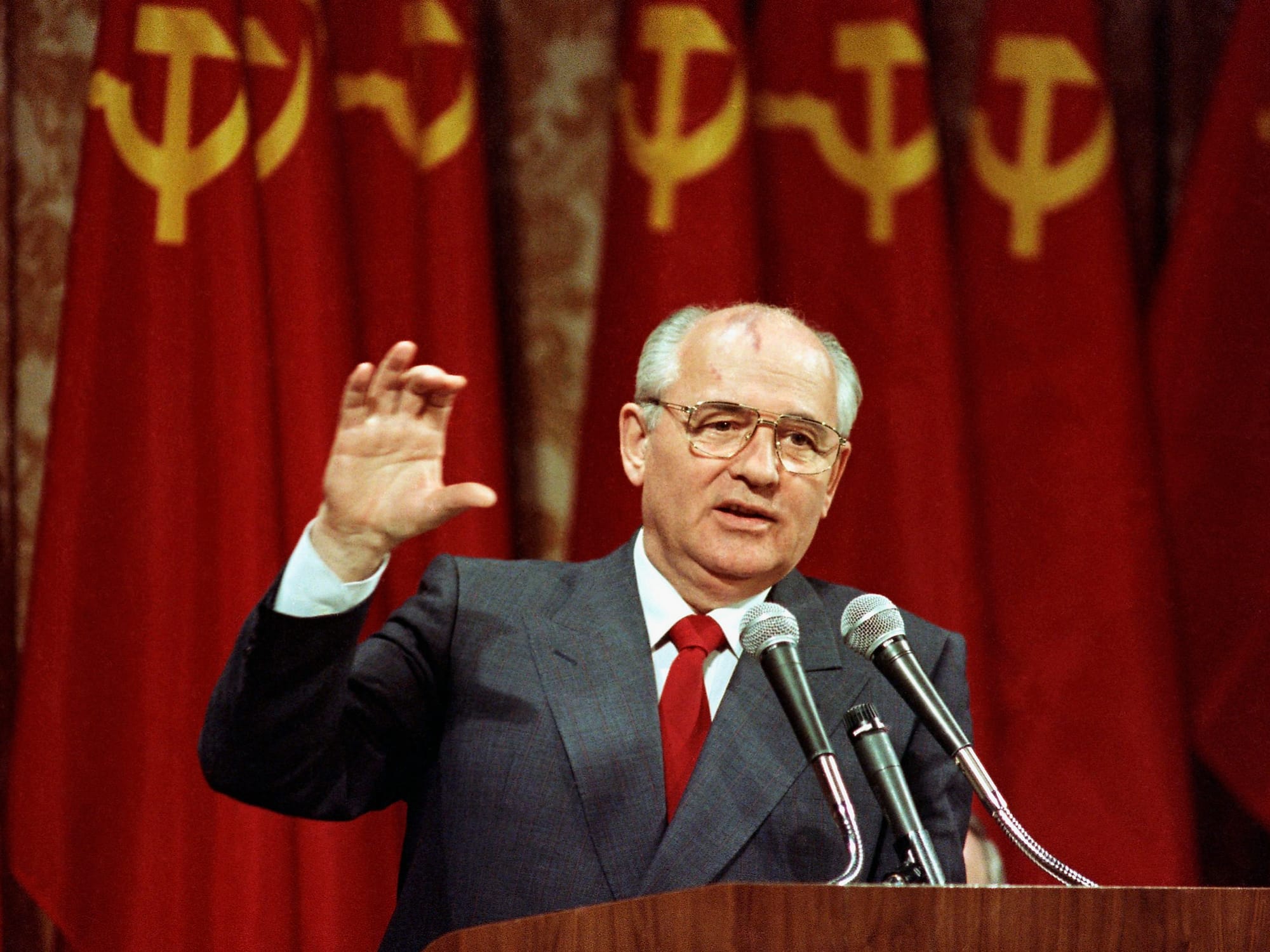
The parallel to post-Soviet Russia—where perestroika produced not democracy but oligarchy—is the outcome Cuba’s independent economists fear most.
Cuba has lived this history before, in miniature. The Obama opening of 2014–2016 produced real economic loosening. A Communist Party plenary reversed most of it before Trump’s first term ended it from the outside. A Cubastroika that relieves the current energy pressure without extracting binding political commitments may simply repeat that cycle—with Díaz-Canel replaced by a more palatable face on the same unreformed system.
The Blackout That Changed Everything
Cuba’s Electric Union confirmed the total national collapse Monday: “A complete disconnection of the National Electric System has occurred. Protocols for restoration are being implemented.”
It was the first time in the island’s modern history that every province lost power simultaneously—the physical consequence of three months without oil, a crumbling Soviet-era grid, and a government that has been unable to attract the foreign investment necessary to modernize its energy infrastructure.
Under existing U.S. law, ending the embargo requires three conditions: 1) liberation of all political prisoners, 2) legalization of all political parties and the press, and 3) scheduling of free multiparty elections. The New York Times reports that the “Cubastroika” model — Díaz-Canel out, regime intact, economic opening negotiated — does not meet any of those three thresholds.
Cuba’s government has survived 66 years, eleven American presidents, the Bay of Pigs, the Missile Crisis, the Soviet collapse, the Special Period, and the Trump first term. Whether it survives Trump’s second—with no oil, a collapsed grid, a population in open revolt, and a U.S. president who says he can “do anything he wants”—is the question that will define this hemisphere’s 2026.
The pots are still banging in the dark. And Washington has just told Havana what it will cost to turn the lights back on.
🚨🇨🇺🇺🇸 | ALERTA/CUBA: President Donald Trump stuns reporters in the Oval Office, stating: “I do believe I’ll have the honor of taking Cuba.”
— Sociedad Media (@sociedadmedia) March 16, 2026
The comments were made hours after a nationwide energy blackout on the island, as the world awaits the administration’s next move ⚡️
Will… pic.twitter.com/R6OPGE3ZHJ


