

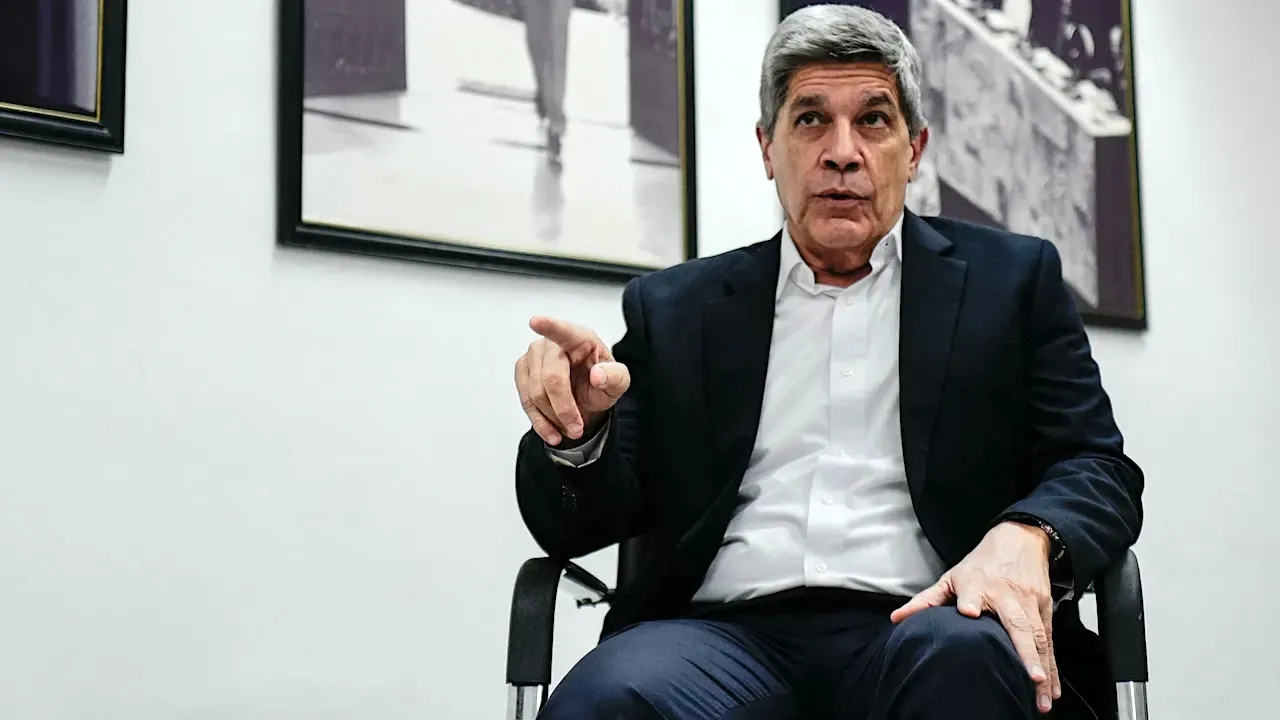
MIAMI — The island’s atmosphere was dangerously tense on Sunday as the government struggled to restore power after the nation’s electrical grid collapsed for the second time in a single week—and into a diplomatic firestorm. Cuban Deputy Foreign Minister Carlos Fernández de Cossío, appearing on NBC’s Meet the Press on Sunday morning, issued one of Havana’s bluntest warnings in years:
“Our military is always prepared, and, in fact, it is preparing these days for the possibility of military aggression.”
The statement landed at a moment of extraordinary escalation. The Trump administration has spent months tightening an oil blockade that has pushed the island into its deepest crisis since the collapse of the Soviet Union, and President Donald Trump has made no effort to soften his language about Cuba’s fate.
What Fernández de Cossío Actually Said
In the tense NBC interview, the deputy foreign minister repeatedly cast Havana’s position as defensive, saying Cuba “has no quarrel with the United States” and wants “a respectful relationship,” while blaming the island’s worsening energy and economic crisis on U.S. pressure, including efforts to choke off fuel supplies.
On the question of regime change, Fernández de Cossío was unequivocal: it is “absolutely” off the table. “The nature of the Cuban government, the structure of the Cuban government and the members of the Cuban government are not part of the negotiation,” he told NBC’s Kristen Welker. The deputy minister insisted that Cuba “is a sovereign country and has the right to self-determination” and would not “become a vassal state or a dependent state from any other country or any other superpower.”
When pressed to provide specifics on how the country is militarily preparing, Fernández de Cossío said Cuba has “historically been ready to mobilize” as a nation but declined to offer further details.
What Ordinary Cubans Are Saying
On the streets of Havana, the sentiment is a volatile mix of exhaustion, defiance, and desperation. A bicycle-taxi driver who spoke to a CNN correspondent whispered:
“Let the Americans come, let Trump come, it’s time to get this over with." He continued: “We can't take it anymore. People can’t feed their families.”
María del Carmen Companioni, 51, captured the prevailing mood: “Really, all of this has people very alarmed and in a bad state. No one knows what is going to happen.”
Despite wanting political change, many Cubans reject the idea of U.S. military intervention, according to reporting by The New Humanitarian. Since the U.S. attack on Venezuela and the removal of President Nicolás Maduro in January, Trump has imposed a strict oil blockade, and Cubans told reporters the humanitarian impact has been brutal—blackouts are longer, patients cannot reach healthcare centers, and children cannot get to school.
Iran, Rubio, and the Sequencing of Pressure
The shadow of U.S. military operations in Iran looms heavily over U.S.-Cuba diplomacy. Speaking at the White House during a visit from Inter Miami CF, Trump said: “What’s happening with Cuba is amazing. And we think that, we want to finish this one [Iran] first. But that will be just a question of time.” Senator Lindsey Graham was even more direct after U.S. and Israeli strikes on Iran began: “Cuba's next,” he told Fox News. Trump, meanwhile, predicted to POLITICO that after Iran’s regime is toppled, “Cuba’s going to fall, too.”
The U.S.-Israeli war in Iran, which killed Supreme Leader Ali Khamenei, has increased anxiety in Havana significantly, according to Par Kumaraswami, professor of Latin American Studies at the University of Nottingham. “Cubans are increasingly concerned about how they will survive in the midst of such global chaos, and the recent violence against Iran will have done nothing to allay their fears,” she told CNBC.
Secretary of State Marco Rubio—the son of Cuban immigrants and a longtime hawk on Havana—is simultaneously pursuing a parallel diplomatic track. His team has been meeting with Raúl Castro’s grandson, Col. Raúl Guillermo Rodríguez Castro, the head of his grandfather’s personal security detail. U.S. officials view the 41-year-old colonel as representing “younger, business-minded Cubans for whom revolutionary communism has failed—and who see value in rapprochement with the U.S.,” according to Axios.
In remarks to reporters, Rubio framed the pressure bluntly: “Fifteen percent of the people of Cuba have left since 2021. That is not a system that’s working. That’s a system that’s in collapse, and they need to make dramatic reforms.”
Does Trump Want Regime Change?
The short answer, based on weeks of statements, is: it depends on how regime change is defined. Reports suggest the administration might settle for something less than full regime change—just as it ultimately did in Venezuela. The New York Times reported that Washington is pressing for the replacement of Cuban President Miguel Díaz-Canel with someone more open to economic reform, a move that would leave much of the existing government structure intact.
That possibility has alarmed many Cubans who seek political freedoms both on the island and in the diaspora. University of Illinois political scientist María de los Ángeles Torres warned that a deal focused narrowly on economic liberalization would “crush the aspirations of Cubans both on the island and in exile who have fought to establish democratic rights in their homeland.”
What an Armed U.S. Intervention Would Look Like
General Francis Donovan, head of U.S. Southern Command, told U.S. Senate lawmakers this week that American troops were not rehearsing for an invasion of Cuba or actively preparing to take over the island. He added, however, that the U.S. stood ready to address any threats to the U.S. embassy, to defend its base at Guantánamo Bay, and to aid any government effort to manage mass migration from the island if needed.
Most analysts remain skeptical that a Venezuela-style extraction of leadership would work in Cuba. Christopher Sabatini, a senior fellow for Latin America at Chatham House, argues that Cuba is “a highly disciplined government” with “a very vertical structure.” Unlike Venezuela, where the U.S. had various points of contact within the government before Maduro’s capture, Cuba presents a far more closed target. “Regime change in Cuba is impossible, and very dangerous,” Sabatini said.
A CSIS analysis notes that the U.S. operation in Venezuela triggered defensive behavior within Cuba’s leadership—including heightened alerts, increased surveillance, and territorial defense exercises. The destruction of Maduro’s Cuban praetorian guard, the elite Avizpas Negras, during the January raid dealt a psychological blow to the Cuban military, representing a defeat they had not experienced in decades.
The Fuel Crisis and the Collapse of Governance
At the core of all the geopolitical maneuvering is a humanitarian emergency that is eroding the Cuban government’s basic ability to function. The humanitarian situation, according to Human Rights Watch’s Americas director Juanita Goebertus, was “already extremely fragile, but the electricity crisis is pushing many essential services to the limit. People don’t have reliable access to drinking water, hospitals can’t operate safely, basic goods are becoming increasingly difficult to obtain, and garbage is piling up in the streets.”
According to the UN Human Rights Office, the blockade and ensuing fuel shortage have threatened Cuba’s food supply and disrupted the country’s water systems and hospitals. The fuel shortage has prevented the harvesting of crops and undermined food sovereignty efforts. The lack of fuel has hampered UN World Food Programme relief efforts following Hurricane Melissa, and the Cuban government has closed schools and universities and limited public transportation.
Cuba produces only about 40% of the fuel it needs and imports the rest—mostly from Mexico and Venezuela. After Maduro’s removal, Venezuela stopped shipments, and Mexico halted them under the threat of U.S. tariffs. Cuba has not received oil from foreign suppliers in months.
The political consequences are beginning to surface. On March 7, residents in parts of Havana took to the streets, banging pots and pans and lighting bonfires—rare acts of public protest in Cuba. Days later, a group of students held a peaceful demonstration on the steps of the University of Havana, telling reporters they could not continue their studies due to the lack of power and internet access.
As of this writing, no deal between Washington and Havana has been reached. Negotiations continue, the blackouts continue, and the military warnings continue—leaving Cuba’s 11 million residents suspended between a government that insists it will never yield and a U.S. president who has said he can do “anything he wants” with the island.
Sociedad Media will continue to monitor the evolving situation in Cuba, including ongoing U.S.-Havana negotiations, the island’s energy crisis, and any developments toward or against military action. Have a tip, a source on the ground, or a story idea connected to the Cuban community in Miami? Reach out to our team at info@sociedadmedia.com—we want to hear from you.


