

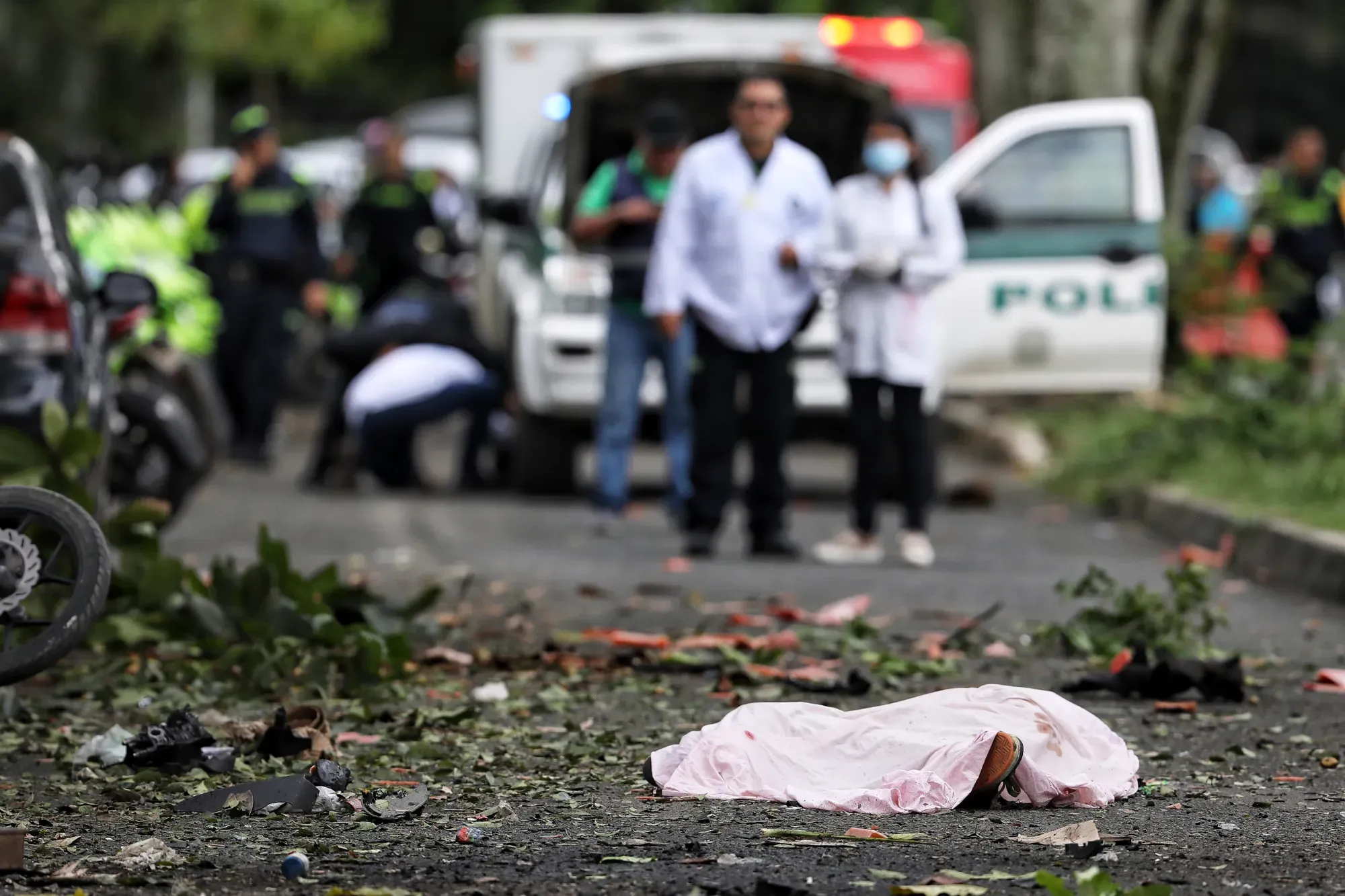
BOGOTÁ — Colombia experienced its most violent first quarter in a decade, with 35 massacres claiming 133 lives between January and March 2026, according to new data from the Institute for Development and Peace Studies (Indepaz), highlighting the deteriorating security situation despite nearly ten years since the landmark FARC peace agreement.
The incidents occurred across 34 municipalities in 17 departments, representing an average of one violent death every 16 hours. The toll surpasses all previous first-quarter records since the 2016 peace deal, with the closest comparison being 2022’s 31 massacres during the government transition between Iván Duque and Gustavo Petro.
Historical Violence Trends
Violence data shows a clear breaking point beginning in 2020. Annual massacres jumped from 51 in 2019 to 91 in 2020, then reached 96 in 2021. Numbers stabilized at 94 cases in both 2022 and 2023, before dropping to 76 in 2024 and 78 in 2025.
The 2026 surge suggests this downward trend has reversed.
Under President Petro’s administration, which began in August 2022, total annual massacres have fluctuated between 76 and 94 cases. However, the dramatic first-quarter spike indicates 2026 could exceed previous years.
Structural Causes Beyond Politics
Leonardo González, Indepaz director, emphasized that the violence stems from structural factors persisting across multiple decades and administrations.
“This is not a phenomenon attributable to a specific administration, but to structural factors that have persisted for several decades,” González stated.
Primary drivers include disputes over illegal economies — drug trafficking, illegal mining, extortion, migrant trafficking, and deforestation activities. Persistent institutional gaps in various regions and unresolved territorial conflicts between criminal groups and Indigenous populations further fuel much of the violence.
Criminal Group Expansion
The massacre surge reflects criminal organizations exploiting gaps left by incomplete peace agreement implementation. Groups, including the Gulf Clan, Los Costeños, Los Pepes, and New Rastrojos, have expanded territorial control through “armed governance” mechanisms and illicit enterprises.
Violence has spread beyond traditional rural conflict zones into urban centers. Cities like Barranquilla and its metropolitan area have experienced increased violent incidents due to the simultaneous presence of multiple illegal structures competing for control.
Peace Agreement Implementation Failures
González directly linked the violence to unfulfilled security guarantees promised in the 2016 peace accord. “The agreement envisioned security guarantees that were not fulfilled, allowing the expansion of armed groups in the territories,” he explained.
The absence of effective state presence in former conflict zones created power vacuums that criminal organizations have filled, establishing illegal regulatory mechanisms over civilian populations.
Victim Demographics and Recent Incidents
Of the 133 people killed, 74 were men, 16 were women, and 17 were minors. Forty bodies remain unidentified. Since 2016, Indepaz has documented 729 massacres claiming 2,657 victims nationwide — 1,675 men, 285 women, and at least 133 children.
The most recent massacre occurred on March 26 in Cajibío, Cauca, where three people were found incinerated inside a vehicle. Other first-quarter incidents spanned from Bogotá to Magdalena, Antioquia, and Tolima, demonstrating the violence’s national scope.
Social Leader Killings Continue
Parallel violence against social leaders and human rights defenders recorded 33 cases in early 2026, down from 56 in the same 2025 period. However, Colombia remains among the world’s deadliest countries for human rights defenders, with at least 1,500 killed since 2016 according to the Ombudsperson’s Office.
Electoral Violence Concerns
With the 2026 presidential elections approaching, security experts warn of escalating political violence. The June 2025 assassination of Senator Miguel Uribe Turbay, a presidential candidate, demonstrated how organized armed groups exploit political polarization to undermine democratic institutions.
Current electoral dynamics pose increased risks as criminal organizations seek to influence political processes through intimidation and violence.
Regional and International Implications
The security deterioration threatens Colombia’s role as a regional stability anchor. With over 2.5 million Venezuelan migrants straining state resources, border regions have become particularly vulnerable to armed group expansion and transnational criminal activities.
The violence surge could impact broader hemispheric security initiatives, given Colombia’s strategic importance in combating organized crime and drug trafficking networks extending throughout Latin America.
Government Response and Challenges
González emphasized the need for comprehensive, long-term security policies rather than short-term military responses. Despite the context of violence, he maintained that peace negotiations with remaining armed groups should not be considered failed efforts.
The Petro administration has pursued dialogue with various illegal organizations, though results remain limited given the fractured nature of the post-FARC criminal landscape.
Looking Forward
The persistence of high violence levels across multiple administrations suggests Colombia’s security challenges require fundamental structural reforms beyond traditional approaches. Without comprehensive state presence and effective implementation of existing peace agreements, experts warn that the cycle of territorial violence may continue plaguing Colombian communities.
The 2026 electoral period presents both risks and opportunities for addressing underlying violence causes, though the current massacre surge indicates the urgent need for renewed commitment to peace agreement implementation and territorial state-building efforts.
Sociedad Media monitors violence across Latin America and its impact on regional stability. As Colombia’s security crisis deepens, we track developments affecting democratic governance and civilian safety throughout the hemisphere


