

MEXICO CITY — It lasted exactly 30 seconds. A man in a black shirt and a blue cap walks onto the sun-drenched terrace of MÄTRE Pan—a fashionable artisanal bakery on Monte Ararat 220, a tree-lined street in the posh Lomas de Chapultepec neighborhood, steps from the Paseo de la Reforma and within sight of the Turkish Embassy.
The gunman pretends to be on a phone call. He pulls a pistol. He robs seven people at two outdoor tables before anyone has time to process what is happening.
The incident, which occurred during lunchtime on Saturday, March 7, was captured on the establishment’s CCTV system and went viral on social media within hours—generating widespread outrage over the brazen ease with which the robbery was carried out in one of the most exclusive neighborhoods in the Mexican capital. The video did not show cartel violence, murder, or kidnapping. It showed a single man with a gun taking phones, wallets, and jewelry—with no gloves, with no mask—from brunch guests in what is arguably the wealthiest ZIP code in Latin America. And it was all done in thirty seconds flat, on the weekend in broad daylight.
That video is Mexico City in 2026: extraordinary, infuriating, complicated, and impossible to reduce to a single narrative. The capital of the world’s thirteenth-largest economy is simultaneously one of Latin America’s most visited cities, one of the most hotly debated expat destinations on the planet, and a place where seven people can be robbed at gunpoint over their pastries in a neighborhood that has more private security guards than most South American cities have police officers.
Is CDMX dangerous? That depends entirely on what you compare it to, who you are, where you come from, and what your definition of “dangerous” really is.
The Lomas Robbery and What it Means for the City
Authorities confirmed the robbery and launched an investigation—but as of publication, no arrests had been reported. Authorities provided support to the victims in filing formal complaints while analyzing footage from surveillance cameras in the surrounding area.
The impunity—not the robbery itself—was what drove the outrage. Mexico City residents are not shocked by petty crime. They are exhausted by the chronic institutional failure to prosecute it, however.
MÄTRE Pan is not a struggling neighborhood bakery. Its artisanal pastries run between 65 and 295 pesos. Its clientele is the kind that summers in Europe and sends children to American universities. The street it sits on is patrolled by private security, monitored by cameras, and located three blocks from an ambassador’s residence. If it can happen there, the implicit social contract between Mexico City’s wealthiest residents and the security apparatus they pay for—through high taxes, lofty building fees, and the small army of men in black who stand outside every Polanco restaurant—has been visibly broken.
The robbery tells a story about Mexico City’s actual crime profile. Not homicide. Not cartel war. Not kidnapping-for-ransom of the kind that defined the capital’s most dangerous years in the 1990s. The threat that ordinary residents, tourists, and expats actually face in 2026 is property crime—muggings, phone snatches, restaurant robberies—carried out by individuals operating in a legal environment where the probability of arrest and prosecution is so low it barely functions as a deterrent.
Such crimes are unfortunately part of the territory of large Latin American cities, but when left unchecked, the cancer spreads and starts to hurt the wallets of those ostensibly unaffected by the crime to begin with.
The Numbers: Mexico City vs. The Headlines
A systematic comparison of homicide rates across Latin American capitals reveals a picture that is more nuanced than either the U.S. State Department’s persistent travel warnings or the Instagram-filtered dispatches of digital nomads suggest.
Mexico City records approximately 8.3 homicides per 100,000 inhabitants annually—placing it solidly in the middle tier of major Latin American capitals. Bogotá registers 15.8; Tegucigalpa in Honduras sits at 28.4, the second highest in the region; Caracas, Venezuela, reaches 26.3; and Guayaquil, Ecuador—a city that has become the symbol of Latin America’s cartel crisis—stands at a miserable 48.2 per 100,000, nearly six times Mexico City’s rate, and awarded the title of murder capital of the western hemisphere.
At the safer end, El Salvador’s capital, San Salvador, has plummeted to a mere 1.9 under President Bukele’s mass incarceration campaign, while Buenos Aires sits at 3.9 and Santiago, Chile, at 4.1.
A national INEGI survey in the final quarter of 2025 found that 63.8% of respondents across 91 Mexican cities consider their place of residence unsafe—a figure that rose 2.1 points compared to the previous year, reflecting an increase in perceptions of insecurity even though official statistics show declines in many crime categories. The gap between the statistics and the lived experience of insecurity is one of Mexico City’s defining tensions—and one that the Lomas robbery video, viewed millions of times across the region, does more to shape than any government report.
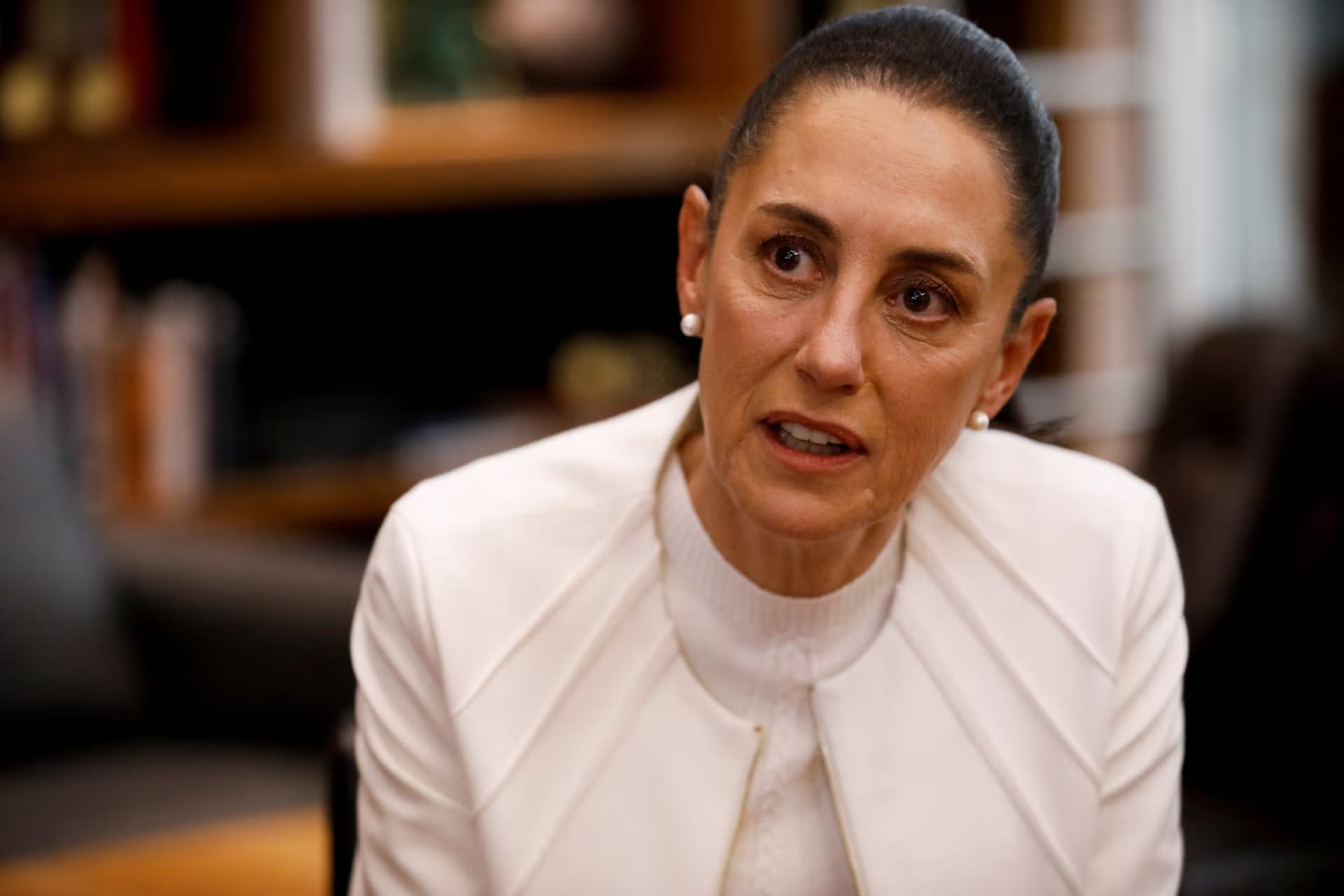
High-impact crimes—including homicides, femicides, kidnappings, violent robberies, and extortion—declined 47% between 2018 and 2025. In 2025 alone, violent robberies fell 14.7%, violent vehicle theft dropped 19.5%, and muggings declined 15.9%. The trajectory is genuinely positive. But the baseline from which those percentages are calculated was extraordinarily high—and the absolute numbers of property crimes remain deeply uncomfortable.
Is CDMX Improving? The Data Debate
Since 2007, the estimated number of organized crime-related homicides has increased sixfold in Mexico as a whole, from roughly 3,000 to nearly 18,000 in 2024. In the last decade alone, Mexico has recorded over 300,000 homicides.
The national context matters because it shapes perception—and because events outside Mexico City directly affect the capital’s safety environment. El Mencho’s killing on February 22 triggered cartel blockades across 22 states. Puerto Vallarta, long considered one of Mexico’s safest tourist destinations, experienced a catastrophic security breakdown the same day, with international flights canceled and tourists stranded in hotels.
Mexico City, however, operates in a different security ecosystem from the cartel-affected states. More than half of all 2025 national homicides occurred in just seven states—Guanajuato, Chihuahua, Baja California, Sinaloa, México state, Guerrero, and Michoacán. The capital’s security trajectory has consistently outperformed the national average—a legacy of the investment in urban policing and intelligence-led operations that President Sheinbaum initiated during her years as mayor.
Independent security analysts nonetheless urge caution about government-presented statistics. “The federal government presents data in a way to construct a narrative of security. Politically, it’s very effective, socially it’s very questionable,” one security analyst told journalists earlier this year. The psychological weight of living in a city with serious security challenges is something that cannot be fully captured by any dataset—and it accumulates over time in ways that statistics do not measure.
“Gringos, Stop Stealing Our Home”: The Anti-Tourist Backlash
The Lomas robbery happened amid widening tensions between international tourists and CDMX residents. Mexico City in 2026 is a city at war with itself over who gets to live in it—and North Americans are at the center of that conflict.
Since July 4, 2025, a series of protests against gentrification have taken place in Mexico City—a response to the transformation of the capital’s most desirable neighborhoods driven by the massive influx of foreign residents since the COVID-19 pandemic. The influx began around 2020, when Americans arrived in Mexico City in large numbers to work remotely, dodge coronavirus restrictions, and take advantage of dramatically cheaper living costs. In the years since, neighborhoods like Roma and Condesa—lush central areas dotted with cafés and neighborhood markets—have grown increasingly populated by foreign tourists and remote workers from the United States, Canada, and parts of Europe.
On July 4 of last year, the first protest left graffiti across Roma Norte with messages that shocked North American expats and tourists alike: “Kill Gringos,” “Learn Spanish, you dog,” and “Out with the colonizers,” “Death to Airbnb,” “White people: your privilege rests on our labor and dispossession.”
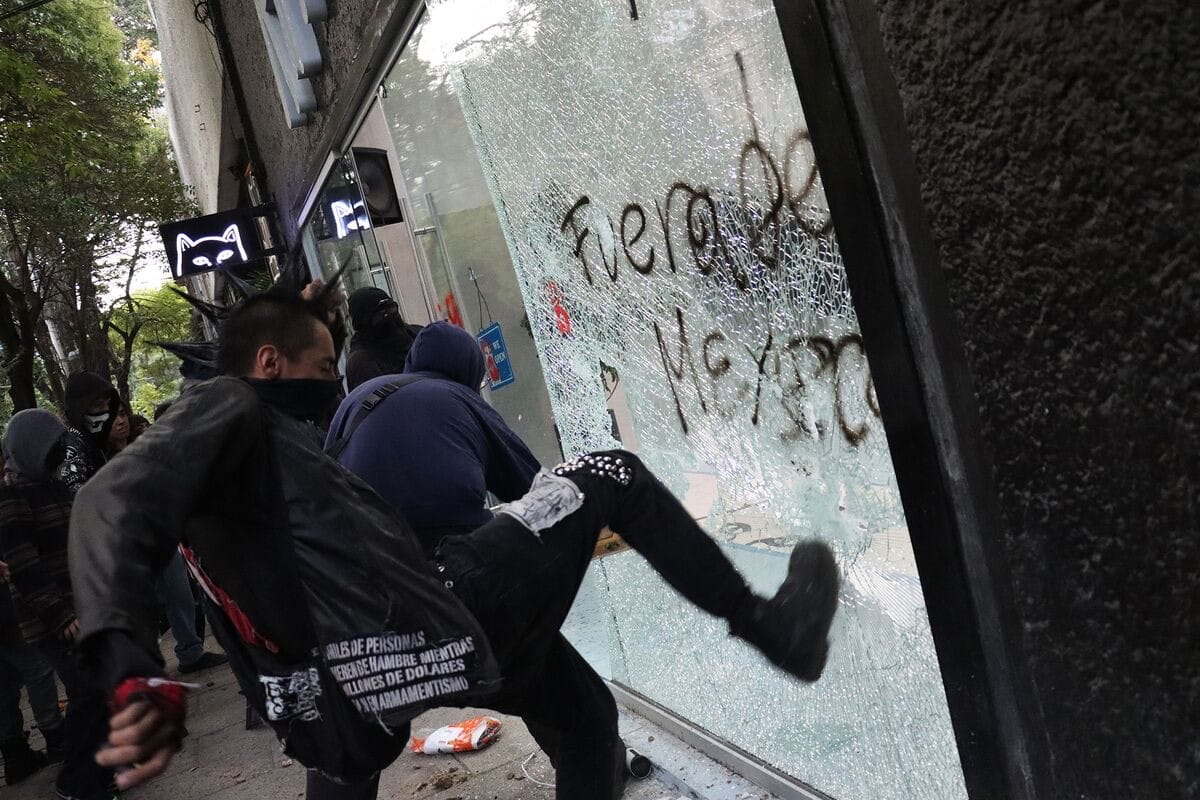
What began as a peaceful march took a turn when a small group in masks began smashing storefronts, looting, and harassing foreigners. Popular areas, including Condesa and Roma, were largely affected by the damage that followed the protests.
Graffiti written on shattered glass read “Get out of Mexico.” Other signs held by protesters read: “Gringos, stop stealing our home” and “Pay taxes, learn Spanish, respect my culture.”
President Sheinbaum characterized the protests as “xenophobic”—drawing a distinction between the legitimate grievances over gentrification and what she described as misdirected anger at individual foreigners rather than at the systemic failures of government housing policy.
The organization behind the protests pushed back: “Gentrification isn’t just foreigners’ fault—it’s the fault of the government, and these companies that prioritize the money foreigners bring,” they stated. “Meanwhile, young people and the working class can’t afford to live here.”
Anthropologist Rocío Gil, co-author of a book on racism and xenophobia in Mexico, offered a more nuanced reading of the movement’s dynamics—noting that the rejection is not directed at all immigrants but focuses specifically on U.S. citizens due to structural power dynamics, compounded by tensions over U.S.-Mexico relations under the Trump administration. “It is important to examine specific manifestations of xenophobia within the broader movement,” she said, “noting that these do not dominate its core demand against inequality.”
Other analysts, too, have attempted to link nativist anti-tourist sentiment in CDMX to U.S. President Donald Trump, attributing Washington’s immigration policy in the U.S. to a rise in enmity towards foreigners in Mexico City.
Fodor’s travel company placed Mexico City on its “No List” for 2026—not citing security concerns, but rather the pressures of over-tourism and the protests lamenting gentrification in Condesa and Roma. The travel guide’s decision reflected a broader reckoning with what mass tourism does to cities—and what could later face Mexico City this summer, with World Cup visitors arriving by the millions in June.
The Cost of Living: Paradise at What Price?
The economic argument for Mexico City remains powerful—but it is eroding faster than most expats anticipated when they made the decision to relocate.
In late 2025, Mexico’s national house price index rose 8.7% compared to the previous year. Rents in prime neighborhoods, including Polanco, Roma, and Santa Fe, have surged up to 30% in the last five years, according to Mexico Business News. Mexico has a genuine housing problem in 2026, with more demand than supply due to expensive materials, high interest rates, and land scarcity.
CDMX has over 26,000 Airbnb listings—more than anywhere else in Latin America. Rent caps and short-term rental limits were legislated but deliberately delayed until after the 2026 FIFA World Cup. There are about 2.7 million homes in CDMX, but nearly 800,000 more are needed. Enforcement of short-term rental policies will not begin until after the FIFA World Cup rolls through—fueling current chaos even as prices climb.
Despite those pressures, Mexico City retains a cost-of-living advantage over comparable global cities that remains significant. A one-bedroom apartment in Roma Norte or Condesa rents for between $800 and $1,400 per month—compared to $2,500 to $4,000 for a comparable apartment in some middle-class areas in Miami. A meal at one of Polanco’s finest restaurants rarely exceeds $50 per person. A metro ride costs seven pesos—under 40 cents. Monthly grocery bills for a couple eating well—markets, not supermarkets—run between $200 and $350.
But Mexico is projected to have the highest medical cost inflation globally in 2026, with an estimated average rate of 14.8%, which could lead to three million Mexicans dropping their private health insurance this year.
For expats who relocated expecting long-term affordability, these numbers represent an uncomfortable recalibration. The cost-of-living advantage that drove the pandemic-era migration wave is real but narrowing—and the social cost of that migration, now measured in shattered shopfronts and graffiti calling for the death of gringos, is a variable that most relocation calculators failed to include.
The Geography of Risk—and the World Cup
The most honest answer to “how dangerous is CDMX?” is: it depends entirely on where you are, where you’re from, and what you are doing. Polanco, Roma Norte, Condesa, Juárez, Coyoacán, and the historic center east of the Zócalo offer strong lighting, police patrols, and steady crowds late into the night. Parts of Doctores, most of Tepito, and the far edges of Iztapalapa pose more significant risk, mostly after sunset.
The World Cup arriving in June will test every one of these dynamics simultaneously. Hundreds of thousands of international visitors—many of them first-time visitors to Mexico—will be navigating a city where anti-tourist sentiment has been building for years, where the housing crisis has pushed working-class Mexicans further from the stadiums and tourist districts they once lived near, and where a viral robbery in one of the city’s safest neighborhoods has reminded everyone that impunity remains the defining feature of Mexico City’s crime environment.
CDMX is not as safe as Santiago at 4.1 per 100,000. But it is dramatically safer than Guayaquil at 48.2. The brunch at MÄTRE Pan, where seven people were robbed, costs less than a cocktail at a Miami rooftop bar. The graffiti on the walls of Roma Norte that says, “Get out of Mexico.” And five million World Cup visitors are already buying tickets to arrive.
The city contains all of these realities simultaneously, which is exactly what has always made it one of the most extraordinary places on earth.


