

MIAMI — It took longer than the iPhone, longer than the European Union itself, and longer than the political careers of most of the leaders who tried and failed to finish it. After 25 years of negotiations, false dawns, and near-fatal opposition from French farmers, the European Union and Mercosur—the South American trading bloc comprising Argentina, Brazil, Paraguay, and Uruguay—formally signed their Partnership Agreement on January 17, 2026, in Asunción, Paraguay.
The deal is not yet in force. It may not be by year’s end. But it is real, it is signed, and its provisional trade provisions are set to begin applying from May 1, 2026, for Mercosur countries that complete ratification in time.
For South America, this could be the biggest economic development for the region in a generation. And for Miami—the commercial gateway between the United States and Latin America—its implications are worth understanding now, before the cargo flows shift.
The Scale of the Deal
The numbers are significant enough to warrant precision. In 2024, EU-Mercosur trade in goods amounted to €111 billion, according to the European Parliament—a substantial baseline that the agreement is designed to expand considerably. Economic modelling estimates that bilateral trade could increase by up to 37% in the long term, with studies projecting a €10.9 billion increase in EU GDP and a €7.4 billion increase in Mercosur GDP by 2032.
The tariff liberalization schedule is the core mechanism. Mercosur will reduce tariffs on 91% of EU exports, including cars—currently facing duties of up to 35%—over a 15-year phase-in. In return, the EU will remove tariffs on 92% of Mercosur exports within ten years.
The deal is expected to save EU exporters more than €4 billion annually in customs duties, eliminating tariffs on cars, machinery—currently 14 to 20%—and pharmaceuticals, currently up to 14%.
For Mercosur’s agricultural exporters, the access is real but carefully constrained. The deal allows 99,000 tonnes of Mercosur beef to enter the EU market annually with a 7.5% duty—a capped quota that represents 1.5% of total European beef production and is actually less than half of current Mercosur beef imports into the EU, which stand at around 206,000 tonnes annually.
Separate quotas were agreed for an additional 180,000 tonnes of poultry phased in over five years, and a tariff-free quota of 30,000 tonnes for cheese. EU exports of agricultural products to Mercosur—currently worth €3.3 billion annually—are expected to increase by almost 50% as Mercosur eliminates high tariffs on EU wine, currently at 27%, spirits at 35%, olive oil at 10%, and chocolate at 20%.
A €6.3 billion safety-net fund was established to protect EU farmers from market disturbances, a concession that proved decisive in securing Italian and eventually qualified majority support from EU member states in the January 9 Council vote.
Why it Took 25 Years—and Why it Almost Failed Again
The deal’s signing in Asunción did not close the political drama. On January 21, 2026, the European Parliament voted by a narrow 334-324 margin to refer the agreement to the Court of Justice of the European Union for a legal opinion—a move that could delay Parliament’s own approval by up to two years.
France, which voted against the deal in the Council despite losing, has promised to continue fighting it in Parliament. The deal’s provisional trade provisions can proceed without full parliamentary consent, but the broader partnership agreement cannot fully enter into force until all 27 EU member states have ratified it—a process that could take years and faces real opposition in agricultural economies.
The geopolitical calculation that finally broke the deadlock after a quarter-century is revealing. The new U.S. National Security Strategy made clear to European policymakers that Washington views Latin America as its sphere of influence. For Brussels, the Mercosur deal became a geopolitical imperative—a way to assert a European presence in South America against both U.S. and Chinese competition.
China surpassed the EU as Mercosur’s top trading partner in 2017 and now accounts for 26.7% of the bloc’s external trade, compared to the EU's 16.9%. The deal is, at least partly, Europe’s response to that shift.
The Atlantic Council noted that once ratified, the EU will have free trade agreements with close to 80 countries globally, while the United States—which has pulled back from multilateral trade frameworks since 2017—has agreements with only 20.
The Miami Angle
South Florida’s role in this story is not passive. Miami is not just watching the EU-Mercosur deal from the sidelines—it is a node in the trade architecture that the deal will reshape.
The Miami Customs District—covering Miami-Dade, Broward, and Palm Beach counties—processed a $144 billion trade economy in 2024, with a 5% rise in trade driven by booming exports to Brazil, Colombia, and the Dominican Republic. Top exports included aircraft parts, medical devices, and telecommunications equipment.
Miami is fast becoming what industry analysts call “the strategic anchor for the other transatlantic relationship—the one between Latin America and Europe.”
European manufacturers, particularly in Spain, Germany, and Italy, are increasingly looking to Latin America not just as a supplier but as an alternative consumer market, and Miami’s role as the routing, warehousing, and financial center of that triangle continues to strengthen.
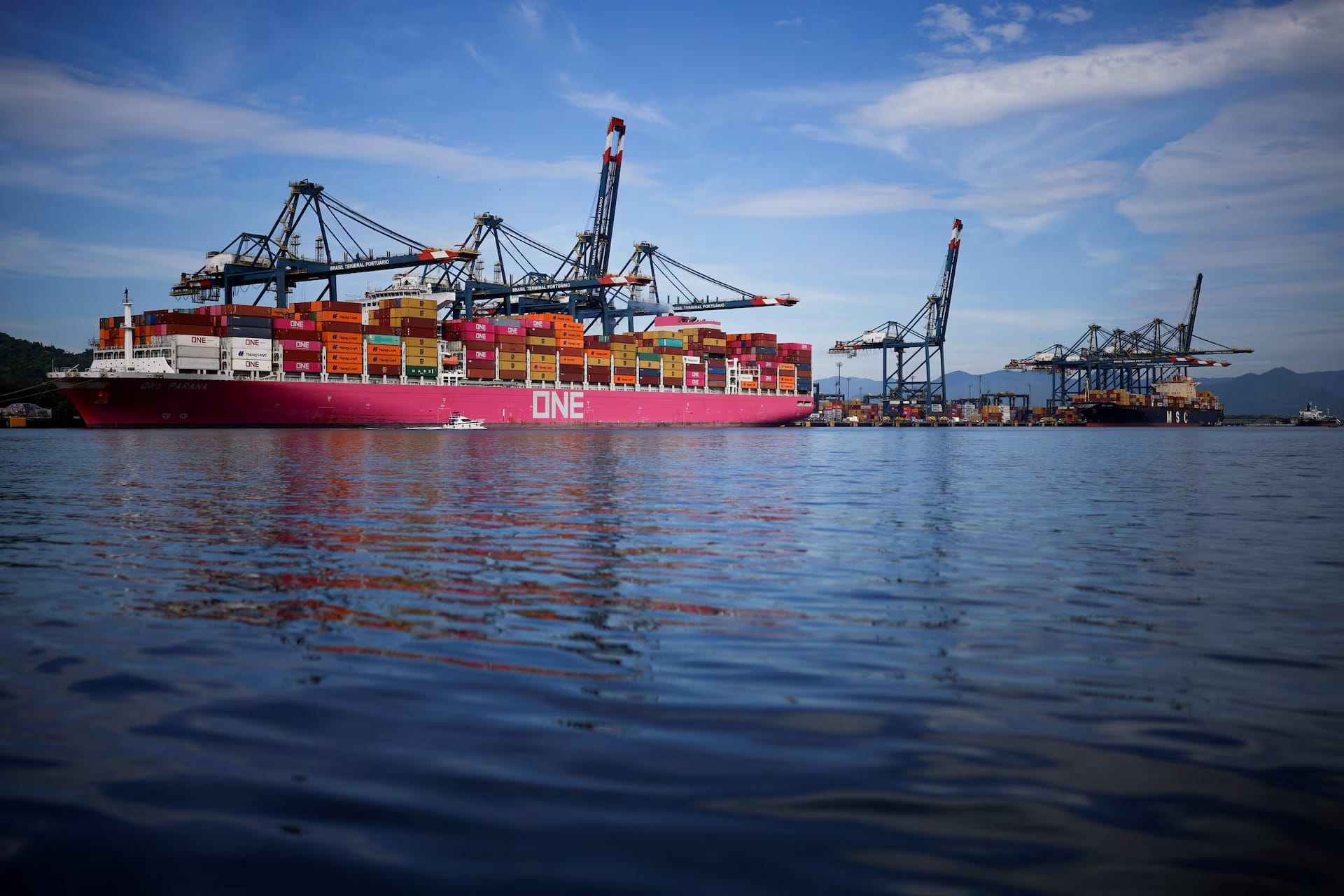
The direct implication for Miami’s trade economy is that as South American agricultural and raw material exports increasingly orient toward the European market—attracted by the preferential tariff access the EU-Mercosur deal opens—the logistics infrastructure required to move those goods will either strengthen Miami’s position as a regional hub or bypass it.
Argentine soy, Brazilian beef, Uruguayan wine, and Paraguayan sugar that currently route through U.S. supply chains or transship through U.S. ports may increasingly move directly to Rotterdam, Hamburg, and Marseille. T
The EU is also seeking exclusive preferential access to critical raw materials from Mercosur, including niobium, of which the EU currently imports 82% from Mercosur countries that are essential to its digital and green transitions. Those commodity flows will reshape shipping lanes.
At the same time, the deal creates new opportunities for Miami-based firms with Mercosur connections. European manufacturers gaining tariff-free access to 295 million South American consumers will need regional distribution, compliance, and logistics expertise—exactly the kind of service economy that South Florida’s trade community has spent decades building.
What Comes Next
The interim trade agreement is set to apply provisionally from May 1, 2026 for Mercosur countries that complete their domestic ratification procedures and notify the EU before the end of March. Argentina and Uruguay have already ratified.
Brazil and Paraguay are working through their processes.
For businesses, investors, and logistics operators in Miami, the window to position ahead of this shift is open now—and it will not stay open indefinitely. A deal 25 years in the making moves slowly. But when it moves, it moves at scale.
Sociedad Media will continue to monitor the EU-Mercosur ratification process and its implications for South Florida’s trade and logistics economy. Have a tip or a story connected to Latin America trade? Reach out to our team at info@sociedadmedia.com—we want to hear from you.


